


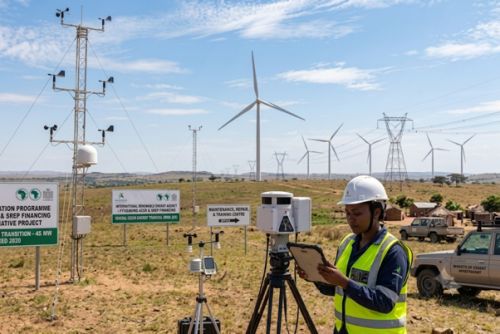
Zambia has taken a step towards diversifying its electricity generation mix after selecting Noubeg Power & Co. to prepare a 40-megawatt wind power project aimed at strengthening energy security and reducing dependence on hydropower. The project preparation phase is being supported through a $1.15 million feasibility study grant under the Scaling-Up Renewable Energy Program (SREP), administered by the African Development Bank.
The initiative is being implemented under the supervision of Zambia’s Ministry of Energy and forms part of the country’s broader effort to expand renewable energy sources beyond hydropower. The feasibility studies will assess the technical, economic, environmental and regulatory requirements needed to move the project towards a competitive procurement process. According to Noubeg Power & Co., the five-month assignment will include a detailed technical and economic feasibility assessment, environmental and social impact studies, and a review of Zambia’s regulatory environment for wind power development.
The outcome of these studies is expected to provide the foundation for a government-led tender process to select a project developer and mobilise private sector and concessional financing. While the authorities have not yet disclosed the project location, construction cost or implementation timeline, the preparation phase represents an important step in developing Zambia’s wind energy market. The project comes as Zambia seeks to address vulnerabilities within its electricity system, which has historically relied heavily on hydropower generation. According to the country’s National Energy Compact developed under the Mission 300 initiative, Zambia has approximately 3,811 megawatts of installed generation capacity, with more than 83% supplied by hydropower.

This dependence has exposed the country’s energy system to climate-related risks, particularly drought conditions that reduce water availability for hydroelectric facilities. In 2024, declining water levels contributed to severe electricity shortages, affecting households, businesses and industrial operations. The energy crisis highlighted the need for Zambia to accelerate diversification of its power sources. The government has since increased focus on renewable technologies, particularly solar energy, while exploring additional opportunities in wind generation.
In June 2025, Zambia commissioned a 100-megawatt solar power plant in Chisamba, while several other solar projects have either entered construction phases or recently connected to the national grid. These developments form part of a wider strategy to increase generation capacity and improve electricity reliability. Zambia’s National Energy Compact sets a target of increasing the share of non-hydropower renewable energy sources from approximately 3% to 33% by 2030. Achieving this objective will require significant investment in renewable generation, transmission infrastructure and private sector participation.
Wind energy is expected to complement Zambia’s growing solar capacity by providing another source of renewable electricity. Unlike solar generation, which depends on daylight availability, wind projects can contribute to a more balanced renewable energy system when integrated with other technologies. However, developing wind power at scale will require addressing several challenges, including resource assessment, transmission connectivity, financing structures and regulatory certainty. Feasibility studies such as the one supported by SREP are designed to reduce project risks and provide investors with reliable information before construction decisions are made.
The involvement of the African Development Bank through SREP reflects the increasing role of development finance institutions in supporting renewable energy preparation across Africa. Many renewable projects face challenges during early development stages because feasibility studies, environmental assessments and regulatory preparation require significant upfront investment. By supporting project preparation, development finance institutions aim to create a pipeline of bankable renewable energy projects capable of attracting private capital.
For Zambia, expanding renewable energy capacity is closely linked to economic development objectives. Reliable electricity supply is essential for mining, manufacturing, agriculture, digital services and small businesses. As one of Africa’s major copper producers, Zambia’s industrial competitiveness depends significantly on affordable and dependable power. The country’s energy transition also takes place within a broader regional context where Southern African economies are seeking greater energy resilience. Climate variability, rising electricity demand and industrial growth are increasing pressure on existing power systems across the region.
The development of wind, solar and other renewable technologies could help countries reduce exposure to climate-related electricity disruptions while supporting longer-term decarbonisation goals. Nevertheless, Zambia’s renewable expansion will require coordinated investment across generation, grid infrastructure and energy market reforms. Increasing renewable capacity alone will not address energy challenges without parallel improvements in transmission networks and electricity distribution systems.
https://www.aecweek-registration.com/2026/
The 40MW wind project therefore represents more than an additional power facility. It reflects Zambia’s broader effort to build a more resilient and diversified energy system capable of supporting economic growth while adapting to climate risks. As the country progresses towards its 2030 renewable energy targets, the success of projects such as this will depend on effective partnerships between government institutions, investors and development finance organisations. Zambia’s move into wind power signals a growing recognition across Africa that energy security will require a wider mix of technologies and stronger investment frameworks.


