


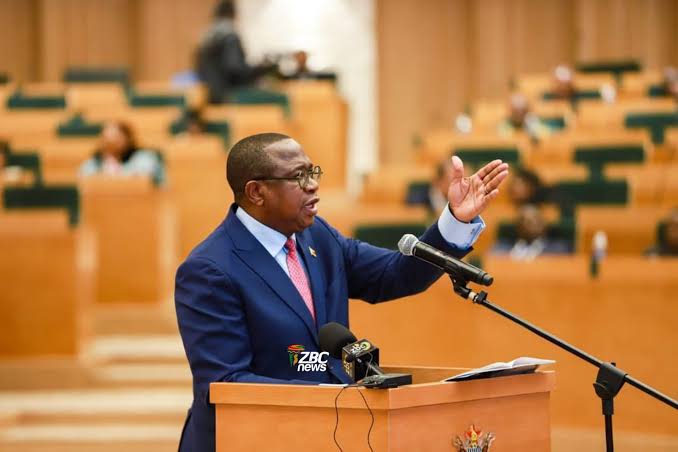
Zimbabwe will maintain the macroeconomic reforms that have contributed to recent economic stability while expanding social protection and investment promotion measures, Finance Minister Professor Mthuli Ncube said during the presentation of the country’s 2026 Mid-Term Budget and Economic Review. Addressing Parliament at the New Parliament Building on Thursday, Ncube said the government would preserve its current policy direction despite global economic uncertainty, citing stronger investor confidence and foreign direct investment inflows that reached US$965 million as evidence that economic reforms are beginning to yield results.
Presenting the review under the theme, Enhancing Drivers of Economic Growth and Transformation Towards Vision 2030, the minister said Zimbabwe had demonstrated resilience during the first half of 2026 despite external pressures, including geopolitical tensions in the Middle East and regional public health risks such as Ebola outbreaks that affected tourism and hospitality. According to the Treasury, maintaining macroeconomic discipline will remain central to supporting economic growth, improving fiscal stability and strengthening confidence among domestic and international investors.
The government’s commitment to policy continuity comes at a time when many African economies are navigating slower global growth, tighter financial conditions and elevated borrowing costs. For Zimbabwe, sustaining investor confidence has become particularly important as authorities seek to expand productive investment while reducing macroeconomic volatility that has characterised parts of the country’s recent economic history.
According to the mid-term review, government priorities for the remainder of 2026 will include supporting vulnerable households, improving access to healthcare, education and other public services, and strengthening programmes designed to promote inclusive economic development. These interventions are intended to ensure that economic gains are accompanied by broader social outcomes, particularly as inflationary pressures and global commodity market fluctuations continue to affect household purchasing power across many African countries.
The reported increase in foreign direct investment reflects improving investor sentiment towards sectors including mining, agriculture, manufacturing, infrastructure and renewable energy. Investment inflows remain an important source of capital for economies seeking to expand productive capacity without relying exclusively on public borrowing. In Zimbabwe’s case, attracting long-term private investment is viewed as critical to financing industrial development, modernising infrastructure and creating employment opportunities necessary to achieve the country’s Vision 2030 development agenda.
According to development finance institutions, macroeconomic stability has become one of the strongest determinants of investment decisions across emerging markets. Predictable fiscal policy, stable exchange rate management and consistent regulatory frameworks reduce investment risk, particularly for projects requiring significant upfront capital such as renewable energy generation, transport infrastructure and industrial manufacturing. Maintaining these conditions is increasingly important as African governments compete for global capital supporting the continent’s energy transition and infrastructure expansion.
The government’s emphasis on social protection also reflects a broader recognition that economic reforms require complementary measures to protect vulnerable communities during periods of adjustment. Targeted social spending can help preserve household consumption, improve human capital and strengthen long-term economic resilience, particularly where structural reforms affect employment patterns or public expenditure priorities.
The external environment nevertheless continues to present challenges. Conflict in the Middle East has contributed to uncertainty in international energy markets and supply chains, while disease outbreaks across parts of Africa continue to affect tourism, trade and regional mobility. These external shocks demonstrate the growing importance of building diversified economies capable of withstanding disruptions originating beyond national borders.
Zimbabwe’s policy direction also carries implications for ESG and sustainable development. Stable macroeconomic conditions provide a stronger foundation for investment in renewable energy, climate adaptation, sustainable agriculture and responsible mining, sectors that increasingly require long-term financing and policy certainty. Governance reforms, fiscal transparency and prudent public financial management remain essential components of attracting sustainable investment while ensuring that economic growth translates into measurable social and environmental outcomes.
 Across Africa, governments are increasingly seeking to balance fiscal consolidation with development spending as they respond to rising debt servicing costs and growing infrastructure needs. According to multilateral development lenders, improving domestic revenue mobilisation, maintaining expenditure discipline and attracting private capital will remain central pillars of economic policy across the continent over the coming decade.
For Zimbabwe, the mid-term budget review signals that authorities intend to remain on the current reform trajectory rather than introduce significant policy shifts during the remainder of the year. Whether higher investment inflows translate into sustained industrial expansion, stronger employment growth and improved public services will depend on the continued implementation of macroeconomic reforms alongside efforts to strengthen institutional capacity and maintain investor confidence. The government’s ability to balance fiscal discipline with inclusive development objectives will remain a key measure of progress towards Vision 2030 and its broader ambition of achieving resilient, sustainable economic transformation.


