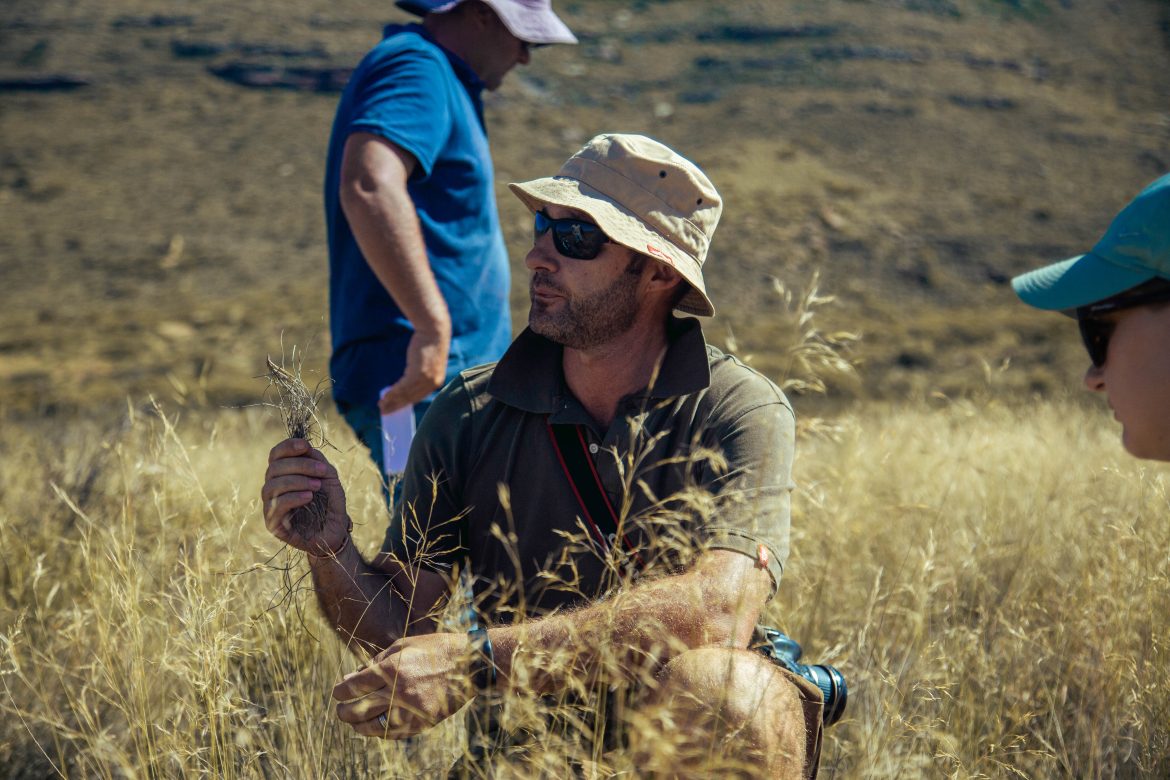
South African communal farming communities have received their first direct carbon revenue payments from a large-scale grassland restoration programme, marking a significant milestone for community-based carbon markets in Africa and demonstrating how high-integrity carbon finance can generate tangible economic returns alongside climate and biodiversity outcomes.
The inaugural payments, amounting to R2.7 million, were distributed to 15 participating communities through the Grassland Restoration and Stewardship in South Africa (GRASS) project after the sale of its first verified carbon credits. Developed by TASC Africa in partnership with Meat Naturally Africa, the initiative works with communal livestock farmers across the Eastern Cape and KwaZulu-Natal to restore degraded rangelands while strengthening rural livelihoods through regenerative agriculture.
The payments follow the verification and issuance of 266,254 Verified Carbon Units (VCUs) earlier this year, covering the project’s first monitoring period across more than 95,000 hectares of communal grazing land. The initiative currently spans approximately 180 communities and involves nearly 10,000 communal livestock farmers, making it one of Africa’s largest community-led grassland restoration programmes linked to voluntary carbon markets.
According to TASC Africa, the carbon credits are the first globally to receive certification under both the Climate, Community and Biodiversity (CCB) Standards and Verra’s VM0042 grassland restoration methodology, independently validating that the project delivers measurable climate mitigation, biodiversity conservation and socio-economic benefits simultaneously.
Unlike many conservation finance initiatives where revenues remain concentrated among project developers or intermediaries, the GRASS programme channels carbon income directly to participating grazing associations. Communities are free to determine how the funds are invested, with priorities already including professional herder salaries, improved fire management, livestock health programmes and other activities that enhance both grassland condition and agricultural productivity.
The revenue-sharing model has been designed to increase community participation over time. TASC estimates that participating communities will receive more than 50 per cent of cumulative net carbon revenues during the project’s first decade, rising to 80 per cent by year 20, creating a long-term financial incentive for sustainable land stewardship.

The initiative demonstrates the growing role of carbon finance in supporting nature-based solutions across Africa, where degraded rangelands continue to threaten agricultural productivity, biodiversity and rural incomes. South Africa’s communal grazing lands support millions of livestock and underpin livelihoods for thousands of rural households, yet many areas have experienced decades of overgrazing, declining vegetation cover and reduced ecosystem resilience.
Rather than focusing solely on emissions reductions, the GRASS project integrates regenerative grazing practices, improved livestock management, wildfire management and community-led ecosystem restoration to improve soil health and increase carbon sequestration while strengthening agricultural production. According to project partners, the carbon revenue supplements broader economic gains already generated through improved market access. Participating farmers have collectively earned approximately R56.4 million in additional income through mobile livestock auctions, expanded wool marketing opportunities and improved value chain access.
The programme has also invested significantly in building local technical capacity. Through its Ecoranger Programme, hundreds of community members have received training in regenerative grazing techniques, biodiversity monitoring, invasive species management and wildfire control. The approach seeks to ensure that restoration activities are implemented and monitored by local communities rather than external organisations, reinforcing long-term ownership of conservation outcomes.
The milestone comes as voluntary carbon markets increasingly shift towards projects that demonstrate measurable social and biodiversity benefits in addition to verified emissions reductions. Investors and buyers are placing greater emphasis on high-integrity credits that generate lasting development impacts while meeting rigorous environmental standards.
For Africa, where millions of hectares of degraded landscapes present significant restoration opportunities, community-centred carbon projects could become an increasingly important mechanism for mobilising climate finance while supporting rural development. Nature-based carbon projects have the potential to diversify rural incomes, strengthen ecosystem resilience and contribute to national climate commitments, provided that transparent governance and equitable benefit-sharing mechanisms remain central to project design.
Commenting on the achievement, Shelley Estcourt, Chief Executive Officer of TASC Africa, said the first payments demonstrate that high-quality carbon finance can generate direct and lasting value for the communities responsible for restoring and managing natural landscapes. She noted that while carbon credits are often viewed primarily through the lens of emissions markets, their long-term success depends on creating durable economic opportunities for local people whose stewardship underpins environmental restoration.
Sarah Frazee, Founder and Chief Executive Officer of Meat Naturally Africa, said the project illustrates how rural communities can become active partners in environmental restoration rather than passive beneficiaries. She added that giving communities a meaningful economic stake in restoration strengthens both conservation outcomes and rural development.
Looking ahead, the GRASS project aims to expand from its current footprint to two million hectares by 2030, with a long-term objective of mitigating approximately 14 million tonnes of carbon dioxide equivalent (CO₂e) during its first 30 years. If achieved, the expansion would position the initiative among Africa’s largest community-led nature-based carbon projects while providing a scalable model for linking ecosystem restoration with sustainable rural livelihoods.
As African countries seek innovative approaches to finance climate adaptation and land restoration, the South African experience highlights how well-designed carbon markets can move beyond emissions accounting to deliver practical economic benefits for communities that manage some of the continent’s most valuable natural ecosystems.