


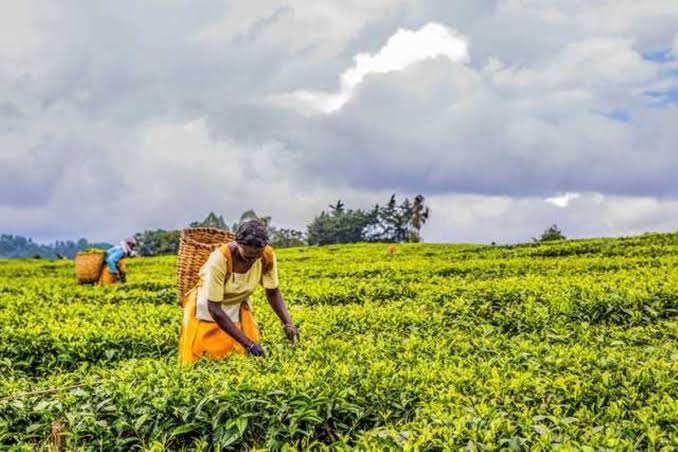
Kenya is reshaping the export strategy for its largest agricultural commodity after China and South Africa emerged as leading destinations for Kenyan tea, replacing Sudan and Iran, whose political and economic instability has disrupted trade. Trade Cabinet Secretary Lee Kinyanjui said the government has concluded import duty waivers with key partners to strengthen the competitiveness of Kenyan tea and reduce the sector’s exposure to shocks in traditional export markets.
The shift reflects a broader effort to diversify Kenya’s export base at a time when geopolitical tensions, conflict and changing global trade dynamics are creating greater uncertainty for commodity-dependent economies. According to the Ministry of Investments, Trade and Industry, expanding access to new markets has become a strategic priority as Kenya seeks to protect foreign exchange earnings while sustaining one of the country’s most important sources of rural employment and agricultural income.
Tea remains Kenya’s leading agricultural export and one of its largest contributors to export revenue. The industry supports millions of livelihoods directly and indirectly through smallholder farming, processing, transport, logistics and export services. However, heavy dependence on a limited number of overseas buyers has exposed the sector to disruptions beyond Kenya’s control. The recent instability in Sudan and prolonged economic challenges in Iran interrupted trade flows and highlighted the financial risks associated with concentrated export markets.
According to Lee Kinyanjui, the government has drawn important lessons from those disruptions and is pursuing a more diversified trade strategy that strengthens resilience against future geopolitical or economic shocks. The conclusion of import duty waivers is intended to improve price competitiveness while creating more predictable access to growing consumer markets.
China represents one of the world’s largest tea-consuming countries, while South Africa remains one of the continent’s most significant tea importers. Expanding exports to both markets provides Kenya with opportunities to reduce reliance on politically volatile destinations while accessing consumers with rising purchasing power and more diversified retail channels. The strategy also aligns with wider efforts across Africa to deepen intra-African trade under the African Continental Free Trade Area (AfCFTA) while expanding commercial links with Asian markets.
The changes come as Kenyan exporters continue to face structural challenges at home. Rising logistics costs, port handling charges, inland transport expenses and broader supply chain inefficiencies have reduced the competitiveness of Kenyan tea in global markets. According to industry stakeholders, transport costs increasingly influence purchasing decisions in price-sensitive international markets, particularly where competing tea-producing countries benefit from lower production or shipping costs.
Improving market access alone is therefore unlikely to resolve competitiveness challenges without parallel investment in domestic infrastructure. More efficient transport corridors, modernised port operations, digital customs systems and lower logistics costs could strengthen Kenya’s position in global agricultural trade while improving returns for farmers and exporters. Such investments also support broader economic objectives by facilitating exports across multiple sectors rather than benefiting tea alone.
The diversification strategy also reflects wider changes in global commodity trade. Climate-related production risks, supply chain disruptions and geopolitical fragmentation are encouraging exporting countries to reduce dependence on individual markets. For African economies whose fiscal revenues and foreign exchange earnings remain closely linked to agricultural exports, market diversification has become an important component of economic resilience.
Kenya’s experience illustrates the growing intersection between trade policy and sustainable development. Stable export earnings help finance rural development, strengthen household incomes and support investment across agricultural value chains. Diversified markets can also encourage producers to meet evolving international standards relating to quality, traceability and sustainability, strengthening the long-term competitiveness of African agricultural exports.
 The government’s approach may also reinforce regional economic integration. South Africa’s emergence as a major destination for Kenyan tea demonstrates the expanding commercial opportunities within African markets, supporting the objectives of AfCFTA to increase intra-African trade and reduce dependence on external markets. Stronger regional trade links can improve economic resilience by broadening demand while encouraging investment in value addition and processing closer to production centres.
Kenya’s decision to pursue new export markets comes as governments across Africa seek to build more resilient trade models capable of withstanding external shocks. Whether the strategy delivers sustained gains will depend on continued market diversification, improvements in domestic logistics, and investment across the tea value chain. Together, these measures could strengthen one of Kenya’s most valuable export industries while providing a model for commodity-dependent African economies seeking greater stability in an increasingly uncertain global trading environment.


