


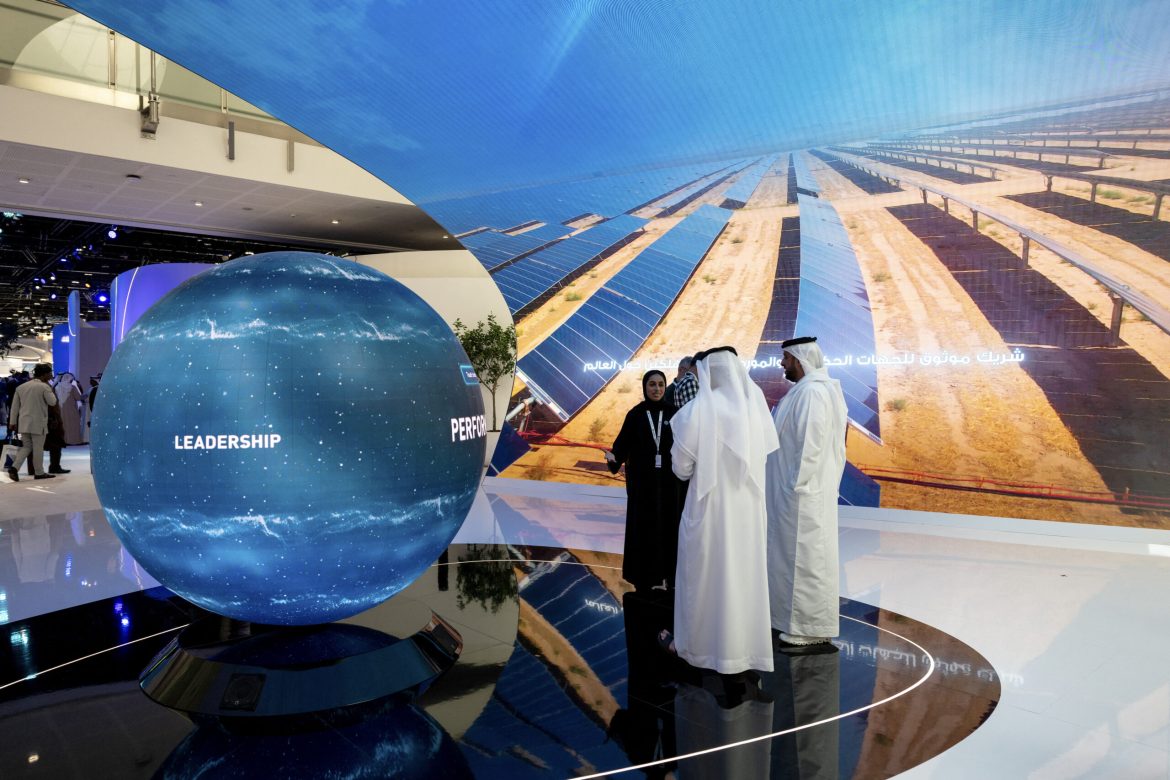
The United Arab Emirates (UAE) is embedding circular information technology practices into corporate strategy as businesses seek to reduce electronic waste, lower operating costs and meet increasingly stringent environmental, social and governance (ESG) expectations, a transition that offers important lessons for African economies pursuing digital transformation alongside sustainable development.
Driven by the UAE’s Net Zero by 2050 Strategy, organisations are moving beyond traditional energy-efficiency initiatives towards comprehensive lifecycle management of technology assets. The shift reflects a broader recognition that sustainability is becoming an operational and financial consideration rather than solely an environmental commitment, influencing investment decisions, corporate governance and long-term competitiveness.
 According to government policy, the UAE’s net-zero strategy is designed to reduce greenhouse gas emissions while stimulating innovation, attracting investment and strengthening economic resilience through low-carbon infrastructure and digital technologies. The strategy has accelerated demand for intelligent energy management systems, artificial intelligence applications and data-driven environmental monitoring that enable organisations to measure and reduce resource consumption more effectively.
Within the corporate technology sector, the transition is reshaping how enterprises manage information technology equipment throughout its lifecycle. Rather than relying on traditional procurement models based on fixed replacement schedules, businesses are increasingly extending the productive life of computers, servers and other digital infrastructure through maintenance, refurbishment, redeployment and responsible recycling. This approach seeks to maximise the economic value of existing assets while reducing demand for new materials and limiting electronic waste.
The change comes against the backdrop of rapidly growing global electronic waste volumes. The United Nations continues to identify e-waste as one of the fastest-growing waste streams worldwide, creating mounting environmental, public health and resource efficiency challenges. Recovering valuable materials from technology products and extending equipment lifecycles are increasingly viewed as essential components of the circular economy, reducing pressure on natural resources while lowering corporate operating costs.
According to Lavina Punjabi, Sustainability Lead for the Middle East and Africa at HP Inc., organisations are increasingly recognising that circularity should be integrated into technology design, procurement and recovery rather than treated as a separate environmental initiative. She argues that extending the useful life of technology assets enables companies to reduce waste while making more efficient use of existing resources, supporting both financial and environmental objectives.
This evolution reflects a broader change in corporate governance. Chief information officers are increasingly expected to align digital transformation strategies with organisational sustainability commitments, ensuring that technology investments contribute not only to operational efficiency but also to measurable ESG outcomes. Data analytics platforms, intelligent asset management systems and lifecycle monitoring technologies are becoming central tools for achieving these objectives.
The financial rationale is proving equally significant. Extending equipment lifecycles reduces capital expenditure associated with frequent hardware replacement while lowering disposal costs and decreasing demand for newly manufactured devices. According to industry practitioners, sustainability initiatives and financial performance are increasingly reinforcing rather than competing with one another, particularly where organisations are able to optimise utilisation of existing technology infrastructure.
Investor expectations are also reshaping corporate behaviour. ESG reporting has become an increasingly important component of business transparency, with investors, regulators and customers seeking evidence that companies can quantify environmental performance using credible, verifiable data. As a result, organisations are investing in digital systems capable of monitoring energy consumption, carbon emissions, resource efficiency and technology asset performance in real time.
According to sustainability practitioners, measurable progress often depends on establishing clear priorities supported by reliable performance indicators rather than pursuing multiple objectives simultaneously. This approach allows organisations to demonstrate tangible improvements while building institutional capacity for broader sustainability programmes over time.
The UAE government has reinforced this corporate transition through complementary public policy initiatives, including the UAE Green Agenda 2030, sustainable public procurement policies and smart city programmes designed to encourage environmentally responsible digital infrastructure. Industry collaboration has also expanded, with technology providers, businesses and policymakers sharing approaches to refurbishment, recycling and circular supply chain management that reduce material consumption while strengthening resource efficiency.
Although the policy environment differs across regions, the experience carries growing relevance for African economies. Rapid digitalisation across the continent is driving increased demand for information technology equipment in both the public and private sectors. At the same time, electronic waste management remains underdeveloped in many African countries, creating environmental challenges alongside rising demand for imported technology products.
According to development agencies, Africa is expected to experience sustained growth in digital infrastructure investment over the coming decade as governments expand broadband access, digital public services, financial technology platforms and artificial intelligence capabilities. Without corresponding improvements in lifecycle management, electronic waste generation is also likely to accelerate, increasing pressure on waste management systems, public finances and environmental protection.
Circular IT presents an opportunity to address multiple development priorities simultaneously. By extending equipment lifecycles and expanding refurbishment industries, African countries could reduce dependence on imported hardware, stimulate local repair and recycling businesses, create skilled employment and improve resource efficiency. Such approaches may also strengthen supply chain resilience while reducing foreign exchange requirements associated with repeated technology imports.
 The transition also aligns with broader sustainability objectives increasingly reflected in African policy frameworks, including Agenda 2063, national climate strategies and emerging sustainable finance initiatives. As financial institutions and investors place greater emphasis on ESG performance, businesses capable of demonstrating responsible resource management may gain improved access to international capital and global value chains.
The UAE’s experience illustrates that digital transformation and environmental sustainability need not evolve independently. Instead, technology governance, circular economy principles and resource efficiency can reinforce one another, enabling enterprises to improve financial performance while reducing environmental impacts. For African economies seeking to build competitive digital industries within increasingly resource-constrained environments, integrating circular IT practices into technology policy may become an important component of sustainable economic development.


