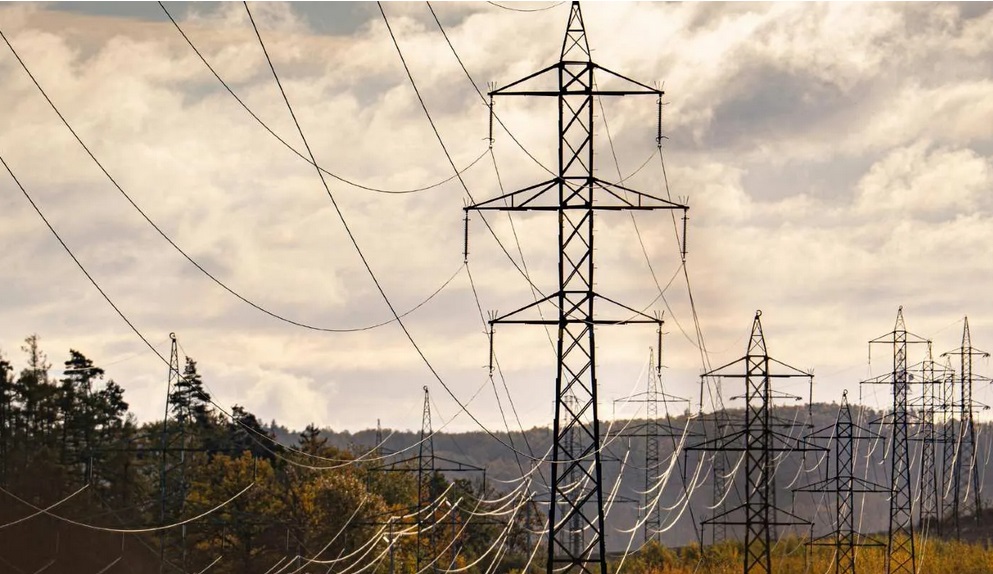
Southern Africa’s leading electricity utilities and regional grid operators will convene at the Power Africa Today Conference during African Energy Week (AEW) 2026 in Cape Town from 12–16 October, placing electricity transmission, grid modernisation and regional power market integration at the centre of discussions on Africa’s energy transition. The participation of senior executives from Eskom, the Uganda Electricity Transmission Company (UETCL), ZESCO and the Southern African Power Pool (SAPP) reflects a growing recognition that expanding electricity generation alone will not solve Africa’s energy deficit unless investments in transmission networks, cross-border interconnections and modern grid infrastructure keep pace. As governments accelerate renewable energy deployment and industrialisation, strengthening electricity networks is increasingly viewed as one of the continent’s most pressing infrastructure priorities.
Across Africa, energy investment has historically focused on increasing generation capacity through hydropower, solar, wind, natural gas and geothermal projects. However, inadequate transmission infrastructure continues to limit the ability of many countries to distribute electricity efficiently, integrate renewable energy and facilitate regional electricity trade. According to the International Energy Agency (IEA), strengthening transmission and distribution systems has become one of the most critical requirements for achieving universal electricity access while supporting economic growth and industrial development. The Power Africa Today conference comes at a time when several Southern African countries are implementing significant reforms aimed at modernising their electricity sectors and encouraging greater private sector participation.
Among the headline speakers is Dan Marokane, Group Chief Executive of Eskom, South Africa’s state-owned electricity utility, which has recorded a notable operational turnaround after years of severe electricity shortages and rotational load shedding. According to Eskom, the utility achieved more than 340 consecutive days without load shedding during the 2025–2026 financial year, while improving the energy availability factor of its generation fleet to 98.9%. The improved operational performance represents an important milestone for South Africa’s economy, where prolonged electricity shortages have constrained industrial production, discouraged investment and reduced economic growth over the past decade. Reliable electricity remains essential for sectors including mining, manufacturing, agriculture and digital services, all of which depend on stable power supplies to remain competitive.
Marokane is expected to discuss Eskom’s ongoing restructuring programme, which forms part of South Africa’s broader electricity market reforms. Under the government’s unbundling strategy, Eskom’s transmission assets are being separated into an independent system operator designed to facilitate greater competition, improve market transparency and enable increased participation by independent power producers. The conference will also feature Velaphi Ntuli, Eskom’s Chief Nuclear Officer at the Koeberg Nuclear Power Station, Africa’s only operational nuclear power facility.
Koeberg recently secured 20-year operating licence extensions for both of its generating units, ensuring continued production of approximately 1,860 MW of baseload electricity until 2045. Nuclear energy is expected to remain part of South Africa’s long-term electricity strategy, with the country’s updated Integrated Resource Plan (IRP 2025) proposing the development of an additional 5,200 MW of nuclear generation capacity over the coming decades. The inclusion of nuclear power in conference discussions reflects the increasingly diverse energy mix being considered across Africa, where governments are balancing renewable energy expansion with the need for reliable baseload electricity capable of supporting industrialisation and economic growth.
Uganda’s electricity sector will also feature prominently during the conference as the country seeks to address one of the continent’s most common infrastructure challenges: the gap between generation capacity and transmission infrastructure. Over the past decade, Uganda has more than doubled its installed electricity generation capacity, increasing from approximately 850 MW in 2014 to more than 2,050 MW. However, transmission expansion has not progressed at the same pace, limiting the efficient distribution of available electricity.
Richard Matsiko, Chief Executive Officer of the Uganda Electricity Transmission Company Limited (UETCL), will discuss efforts to close this infrastructure gap, including the Amari Power Transmission Project, a US$50 million partnership with United Kingdom-based Gridworks that became Africa’s first independently financed transmission project to enter construction in early 2026.
UETCL is also advancing the 298-kilometre Uganda–Tanzania electricity interconnector, scheduled to begin construction during the 2026–2027 period. Cross-border transmission infrastructure such as this plays an increasingly important role in regional electricity markets by enabling countries to trade surplus electricity, improve grid stability and optimise generation resources across national boundaries.
Zambia’s state-owned utility ZESCO will provide another perspective on electricity sector reform. Managing Director Justin Loongo is expected to outline recent regulatory changes designed to encourage greater private investment in renewable energy and electricity infrastructure. Among the reforms introduced by Zambia are open-access transmission regulations, allowing independent power producers to transport electricity through the national grid, together with a multi-year tariff framework aimed at providing greater pricing certainty for investors.
These reforms coincide with Zambia’s efforts to reduce dependence on hydropower following repeated droughts that have affected reservoir levels and electricity generation. The utility has set a target of developing 1,000 MW of solar generation by the end of 2026, while partnering with Stanbic Bank and GreenCo Power Services to develop renewable energy projects serving commercial and industrial customers. At the regional level, Stephen Dihwa, Executive Director of the Southern African Power Pool (SAPP) Coordination Centre, will discuss progress toward deeper regional electricity market integration.
Established in 1995, SAPP coordinates electricity planning, operations and cross-border power trading among member countries of the Southern African Development Community (SADC). Today, nine of the twelve participating member states are physically interconnected, enabling electricity trading that improves energy security while reducing the need for costly reserve generation capacity. Regional integration continues to accelerate. In February 2026, the Southern African Power Pool and the East Africa Power Pool (EAPP) signed an agreement aimed at harmonising cross-border electricity trading rules. The initiative is supported by a World Bank technical assistance programme intended to strengthen regional electricity markets and improve long-term energy security across multiple African regions. According to development finance institutions, regional power pools can significantly improve electricity affordability by allowing countries to share generation resources, reduce infrastructure duplication and increase the integration of renewable energy across interconnected grids.
The conference also highlights growing recognition that Africa’s energy transition depends not only on expanding renewable energy generation but also on building modern electricity networks capable of transporting that power efficiently across national borders.
Speaking ahead of the event, NJ Ayuk, Executive Chairman of the African Energy Chamber, emphasised the importance of coordinated action between governments, utilities and investors.
“Power utilities are at the heart of Africa’s industrial future. If we are serious about making energy poverty history, we need stronger collaboration between utilities, governments, investors and technology providers. Power Africa Today is where that collaboration takes shape.”
While the statement reflects the African Energy Chamber’s position, it also underscores a broader consensus emerging across the continent: achieving universal electricity access, supporting industrialisation and accelerating the energy transition will require coordinated investment not only in power generation but equally in transmission infrastructure, regulatory reform and regional market integration.
For Africa, where more than 600 million people still lack access to electricity according to the International Energy Agency, strengthening interconnected electricity systems remains one of the most significant opportunities to improve energy security, lower electricity costs and support sustainable economic development. As renewable energy investment continues to expand, the effectiveness of transmission networks and regional electricity markets will increasingly determine how successfully that new generation capacity translates into reliable, affordable power for industries, businesses and households.