


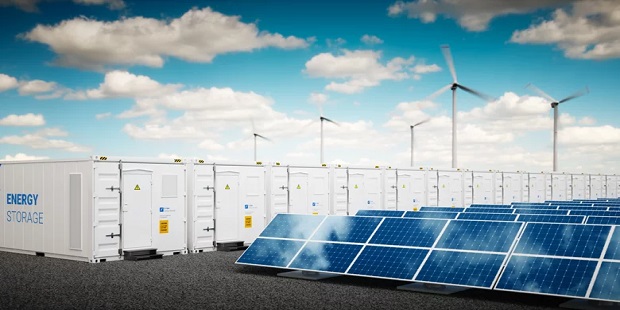
TotalEnergies has commissioned a 216-megawatt (MW) solar photovoltaic plant paired with a 500-megawatt-hour (MWh) battery energy storage system in South Africa, marking another significant milestone in the country’s transition toward a more resilient and lower-carbon electricity system. Announced on 16 July, the Hydra project in the Northern Cape will provide dispatchable renewable electricity to South Africa’s national grid under a 20-year power purchase agreement (PPA) with state-owned utility Eskom, highlighting the increasingly important role of private investment in addressing the country’s long-standing energy security challenges. As Africa’s largest electricity market continues to diversify its energy mix, projects that integrate renewable generation with battery storage are emerging as critical infrastructure capable of improving grid stability while supporting industrial growth and reducing dependence on coal-fired power generation.
Developed through a partnership between TotalEnergies, Hydra Storage Holding and Reatile Renewables, the project combines large-scale solar generation with battery storage technology designed to deliver reliable electricity during periods of peak demand. According to TotalEnergies, the facility will supply 75 MW of dispatchable renewable power to the national grid between 5:00 a.m. and 9:30 p.m., significantly extending the availability of solar-generated electricity beyond daylight hours through integrated battery storage.
Annual electricity generation is projected to exceed 400 gigawatt-hours (GWh), enough to supply electricity equivalent to approximately 200,000 South African households each year. While renewable generation continues to expand rapidly across Africa, projects capable of delivering electricity on demand rather than only when weather conditions permit are becoming increasingly valuable as electricity systems incorporate higher shares of intermittent renewable energy.
The Hydra facility represents an important evolution in renewable energy development by addressing one of the principal challenges associated with solar power—its variability. Battery energy storage systems enable excess electricity generated during periods of strong sunlight to be stored and released later when electricity demand increases or solar generation declines, improving overall grid reliability. For South Africa, where electricity shortages and load shedding have constrained economic growth for more than a decade, dispatchable renewable energy offers an opportunity to strengthen power system resilience without increasing dependence on fossil fuels.
The electricity generated by Hydra will be sold directly to Eskom under a 20-year power purchase agreement, providing long-term revenue certainty for investors while supporting South Africa’s broader electricity supply objectives. According to Magali Pailhé, Managing Director of TotalEnergies Southern Africa, the project strengthens both energy security and decarbonisation objectives.
“This project enables us to supply dispatchable renewable power to the South African grid, thereby strengthening the country’s energy security while decarbonizing its electricity generation,” she said during the project’s inauguration.
The ownership structure reflects growing collaboration between international energy companies and South African investors. TotalEnergies holds 35% of the project, with Hydra Storage Holding owning another 35%, while Reatile Renewables, one of South Africa’s leading black-owned renewable energy developers, holds the remaining 30% stake. Although TotalEnergies did not disclose the project’s total investment value or financing arrangements, the development illustrates how private capital continues to play an increasingly important role in expanding South Africa’s electricity infrastructure.
The Hydra project was developed under South Africa’s Risk Mitigation Independent Power Producer Procurement Programme (RMIPPPP), a government initiative introduced to accelerate new electricity generation capable of addressing immediate supply shortages through dispatchable technologies. Unlike earlier renewable procurement rounds that focused primarily on generation capacity, RMIPPPP places greater emphasis on projects capable of delivering electricity reliably during periods of high demand.
The programme complements the country’s long-running Renewable Energy Independent Power Producer Procurement Programme (REIPPPP), widely recognised as one of Africa’s most successful renewable energy procurement frameworks. Since its introduction in 2011, REIPPPP has attracted billions of dollars in private investment into utility-scale wind and solar projects, contributing significantly to South Africa’s expanding renewable energy capacity.
According to the International Renewable Energy Agency (IRENA), South Africa had 16,598 MW of installed renewable energy capacity by the end of 2025, the largest renewable energy portfolio on the African continent. This growth reflects sustained government efforts to diversify electricity generation while encouraging greater private sector participation in energy infrastructure. Despite this progress, coal continues to dominate South Africa’s electricity system, accounting for the majority of national power generation. While coal has historically supported industrial development and energy security, ageing infrastructure, operational challenges and rising maintenance costs have contributed to declining plant performance and persistent electricity shortages.
The country’s ongoing energy transition therefore involves balancing the need for reliable electricity supplies with commitments to reduce greenhouse gas emissions, improve air quality and modernise electricity infrastructure. Battery storage technologies are becoming increasingly central to achieving these objectives. According to the International Energy Agency (IEA), energy storage will play a critical role in enabling electricity systems worldwide to integrate larger shares of renewable energy while maintaining reliability and operational flexibility. For African electricity markets, battery storage offers additional advantages beyond emissions reduction. Storage systems can improve grid stability, reduce reliance on expensive diesel-powered backup generation and support electricity access in regions where transmission infrastructure remains limited.
South Africa’s experience is increasingly being observed by other African countries seeking to accelerate renewable energy deployment while maintaining stable electricity systems. As renewable energy investment expands across the continent, integrated projects combining solar generation with storage technologies are expected to become more common, particularly in countries pursuing industrialisation and economic diversification alongside climate commitments. The Hydra project also reflects broader changes within the global energy sector. International energy companies traditionally focused on oil and gas production are increasingly investing in renewable electricity generation, battery storage and integrated energy systems as part of wider business diversification strategies.
For TotalEnergies, the South African investment aligns with its international objective of expanding renewable electricity generation while maintaining a diversified energy portfolio. Across Africa, the company has invested in solar power, natural gas infrastructure and renewable energy projects aimed at supporting growing electricity demand while contributing to lower-carbon energy systems. From a regional perspective, projects such as Hydra carry implications beyond electricity generation alone. Reliable power remains one of the most significant determinants of industrial competitiveness, investment attractiveness and economic productivity across Africa. Persistent electricity shortages increase production costs, discourage manufacturing investment and constrain employment creation. Expanding dispatchable renewable energy therefore contributes not only to environmental objectives but also to broader economic development priorities, including infrastructure resilience, industrial expansion and improved energy affordability over the long term.
The project further demonstrates the effectiveness of public-private partnerships in mobilising investment into strategic infrastructure. Government procurement programmes such as RMIPPPP and REIPPPP provide policy certainty that enables private developers, financial institutions and international investors to participate in large-scale infrastructure projects while supporting national development priorities.
As South Africa continues implementing its Integrated Resource Plan (IRP) and broader energy transition strategy, investments combining renewable generation with energy storage are expected to play an increasingly important role in replacing ageing coal capacity while supporting a more flexible and resilient electricity system.For Africa more broadly, the commissioning of Hydra illustrates how renewable energy investment is evolving beyond simply adding generation capacity. Increasingly, the focus is shifting toward integrated energy systems capable of delivering reliable electricity, strengthening economic competitiveness and supporting sustainable development in rapidly growing economies.


