


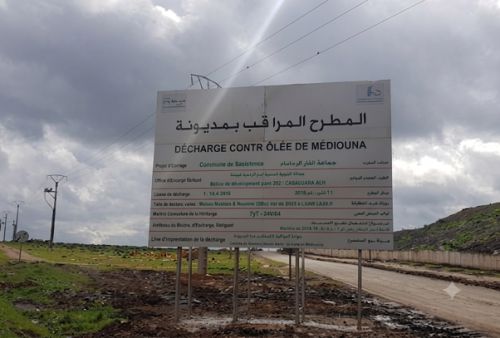
Casablanca has awarded a 33.5-year concession for the construction of a $1.5 billion waste-to-energy facility that is expected to become Africa’s first large-scale municipal waste-to-electricity power plant, marking a significant milestone in the continent’s efforts to address growing urban waste challenges while diversifying electricity generation. The concession, awarded to a consortium led by Swiss-Japanese waste recovery specialist Kanadevia Inova alongside Morocco’s Nareva, Japan’s Itochu Corporation and Moroccan construction firm Somagec, will see the development of a 115-megawatt power plant at the Mediouna landfill on the outskirts of Casablanca. According to Reuters, the project is expected to process approximately 1.5 million metric tonnes of municipal waste annually and generate enough electricity to supply nearly one million people once it reaches full commercial operation by mid-2030, subject to financial close.
The development represents one of the largest circular economy infrastructure investments on the African continent and reflects Morocco’s broader strategy to modernise waste management while expanding renewable and alternative energy sources. As African cities experience rapid urbanisation, municipal solid waste volumes continue to rise, placing increasing pressure on landfill capacity, public health systems and municipal budgets. According to the World Bank, Sub-Saharan Africa is projected to more than triple its annual waste generation by 2050, making sustainable waste management one of the continent’s fastest-growing infrastructure priorities.
The project will be located at the Mediouna landfill, Morocco’s largest disposal site, which has operated for decades and has nearly reached its storage capacity. Rising almost 70 metres high, the landfill has long been associated with environmental degradation, including groundwater contamination, methane emissions and pollution affecting nearby agricultural land. By converting municipal waste into electricity, the new facility is expected to reduce landfill dependence while capturing additional value from materials that would otherwise contribute to environmental pollution.
Under the concession agreement, the facility will generate electricity through a combination of municipal waste incineration, landfill gas recovery and on-site solar energy generation. The integrated design reflects an increasing trend among modern waste-to-energy facilities to diversify energy sources while improving overall plant efficiency. According to Itochu Corporation, electricity generated from the project will be sufficient to meet the needs of almost one-quarter of Casablanca’s population, making it one of Morocco’s largest independent power generation facilities outside conventional renewable energy projects.
The consortium has already secured long-term power purchase agreements with Morocco’s National Office of Electricity and Drinking Water (ONEE) and regional utility SRM Casablanca-Settat, providing an important commercial foundation for the project. While financial details of the agreements have not been disclosed, Bruno-Frédéric Baudouin, Chief Executive Officer of Kanadevia Inova, said financing is expected to be provided by Moroccan banks, with construction anticipated to begin once financial close is achieved.
The investment reinforces Morocco’s position as one of Africa’s leading markets for energy transition infrastructure. Over the past decade, the country has pursued an ambitious strategy to diversify its electricity mix through investments in solar, wind, green hydrogen and energy efficiency. According to the International Energy Agency (IEA), Morocco aims to increase renewable energy’s share of installed electricity capacity to more than 52 percent by 2030, reducing dependence on imported fossil fuels while strengthening energy security.
Although waste-to-energy contributes differently from conventional renewable technologies such as wind and solar, it is increasingly recognised as part of integrated urban resource management strategies, particularly where rapidly growing cities face mounting waste disposal constraints. According to the United Nations Environment Programme (UNEP), recovering energy from non-recyclable municipal waste can complement recycling programmes when integrated into broader circular economy policies that prioritise waste reduction, material recovery and responsible disposal.
Across Africa, interest in waste-to-energy infrastructure has grown steadily as governments seek solutions that simultaneously address waste management, electricity shortages and greenhouse gas emissions. However, relatively few projects have progressed to commercial scale because of high capital costs, financing constraints and the need for reliable waste collection systems capable of supplying sufficient feedstock throughout plant operations.
The Casablanca facility will become the continent’s first utility-scale municipal waste incineration plant dedicated primarily to electricity generation. South Africa currently hosts one of Africa’s best-known waste recovery facilities through the New Horizons Energy project in Athlone, Cape Town, which has operated since 2017. However, that facility produces biomethane from organic waste rather than electricity and processes significantly smaller waste volumes.
Morocco has also accumulated experience through smaller-scale waste-to-energy initiatives. The city of Fez has operated a landfill gas recovery facility since 2015, demonstrating the technical feasibility of converting municipal waste into useful energy while reducing methane emissions from landfill operations.
Despite its potential benefits, waste-to-energy technology continues to generate debate among policymakers, environmental researchers and civil society organisations. Critics argue that large-scale waste incineration can discourage recycling if facilities require continuous waste volumes to remain economically viable. Environmental groups have also raised concerns regarding particulate emissions, air quality and greenhouse gas releases, particularly where facilities lack advanced emissions control technologies.
Supporters, however, argue that modern waste-to-energy plants equipped with stringent emissions controls can play a complementary role within integrated waste management systems by diverting non-recyclable waste from landfills while generating reliable baseload electricity. According to the International Solid Waste Association, successful projects generally combine recycling, composting, waste reduction policies and energy recovery rather than relying on incineration alone.
For African economies, the Casablanca project illustrates the growing convergence between urban infrastructure, climate policy and resource efficiency. Rapid urban population growth is expected to significantly increase municipal waste generation across major African cities over the coming decades, requiring substantial investment in modern waste management infrastructure. At the same time, expanding electricity demand continues to place pressure on national power systems already facing generation deficits and rising fuel import costs.
If successfully implemented, the Casablanca project could provide a reference model for other African cities seeking to integrate waste management with energy generation. While replication will depend on financing availability, regulatory frameworks and environmental safeguards, the project demonstrates how municipal waste is increasingly being viewed not solely as an environmental liability but also as a strategic resource capable of supporting urban sustainability, energy diversification and long-term economic resilience.


