


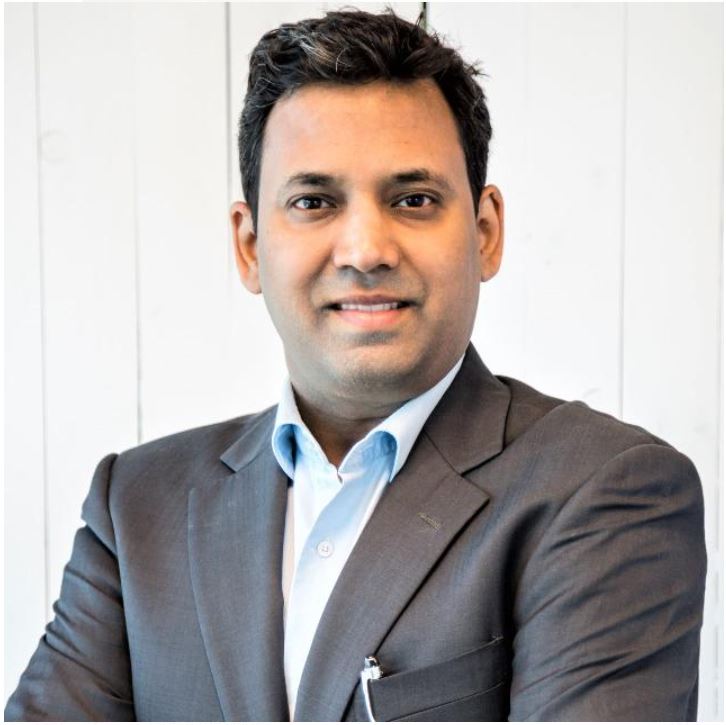
Spiro has appointed Ram Ramanathan as Group Chief Financial Officer as the African electric mobility company moves into a more capital-intensive phase of expansion, following major equity and debt financing rounds aimed at scaling electric motorcycles, battery-swapping infrastructure, manufacturing and energy systems across the continent.
Ramanathan joins Spiro with three decades of international finance and general management experience spanning strategic and operational finance, mergers and acquisitions, capital raising, treasury, corporate governance, financial transformation and performance management. Before joining Spiro, he held senior finance leadership positions at IFFCO Group, Landmark Group and PepsiCo, with experience across more than 90 countries, according to the company.
His appointment comes after a year in which Spiro has significantly expanded its access to institutional capital. The company closed a $270 million equity funding round in June 2026, comprising a previously announced $215 million raise and a further $55 million investment from Chinese growth-stage investor NewTrails Capital. The funding is being directed towards electric mobility and clean-energy infrastructure, including battery swapping, vehicle manufacturing and greater localisation of the company’s industrial footprint.

The company has also attracted debt financing from development-oriented investors. In February, Spiro announced a $50 million debt facility led by the African Export-Import Bank and Africa Go Green Fund, managed by Cygnum Capital, with Nithio participating as a co-lender. The financing was intended to support the expansion of battery-swapping infrastructure and clean-energy integration across its African markets.
In September, Africa Go Green Fund increased its commitment to Spiro by another $18 million, taking its total financing commitment to $36 million. Cygnum Capital said the additional facility would support the deployment of more electric motorcycles and expansion of battery-swapping infrastructure in Uganda and Rwanda. By September, Spiro said it had deployed more than 135,000 electric motorcycles and completed more than 50 million battery swaps across its seven active markets.
The scale of these investments illustrates a broader change in the economics of electric mobility in Africa. The sector is increasingly moving beyond pilot projects and small-scale fleet deployments towards infrastructure businesses that require sustained investment in vehicles, batteries, manufacturing capacity, software, energy systems and distribution networks.
Read more:Africa go green fund doubles Spiro financing to $36 million as east Africa’s electric mobility market scales
That transition also changes the financial requirements of mobility companies. For operators such as Spiro, growth is not limited to selling vehicles. Battery-swapping networks require upfront infrastructure expenditure and ongoing maintenance, while manufacturing expansion brings additional working-capital requirements, supply-chain commitments and foreign-exchange exposure. Expansion across multiple African markets can also create different regulatory, tax, currency and financing conditions that need to be managed at group level.
Ramanathan’s mandate therefore extends beyond conventional financial reporting. Spiro said he will oversee financial planning and performance, capital allocation, treasury, governance and financing as the company continues to invest in its vehicle platform, battery-swapping network, manufacturing operations and energy infrastructure.
The appointment comes as investors increasingly assess whether Africa’s electric mobility companies can translate rapid deployment into commercially sustainable businesses. Impact Fund Denmark, which invested $40 million in Spiro in June, said the investment would support the continued rollout of electric motorcycles and battery-swap stations, particularly in Kenya, Rwanda and Uganda. The institution has also highlighted the scale of Africa’s motorcycle market, where more than 30 million motorcycles are estimated to operate, most still powered by fossil fuels.
For African economies, the financial case for electric mobility is closely connected to transport costs, fuel-import dependence and industrial development. Electric motorcycles can reduce exposure to petrol prices for commercial riders, while locally assembled vehicles, batteries and associated infrastructure could create opportunities for manufacturing, technical skills and supply-chain development. Spiro has increasingly positioned its model around this combination of mobility, energy infrastructure and industrial localisation.
The company has already expanded beyond its original markets. Spiro said in 2026 that it was operating across seven African countries, while its latest funding is intended to support further geographic expansion and deepen its manufacturing and infrastructure footprint. The company has also identified the localisation of vehicle design, development and manufacturing as part of its wider strategy.
The financing environment surrounding Spiro also points to the growing role of blended and development-oriented capital in Africa’s clean transport transition. The Africa Go Green Fund focuses on commercially viable businesses capable of reducing greenhouse-gas emissions, while the Fund for Export Development in Africa has invested in Spiro as part of its broader mandate to support African industrialisation and export development. FEDA appointed Emmanuel Assiak as its chief executive in 2026 as the institution expanded its investment activities across strategic sectors.
The challenge now is to ensure that capital deployed into electric mobility produces durable operating businesses rather than simply rapid asset growth. That will depend on utilisation rates, battery economics, network density, vehicle affordability, maintenance, electricity availability, manufacturing efficiency and the ability of operators to manage currency and financing risks across different markets.
For Spiro, Ramanathan’s arrival places financial management at the centre of that next phase. His experience in capital raising, treasury, transactions and corporate governance comes as the company manages a larger balance sheet and a more complex operating footprint.
As African cities seek alternatives to petrol and diesel-powered transport, electric mobility is increasingly becoming an infrastructure and industrial-finance question as much as a technology story. Spiro’s latest leadership appointment reflects that shift: the next stage of the continent’s e-mobility market will require companies to demonstrate not only how quickly they can deploy electric vehicles, but how effectively they can allocate capital, build resilient infrastructure and convert expansion into sustainable long-term growth.


