


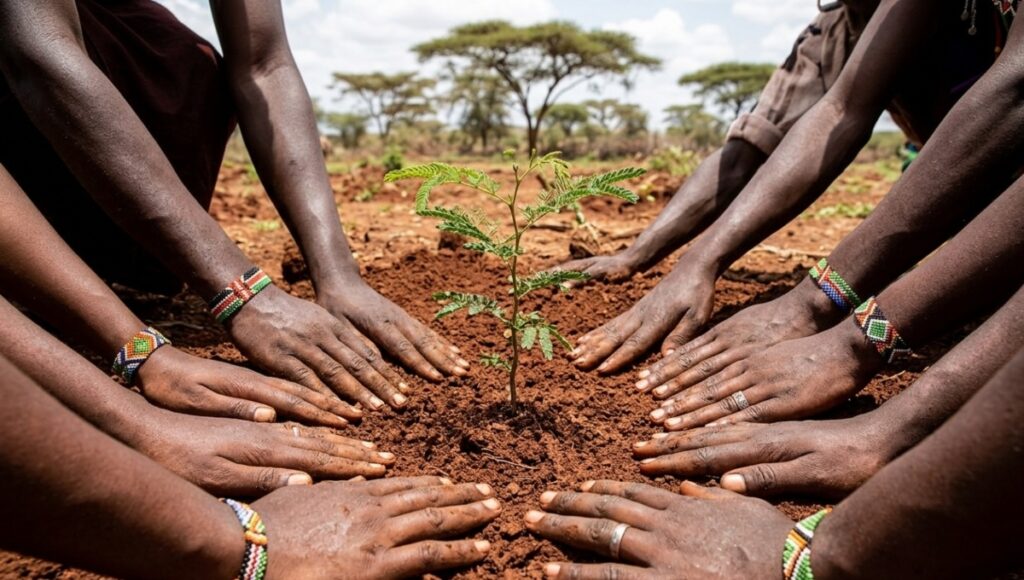
Kenya is increasingly positioning its ambitious 15 billion tree planting programme as both an environmental restoration initiative and an economic development strategy, with policymakers seeking to build a “tree economy” capable of generating jobs, strengthening rural livelihoods and supporting climate resilience. The initiative, which forms part of the country’s broader climate action agenda, aims to restore degraded landscapes while creating commercial opportunities across forestry value chains, including seedling production, agroforestry, sustainable timber, carbon markets and ecosystem services.
The government’s approach reflects a growing recognition that large-scale reforestation programmes require viable economic incentives to achieve long-term success. Rather than viewing tree planting solely as a conservation exercise, Kenya is encouraging investment in forestry-based enterprises that can generate income for households, community organisations and private businesses while contributing to national climate commitments. According to government officials, integrating commercial value chains into restoration efforts is expected to improve participation rates, increase tree survival and strengthen local ownership of afforestation programmes.
The 15 billion tree initiative was launched to increase Kenya’s national tree cover and help reverse decades of deforestation, land degradation and biodiversity loss. Forest degradation has affected water catchments, agricultural productivity and ecosystem stability across several regions, increasing the country’s vulnerability to climate-related shocks including droughts, floods and declining rainfall reliability. Restoring forest ecosystems is therefore viewed not only as an environmental objective but also as a critical investment in long-term economic resilience.
According to Kenya’s climate and forestry strategies, expanding tree cover supports multiple national priorities simultaneously. Forests play an important role in regulating water systems, protecting soils, reducing erosion and maintaining biodiversity, while also providing timber, fuelwood, non-timber forest products and income opportunities for rural communities. Increasing tree cover further strengthens Kenya’s ability to meet its Nationally Determined Contributions (NDCs) under the Paris Agreement by expanding natural carbon sinks capable of absorbing greenhouse gas emissions.
The economic dimension of the strategy centres on developing what policymakers describe as a tree economy. This includes expanding commercial nurseries, improving access to quality seedlings, promoting agroforestry among farmers, strengthening sustainable wood processing industries and supporting enterprises involved in forest restoration services. Such activities have the potential to diversify rural incomes while reducing pressure on natural forests through more sustainable production systems.
Agroforestry is expected to play a particularly significant role. Integrating trees into agricultural landscapes can improve soil fertility, enhance moisture retention, increase resilience against climate variability and provide farmers with additional sources of income through fruit production, timber harvesting and carbon financing. These benefits are especially important in regions where climate change continues to affect agricultural productivity and food security.
Carbon markets may also become an increasingly important component of Kenya’s tree economy. As international demand for high-quality carbon credits grows, well-managed reforestation and landscape restoration projects could create additional revenue streams for communities and private investors. However, environmental economists caution that participation in voluntary carbon markets will require robust monitoring systems, transparent governance and equitable benefit-sharing arrangements to ensure that local communities receive meaningful economic returns.
Financing remains central to the programme’s success. Establishing and maintaining billions of trees requires sustained investment in seedlings, extension services, monitoring systems and community mobilisation over many years. Kenya is therefore seeking to leverage public funding alongside private capital, development finance and climate finance instruments capable of supporting long-term restoration. International development institutions have increasingly recognised nature-based solutions as cost-effective investments that simultaneously address climate adaptation, biodiversity conservation and rural development.
The initiative also aligns with broader continental priorities under the African Union’s Agenda 2063 and the African Forest Landscape Restoration Initiative (AFR100), through which several African countries have committed to restoring millions of hectares of degraded land. Across the continent, governments are increasingly framing forest restoration as an economic opportunity capable of supporting green industrialisation, sustainable agriculture and climate adaptation rather than as a purely environmental obligation.
Successful implementation, however, will depend on effective governance. Environmental experts note that tree planting targets alone do not guarantee long-term ecological outcomes if newly planted forests are not properly managed. High seedling mortality, weak monitoring systems, land tenure disputes and inadequate maintenance have limited the effectiveness of previous afforestation campaigns in several countries. Sustained community participation, appropriate species selection and long-term maintenance programmes remain essential to achieving meaningful restoration outcomes.
 The initiative also carries implications for Kenya’s broader economic strategy. Nature-based sectors are increasingly viewed as components of the country’s emerging green economy, capable of attracting climate finance while supporting employment creation in rural areas. Developing forestry value chains could stimulate investment in wood processing, sustainable construction materials, ecotourism and ecosystem restoration services, contributing to economic diversification while strengthening environmental resilience.
For Africa more broadly, Kenya’s tree economy strategy illustrates the growing convergence between climate policy and economic planning. As governments seek practical pathways to achieve emissions reduction targets while addressing unemployment and environmental degradation, restoration programmes that generate measurable economic value may become increasingly important policy tools. The success of Kenya’s approach will ultimately depend on its ability to demonstrate that environmental restoration and inclusive economic development can reinforce one another, transforming large-scale tree planting from a conservation target into a sustainable engine for long-term green growth.


