


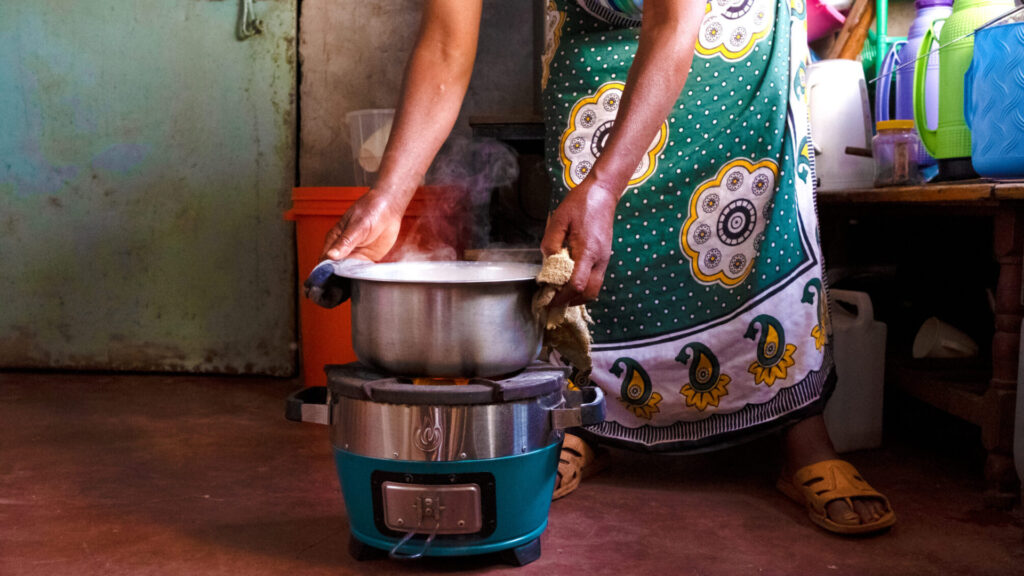
Africa’s emerging carbon market has taken another step towards commercial maturity after climate finance platform Africa Go Green partnered with clean energy company BioLite to support the rollout of clean cooking solutions in Zambia through an innovative financing structure backed by Article 6.2 of the Paris Agreement. The initiative introduces a debt-financing model anchored by the future purchase of internationally transferred mitigation outcomes (ITMOs), demonstrating how carbon markets can mobilise private capital for climate action while addressing one of Africa’s most pressing public health and environmental challenges.
The transaction combines concessional debt finance, an Article 6.2 carbon credit offtake agreement and insurance mechanisms designed to reduce investment risk. According to the project partners, the structure enables BioLite to accelerate the deployment of clean cooking technologies across Zambia while providing investors with greater certainty over future carbon revenue streams. The model seeks to address a long-standing challenge facing voluntary and compliance carbon markets: the limited availability of affordable upfront capital needed to finance projects before carbon credits are generated.
Clean cooking remains one of Africa’s largest untapped climate and development opportunities. Across the continent, hundreds of millions of households continue to rely on charcoal, firewood and other traditional biomass fuels for daily cooking. The World Health Organization estimates that household air pollution from these fuels contributes to millions of premature deaths globally each year, while unsustainable wood harvesting continues to drive deforestation, biodiversity loss and rising greenhouse gas emissions. In Zambia, where biomass remains the dominant household energy source, expanding access to cleaner technologies carries implications not only for climate mitigation but also for public health, gender equality and rural livelihoods.
The financing model leverages provisions under Article 6.2 of the Paris Agreement, which allows countries to cooperate in achieving their climate commitments through the transfer of verified emissions reductions. Unlike traditional voluntary carbon markets, Article 6.2 introduces government-to-government oversight and accounting mechanisms intended to strengthen environmental integrity, avoid double counting and improve investor confidence. By securing a forward purchase agreement for future carbon credits, project developers gain access to predictable revenues that can support debt servicing and unlock commercial financing at an earlier stage of project implementation.
According to project participants, the addition of insurance further strengthens the financing framework by reducing risks associated with carbon delivery and performance. This combination of credit enhancement and future carbon revenues illustrates how climate finance is evolving beyond grant-based support towards market-driven investment structures capable of attracting institutional capital. The approach reflects broader efforts to position carbon markets as scalable financing tools rather than standalone environmental mechanisms.
The project also aligns with growing international efforts to increase investment in Africa’s clean energy transition while supporting national climate commitments under the Paris Agreement. Many African governments have identified clean cooking as a priority within their Nationally Determined Contributions (NDCs), recognising its potential to reduce emissions while improving health outcomes and strengthening energy access. However, financing constraints have continued to limit deployment at the scale required to meet these objectives.
Development finance institutions, climate funds and private investors have increasingly argued that innovative financial instruments will be essential to bridge Africa’s climate investment gap. The blended structure adopted in Zambia demonstrates how carbon finance, when combined with debt and risk-sharing mechanisms, can create commercially viable projects capable of delivering both environmental and developmental outcomes. Such models may become increasingly relevant as Article 6 carbon markets expand and countries seek practical pathways to finance implementation of their climate commitments.
For African economies, the implications extend beyond emissions reductions. Stronger carbon market infrastructure has the potential to generate new investment flows, stimulate local manufacturing of clean energy technologies, create employment opportunities across supply chains and strengthen domestic financial markets. It also provides governments with an opportunity to leverage climate assets more strategically while maintaining alignment with national development priorities.
 The Zambia initiative arrives as international carbon markets continue transitioning towards higher standards of transparency, accountability and regulatory oversight. As Article 6 implementation gathers pace globally, projects capable of demonstrating measurable climate benefits alongside tangible social and economic impacts are expected to attract increasing attention from investors seeking credible transition assets.
Whether the financing model proves replicable across other African markets will depend on regulatory certainty, project quality and the continued evolution of international carbon accounting rules. Nevertheless, the partnership between Africa Go Green and BioLite offers an early example of how Article 6.2 can move beyond policy discussions into practical financial structures capable of accelerating Africa’s low-carbon development while strengthening confidence in the continent’s growing carbon economy.


