


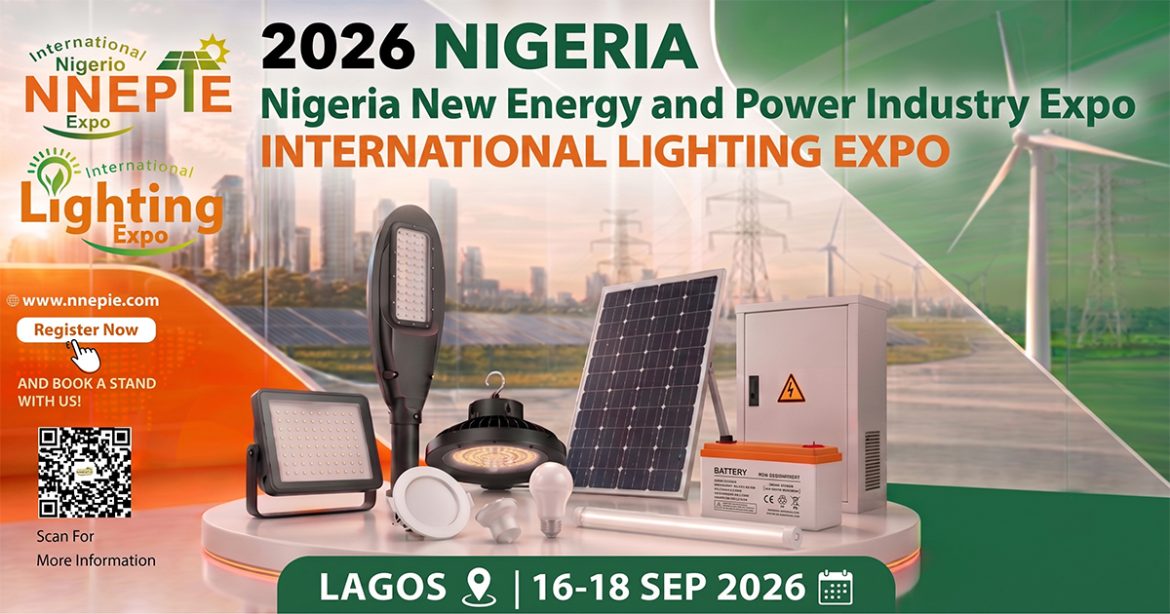
The 2026 Nigeria International Power Energy Expo (NNEPIE 2026), being held alongside the 2026 Nigeria International Lighting Expo (NILE 2026), is expected to bring together global manufacturers, investors, utilities, policymakers and technology providers seeking opportunities in one of Africa’s fastest-growing energy markets.
Scheduled to take place from 16–18 September 2026 at the Landmark Centre in Lagos, the co-located exhibitions come at a time when Nigeria and the wider Economic Community of West African States (ECOWAS) are intensifying investments in electricity generation, renewable energy, energy storage, transmission infrastructure and energy-efficient buildings. The event is expected to provide a platform for commercial partnerships and policy dialogue as governments across the region pursue ambitious electrification and industrialisation agendas while strengthening resilience against climate change.
The organisers describe the event as the only integrated business-to-business platform in West Africa bringing together stakeholders across the entire electricity value chain—from power generation and smart grids to battery storage, electric mobility and advanced lighting technologies. While trade exhibitions primarily serve commercial objectives, the growing scale of the event reflects increasing international investor interest in Africa’s expanding energy sector and the continent’s broader transition towards sustainable infrastructure.
Nigeria’s strategic importance in Africa’s energy landscape underpins the significance of the exhibition. As Africa’s largest economy and its most populous nation, with an estimated population exceeding 230 million, Nigeria faces one of the world’s largest electricity access and supply gaps. According to the World Bank, despite significant progress in expanding electricity access, millions of Nigerians continue to experience unreliable power supply, constraining industrial productivity, business competitiveness and economic growth.
The country’s installed electricity generation capacity significantly exceeds actual available generation, with grid output typically ranging between 4,000 and 5,000 megawatts, far below estimated national demand exceeding 20,000 megawatts. According to the International Energy Agency (IEA), addressing Nigeria’s electricity deficit will require sustained investment across generation, transmission and distribution infrastructure, alongside greater deployment of decentralised renewable energy systems capable of reaching underserved communities.
The gap has accelerated private sector investment in distributed solar energy, battery storage and hybrid mini-grid solutions that can provide reliable electricity independent of the national grid.
According to the organisers, falling technology costs have strengthened the commercial case for renewable energy deployment. Commercial and residential solar-plus-storage systems now deliver electricity at significantly lower costs than diesel-powered generators, which have historically served as the primary backup power source for households and businesses across Nigeria.
The economics of decentralised energy continue to improve globally. According to the International Renewable Energy Agency (IRENA), the cost of utility-scale solar photovoltaic electricity has declined by approximately 90% over the past decade, while battery storage costs have also fallen substantially, making renewable energy increasingly competitive with conventional fossil fuel generation.
This transition is receiving additional support from international development finance.
The World Bank has committed approximately US$470 million to strengthen Nigeria’s electricity sector through programmes supporting improved electricity access, grid expansion and private sector participation. These investments form part of broader international efforts to accelerate universal energy access while supporting climate-resilient infrastructure development.
Lighting technologies also represent a rapidly expanding market opportunity.
According to industry data cited by the organisers, Nigeria imported approximately US$200 million worth of lighting products in 2023, with high-efficiency LED technologies accounting for the majority of demand. Rising urbanisation, commercial construction, public infrastructure development and government energy efficiency programmes continue to increase demand for advanced lighting solutions capable of reducing electricity consumption while improving urban services.
The International Energy Agency estimates that lighting accounts for approximately 15% of global electricity consumption, making energy-efficient LED technologies one of the most cost-effective interventions for reducing energy demand and lowering greenhouse gas emissions. Across Africa, governments are increasingly integrating efficient lighting standards into national energy policies to improve electricity access while reducing pressure on constrained power systems.
The Lagos exhibition reflects these evolving market dynamics.
Organisers project participation from more than 200 exhibitors representing 28 countries and regions, with attendance expected to exceed 8,000 professional visitors over three days. Participants are expected to include engineering, procurement and construction (EPC) contractors, electricity utilities, renewable energy developers, electrical engineers, urban planners, property developers, distributors, government agencies and investors from across West Africa.
The event is also expected to strengthen regional trade integration within the Economic Community of West African States (ECOWAS) by facilitating cross-border commercial partnerships between manufacturers and distributors serving markets including Ghana, Côte d’Ivoire, Senegal and other rapidly expanding economies.
Several internationally recognised manufacturers have confirmed participation, including companies specialising in photovoltaic technologies, battery energy storage systems, electrical equipment and smart lighting solutions. Their participation reflects growing confidence in West Africa’s long-term energy investment potential despite ongoing infrastructure and financing challenges.
According to the African Development Bank (AfDB), Africa requires approximately US$130–170 billion annually in infrastructure investment, with the electricity sector accounting for one of the largest financing needs. Expanding public-private partnerships and strengthening regional electricity markets are therefore becoming increasingly important for accelerating investment while improving energy security.
The exhibition will showcase technologies spanning five major areas of the modern energy ecosystem.
Displays will include smart grid infrastructure, transformers, switchgear, industrial generators and uninterruptible power systems alongside next-generation solar photovoltaic modules, hybrid inverters, solar tracking systems and decentralised microgrids designed for rural and commercial applications.
Energy storage technologies are expected to feature prominently, reflecting the growing importance of batteries in supporting renewable energy integration. Exhibitors will present utility-scale storage systems, commercial battery solutions, lithium iron phosphate (LiFePO₄) technologies, sodium-ion batteries and portable energy storage systems suitable for residential and off-grid applications.
Smart lighting innovations will also occupy a significant portion of the exhibition, including LED commercial lighting, solar-powered streetlights, intelligent building lighting controls and industrial illumination systems designed to improve energy efficiency across urban infrastructure. Emerging technologies supporting digitalisation of electricity networks—including electric vehicle charging infrastructure, digital twin power grids and cloud-based energy management systems will further illustrate how digital innovation is reshaping electricity systems globally. Beyond product exhibitions, organisers have scheduled a series of technical forums, policy discussions and business networking sessions intended to facilitate dialogue between governments, investors, technology providers and development partners.
These forums are expected to examine subjects including electricity market reforms, renewable energy financing, energy storage deployment, low-carbon industrialisation, climate-resilient infrastructure and digital transformation of power systems. Dedicated business matchmaking sessions will also enable manufacturers and distributors to negotiate commercial partnerships supporting technology transfer and regional market expansion.
The event comes as ECOWAS countries pursue greater regional electricity integration through initiatives including the West African Power Pool (WAPP), which aims to establish an interconnected regional electricity market capable of improving energy security while reducing generation costs through cross-border electricity trade.
According to the ECOWAS Centre for Renewable Energy and Energy Efficiency (ECREEE), expanding renewable energy deployment and strengthening regional transmission infrastructure remain central to achieving universal electricity access while supporting economic growth and climate resilience across West Africa.
For Africa, exhibitions such as NNEPIE and NILE increasingly represent more than commercial trade fairs. They provide practical platforms where technology providers, policymakers, financiers and infrastructure developers can align investment with national energy priorities, strengthen regional supply chains and accelerate deployment of solutions addressing persistent electricity deficits.
As electricity demand continues to rise alongside rapid urbanisation, industrial expansion and digital transformation, the technologies and partnerships emerging from regional industry platforms are expected to play an increasingly important role in shaping West Africa’s energy future. Their long-term significance will depend not only on commercial agreements signed during the event but also on how effectively those partnerships contribute to expanding affordable electricity access, strengthening grid resilience and supporting sustainable economic development across one of Africa’s fastest-growing regions.


