


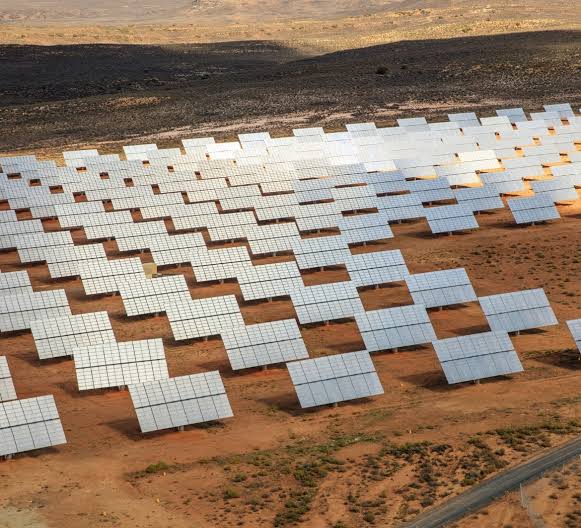
Africa’s development finance landscape is undergoing a structural shift as development finance institutions (DFIs) increasingly concentrate renewable energy investment in markets that combine political stability, regulatory certainty and commercially viable project structures. Kenya has emerged as one of the clearest examples of this trend in 2026, demonstrating how blended finance, distributed energy and institutional reforms are reshaping capital allocation across Africa’s energy transition.
Rather than signalling a retreat from African energy markets, international development finance is becoming more selective in where and how capital is deployed. According to analysis of recent financing trends, DFIs are prioritising countries capable of reducing sovereign risk, demonstrating stable regulatory environments and developing scalable revenue models that attract commercial investors alongside concessional finance. Kenya, which accounts for nearly half of all DFI commitments into East Africa, has increasingly positioned itself as a regional platform for renewable energy investment through decades of institutional reforms, expanding electrification and sophisticated blended finance structures.
This shift comes as Africa faces an unprecedented financing challenge. While the continent possesses some of the world’s largest renewable energy resources, investment continues to fall significantly short of what is required to meet growing electricity demand and climate objectives. According to available estimates, public and development finance for Africa’s energy sector has declined by roughly one-third over the past decade, reaching approximately US$20 billion in 2024. At the same time, annual energy investment requirements are expected to exceed US$180 billion by 2030, with clean energy and electricity grid infrastructure accounting for the majority of future capital needs.
The growing financing gap has forced development finance institutions to become increasingly strategic in capital allocation. Rather than distributing concessional resources broadly across high-risk environments, DFIs are focusing on markets capable of mobilising substantially larger volumes of commercial capital through carefully structured investment platforms. This evolution reflects changing institutional mandates that increasingly prioritise catalytic finance over direct project lending.
Kenya illustrates how long-term institutional development can progressively reduce investment risk. According to the International Energy Agency, the country has become one of Africa’s most advanced renewable energy markets, driven by geothermal development, wind generation and rapidly expanding distributed solar systems. Electrification has risen substantially over the past decade, creating predictable customer payment histories and revenue streams that improve investor confidence in off-grid and distributed energy projects.
The country’s renewable energy sector has also benefited from sustained collaboration between government agencies, multilateral lenders and private investors. Early interventions focused on reducing political and sovereign risks through guarantees and insurance instruments. Over time, these mechanisms have evolved into larger blended finance platforms that combine concessional funding, commercial debt and private equity to finance increasingly complex renewable energy portfolios.
Read also: https://delphos.co/news/blog/dfi-investment-in-africa-energy-what-kenyas-2026-deal-reveals/
A recent example has been the expansion of distributed renewable energy platforms across East Africa, where development finance institutions have anchored investment structures designed to attract institutional investors. These financing arrangements typically position concessional capital in subordinate or mezzanine layers, allowing commercial lenders to participate with reduced exposure to project risk. According to blended finance practitioners, this sequencing enables significantly larger volumes of private capital to flow into sectors that would otherwise remain commercially unattractive.
The importance of electricity networks has also become increasingly evident. While generation capacity continues to expand across several African markets, transmission and distribution infrastructure remains one of the most significant constraints to integrating renewable energy at scale. According to the International Energy Agency, investment in electricity grids must accelerate substantially over the remainder of the decade if African countries are to accommodate intermittent renewable generation while maintaining system reliability and expanding electricity access.
These structural constraints extend beyond power generation. Reliable energy infrastructure increasingly underpins industrial development, digital economies, mining, agricultural processing and the manufacturing sectors that many African governments view as central to economic diversification. As a result, energy investment is becoming closely linked with broader industrial policy and regional trade strategies, particularly under the African Continental Free Trade Area (AfCFTA).
Development finance institutions are similarly broadening their investment priorities beyond electricity generation alone. Natural gas infrastructure, battery storage, electricity transmission, renewable manufacturing, electric mobility and critical minerals processing are increasingly viewed as interconnected components of Africa’s long-term energy transition. Financing strategies now seek to support entire value chains rather than isolated infrastructure assets.
The growing emphasis on market selectivity also reflects broader geopolitical changes affecting global capital flows. Rising sovereign debt levels across many emerging economies, elevated global interest rates and shifting climate finance priorities have increased scrutiny over project bankability. Investors increasingly require evidence of stable policy environments, transparent regulation, credible counterparties and predictable revenue models before committing long-term capital.
For African policymakers, Kenya’s experience demonstrates that reducing financing costs requires sustained institutional development rather than isolated investment incentives. Stable regulatory frameworks, transparent procurement systems, functioning utilities and credible energy planning reduce risk perceptions that ultimately determine borrowing costs. According to industry estimates, sovereign and political risk account for the majority of financing costs for renewable energy projects across much of Africa, often outweighing technology-specific considerations.
 The implications extend well beyond Kenya. Countries seeking to expand renewable energy investment may increasingly compete not only on natural resource potential but also on institutional quality and financial credibility. Markets capable of demonstrating regulatory consistency, effective governance and commercially structured energy projects are likely to attract disproportionate shares of limited concessional finance while leveraging significantly larger pools of private investment.
As Africa seeks to close its widening energy financing gap, development finance institutions appear less concerned with financing every project than with building investable markets capable of sustaining long-term private capital participation. Kenya’s experience suggests that the future of energy finance on the continent will depend increasingly on the ability of governments, financiers and developers to align policy reforms, blended finance structures and commercially viable business models capable of delivering both development impact and investor confidence.


