


The Common Market for Eastern and Southern Africa (COMESA) and the Alliance for Renewable Electrification (ARE) have signed a memorandum of understanding to strengthen cooperation on renewable electricity access, project preparation and private investment across Eastern and Southern Africa, as governments in the region seek to expand reliable power supplies while managing energy security, climate and industrialisation pressures.
The agreement, signed in Brussels on September 24 during ARE’s Green Industrialisation Days, brings together COMESA’s 21 member states, representing more than 640 million people, and ARE, a private-sector platform representing more than 170 renewable-energy companies across Africa, Asia-Pacific and Latin America. According to the two organisations, the partnership is intended to create a more structured link between regional policy priorities and private-sector investment in renewable electrification.
 The immediate focus is not on a single generation project but on the infrastructure and institutional pipeline needed to make more renewable-energy projects financeable. COMESA and ARE plan to develop joint knowledge products, organise training and study tours, incorporate private-sector input into policymaking and support developers with project preparation and investment readiness. They will also facilitate business matchmaking intended to connect project developers, policymakers and potential investors.
That emphasis on preparation reflects a persistent constraint in African energy markets. Access to capital is important, but many renewable projects struggle to reach financial close because of gaps in feasibility studies, regulatory clarity, revenue models, technical capacity and risk allocation. Developing bankable project pipelines can therefore be as consequential as attracting investors, particularly in markets where utilities and governments face limited fiscal space.
The partnership also comes as Eastern and Southern Africa confronts a large electricity-access deficit. According to COMESA’s Regional Energy Access Acceleration Platform, only about 48% of the population in the wider Eastern and Southern Africa region has access to electricity, with access in rural areas estimated at about 26%. The platform’s regional programme aims to support new electricity connections for 100 million people through grid-based and distributed renewable-energy solutions.
The scale of that gap means renewable energy is increasingly being considered not simply as a climate instrument but as part of the region’s economic infrastructure. Reliable electricity affects the operating costs of manufacturers, cold-chain systems, hospitals, schools, telecommunications networks and small businesses. Where power remains unreliable or unavailable, firms often turn to diesel generators and other higher-cost alternatives, increasing operating expenses and limiting the productivity gains associated with electrification.
For businesses operating across COMESA markets, the regional dimension is particularly important. Electricity systems remain largely organised around national utilities and regulatory frameworks, while commercial activity and supply chains increasingly cross borders. Greater coordination around renewable-energy policy, project development and investment could help reduce some of the fragmentation that has historically increased transaction costs for regional infrastructure.
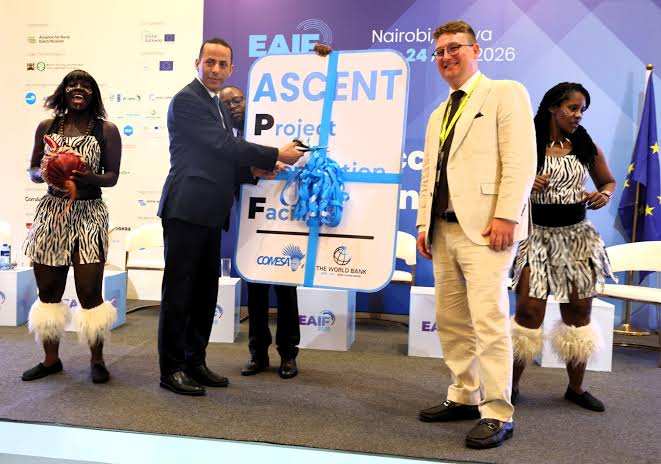
The COMESA–ARE agreement is also aligned with an existing regional push to use renewable energy and distributed systems to close access gaps. Under the World Bank-backed Accelerating Sustainable and Clean Energy Access Transformation programme, known as ASCENT, COMESA is implementing a regional platform that includes support for grid electrification, distributed renewable energy and clean cooking. The programme is backed by a proposed $5 billion International Development Association financing envelope and aims to mobilise an additional $10 billion from governments, development partners, private financiers, climate investors and other sources.
Within ASCENT, project preparation is treated as a specific investment function. COMESA’s platform includes a project preparation facility designed to help governments and private developers develop bankable projects, including cross-border solutions and distributed renewable-energy projects. This indicates that the new COMESA–ARE partnership is emerging within a wider regional effort to address the gap between energy-policy ambitions and investment-ready projects.
Investment trends provide another reason for the focus on project pipelines. According to UN Trade and Development’s COMESA Investment Report 2025, renewable-energy investment in the bloc increased by 67% in 2024, although investment performance across other Sustainable Development Goal-related sectors was mixed. Infrastructure investment contracted sharply despite growth in the overall value of international project finance, underscoring the difficulty of converting investor interest into sufficient infrastructure capital.
The financing challenge is particularly relevant as governments seek to expand electricity access without placing unsustainable pressure on public finances. Large grid projects can require substantial upfront capital, while distributed renewable systems can involve different combinations of private finance, concessional capital, guarantees, consumer financing and climate-related funding. The appropriate structure varies by market, technology and customer base.
For commercial and industrial users, the economics are also changing. Renewable energy systems, including solar and battery-based solutions, can provide businesses with alternatives where grid supply is inadequate or costly. However, scaling these systems requires clear rules around electricity markets, licensing, tariffs, grid interaction, foreign-exchange exposure, and the ability of customers to enter long-term energy contracts.
These issues make policy coordination a central component of the new partnership. COMESA and ARE have said private-sector expertise will be channelled into regional policymaking, while knowledge exchange and public-private dialogue will be used to improve the investment environment. The practical test will be whether these mechanisms reduce delays and uncertainty sufficiently for more projects to progress from concept to financing and construction.
The industrial implications are equally significant. COMESA’s September 2026 ministerial declaration identified market fragmentation, limited manufacturing capacity, weak regional value chains and regulatory barriers as constraints to industrial development. It also called for responsible and inclusive investment, regional value chains and an inclusive transition towards a circular economy. Reliable renewable electricity can support those objectives by improving the operating environment for manufacturing, processing, and other productive sectors.
For communities, however, the value of the partnership will ultimately be measured through access and reliability rather than investment announcements alone. New generation capacity does not automatically translate into connections for households, schools, health facilities or businesses. Transmission and distribution networks, affordability, utility performance and the ability of consumers to pay for electricity remain critical parts of the equation.
 The COMESA–ARE agreement therefore places the emphasis on a part of Africa’s energy transition that is often less visible than new power plants: building the institutional, financial and technical pipeline required to turn renewable-energy opportunities into operating infrastructure. For Eastern and Southern Africa, where electricity shortages and uneven access continue to constrain economic activity, the ability to connect regional policy with bankable projects will shape how quickly renewable energy can contribute to energy security, industrial development and broader economic integration.


