


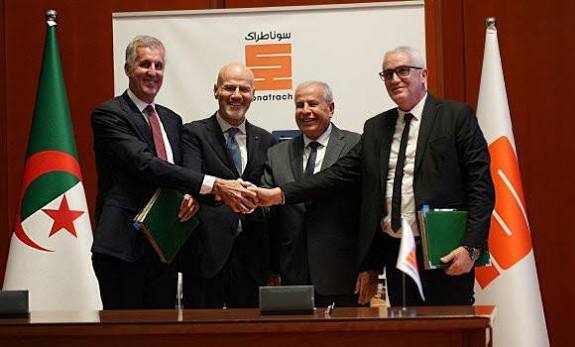
Eni and Algeria’s state-owned energy company Sonatrach are expanding a decarbonisation partnership to cover methane emissions, natural carbon removal and broader emissions monitoring, as Africa’s leading gas-producing economies face increasing pressure to reduce the climate intensity of hydrocarbon production while maintaining energy revenues and export competitiveness.
The new Memorandum of Intent builds on a cooperation framework established by the two companies in January 2023 to identify and implement opportunities to reduce greenhouse-gas emissions from Algeria’s upstream oil and gas operations. According to the companies’ existing programme, the partnership has already included methane and flaring assessments, energy-efficiency work, renewable-energy opportunities and carbon capture and storage, while a Leak Detection and Repair campaign has examined hundreds of kilometres of gas infrastructure and thousands of potential leak points.
The expansion comes as methane management moves higher up the agenda for oil and gas producers, particularly those seeking to preserve access to international markets and capital while continuing to develop natural-gas resources. For Algeria, the issue is closely connected to the country’s role as a major supplier of gas to Europe and its wider strategy of maintaining hydrocarbon production while gradually developing lower-carbon energy and industrial opportunities. The original 2023 agreement established a broad framework for reducing emissions through fugitive-emission campaigns, flaring reduction, energy diagnoses, renewable energy and carbon capture and storage. Eni said at the time that its technical expertise would support Sonatrach in mapping methane and flaring emissions across the upstream sector and identifying projects capable of reducing those emissions.
The work has since moved towards operational measurement. Eni’s 2024 methane report said the companies had begun Leak Detection and Repair campaigns on gas pipelines and plants, with an initial campaign covering four 200-kilometre pipeline sections. Of approximately 7,500 potential leaking points examined, 32 leaks were identified, with mitigation measures subsequently initiated. The companies also established a longer-term plan intended to extend LDAR coverage to all upstream assets over a three-to-five-year period.

That progression from assessment to routine monitoring is important because methane is difficult to manage without reliable measurement. Unlike carbon dioxide, which is predominantly associated with fuel combustion and can often be estimated from fuel consumption, methane can escape through leaks, venting and incomplete combustion across production and transportation infrastructure. For oil and gas producers, reducing those emissions can therefore serve two purposes. It can lower the climate impact associated with production while also recovering gas that would otherwise be lost. In commercial terms, methane that escapes from pipelines, valves, compressors and other equipment represents both an environmental liability and potentially saleable energy.
The new partnership’s focus on international oil and gas standards is consequently significant. More consistent measurement and reporting can improve the comparability of emissions data across assets and provide a stronger basis for identifying the facilities where investment can produce the greatest reductions. The issue has become increasingly relevant to African gas exporters because international energy markets are placing greater emphasis on the emissions intensity of gas supply chains. European climate policy, investor scrutiny and emerging methane regulations are increasing the importance of demonstrating that natural gas is produced and transported with credible controls on methane leakage.
Algeria is particularly exposed to that shift because of its geographical and commercial relationship with Europe. The country has expanded gas cooperation with European buyers while also seeking to increase production. In July 2026, Sonatrach signed a natural-gas supply contract with Germany’s VNG, with expanded deliveries to the German market scheduled to begin in January 2027. The companies are also partners in initiatives examining green hydrogen exports to Europe. That combination places emissions management alongside production capacity as a component of Algeria’s energy strategy. The country is investing in its hydrocarbon infrastructure while simultaneously exploring hydrogen, renewable energy and other transition technologies.
Sonatrach’s current strategy reflects this balancing act. The company describes climate-emissions reduction as a central part of its strategy while continuing to prioritise energy security and the development of Algeria’s hydrocarbon resources. Its 2024 annual report highlighted the launch of a forest project aimed at creating certified carbon sinks, alongside the company’s cooperation with Eni on emissions reduction. The inclusion of forestry-based carbon removal in the expanded Eni-Sonatrach programme therefore adds a new dimension. Rather than focusing exclusively on reducing emissions from oil and gas operations, the partnership is also examining the capacity of natural ecosystems to remove carbon dioxide from the atmosphere.
Natural climate solutions can include reforestation, afforestation, ecosystem restoration and improved land management. For Algeria, however, the credibility of such projects will depend heavily on project design, permanence, monitoring and verification, particularly in a country where water availability and land degradation present significant environmental constraints. The addition of carbon removal should therefore not be interpreted as a substitute for reducing operational emissions. Methane leakage, venting and flaring occur within the energy value chain and require direct interventions in equipment, processes and operating practices. Forestry projects address a different part of the carbon balance.
This distinction is increasingly important for companies facing scrutiny over the quality of their decarbonisation claims. Investors and regulators are placing greater emphasis on actual emissions reductions and credible measurement rather than simply increasing the volume of offsets or removals associated with corporate climate strategies. Eni’s own climate strategy illustrates that distinction. The company has established targets covering greenhouse-gas emissions, carbon intensity, routine flaring and fugitive methane, while also incorporating natural climate solutions into its wider carbon-management approach.
For Sonatrach, developing comparable measurement and management capabilities could have implications beyond its partnership with Eni. A stronger emissions-data system can help Algeria establish more consistent baselines across its oil and gas assets and identify where capital expenditure on equipment upgrades, energy efficiency, flare reduction or methane controls can generate measurable returns. The partnership also has an important workforce dimension. The earlier programme included technical analysis, field visits and capacity-building designed to equip local technicians with the skills required to undertake emissions measurements. As emissions monitoring becomes more routine, those capabilities could become an increasingly important part of Algeria’s domestic energy-sector expertise.
This matters for Africa more broadly. Many African oil and gas producers face a similar challenge: they need to monetise natural resources to finance development while managing the environmental costs associated with production. Countries including Nigeria, Angola, Libya, Egypt and Algeria have introduced different combinations of flaring-reduction, methane-management, renewable-energy and carbon-management measures.
The Algerian experience could offer a practical example of how emissions governance can be incorporated into existing petroleum operations rather than treated solely as a future transition issue. Measurement campaigns, equipment maintenance, flare recovery, energy efficiency and operational changes can generate reductions within existing assets while the broader energy system evolves. Nigeria’s experience is particularly relevant because its oil and gas sector has also been under sustained pressure to reduce methane emissions and gas flaring. The development of stronger measurement systems across major producing countries could eventually improve the quality of Africa-wide emissions inventories and provide policymakers with better information for climate and energy planning.
There is also a regional energy-security dimension. Algeria is seeking to maintain and expand its role as a reliable supplier of natural gas to Europe at a time when European countries are diversifying supply sources. In 2025, Sonatrach and Eni also signed a memorandum of understanding covering hydrocarbons, energy transition and renewable energy, with the companies saying new initiatives could increase Algerian gas production by 5.5 billion cubic metres a year by 2028.
The continued development of gas production makes emissions management more consequential rather than less. As production expands, unmanaged methane emissions could rise in absolute terms even if the emissions intensity of individual facilities improves. Conversely, better measurement can help operators identify losses and reduce emissions as production systems become more efficient. The partnership also fits into a wider shift in Algeria’s international energy relationships. In June 2026, Sonatrach signed a memorandum of understanding with Germany’s VNG covering cooperation on green hydrogen and methane-emissions reduction. The companies said the agreement would explore hydrogen supply chains from Algeria to Europe while examining emissions reductions along the gas value chain.
The parallel initiatives suggest that methane management is increasingly becoming part of Algeria’s broader engagement with European energy markets. Gas exports, hydrogen development and emissions reduction are being considered within a single evolving energy relationship. For investors, that creates a more complex assessment of Algeria’s hydrocarbon sector. Production volumes and reserves remain important, but operational emissions, data quality and the ability to demonstrate compliance with evolving international standards could increasingly influence project economics and market access.
For European buyers, better methane measurement can also help address concerns over the climate footprint of imported gas. The relevance is particularly strong because methane has a much stronger short-term warming effect than carbon dioxide, making rapid reductions in oil and gas methane one of the potentially significant opportunities for near-term climate action. The expanded Eni-Sonatrach framework nevertheless remains a memorandum and will need to translate into funded projects, verified measurements and sustained operational changes before its full impact can be assessed. The credibility of the programme will depend on whether identified emissions are actually reduced and whether monitoring systems produce transparent and consistent data.
The same applies to forestry-based carbon removal. Projects will need clear baselines, land-use safeguards, monitoring systems and credible verification if their carbon-removal claims are to withstand increasing scrutiny in international carbon markets. For Algeria, the economic stakes extend beyond environmental compliance. The country’s hydrocarbons sector remains central to government revenues, foreign-exchange earnings and industrial activity. At the same time, the government is pursuing investments in renewables, hydrogen and other forms of energy diversification. Managing emissions from existing oil and gas operations while developing new energy industries will therefore form part of the country’s wider transition challenge.
The Eni-Sonatrach partnership illustrates that transition in practical terms. Algeria is not abandoning its hydrocarbon sector; instead, it is attempting to make production more efficient and less emissions-intensive while building options around renewable energy, carbon management and future low-carbon fuels. For Africa, that approach raises a broader question about the role of natural gas in the continent’s development. Gas-producing countries argue that the resource can support industrialisation, electricity generation and export revenues, while climate policy increasingly requires producers to demonstrate lower emissions. Methane measurement and reduction sit directly at that intersection.
The next phase of the partnership will therefore be judged less by the number of initiatives announced than by the quality of emissions data, the reductions achieved and the ability to institutionalise monitoring across Algeria’s upstream sector. If those systems become embedded in routine operations, they could provide a more durable foundation for managing the environmental and commercial risks associated with continued hydrocarbon production.
As Algeria strengthens gas ties with Europe while pursuing hydrogen and renewable-energy opportunities, the country’s ability to demonstrate credible control over methane and other emissions is likely to become increasingly important. The expanded Eni-Sonatrach agreement puts that challenge closer to the operational level, where pipelines, production facilities, monitoring equipment, technicians and investment decisions ultimately determine whether decarbonisation targets translate into measurable results


