


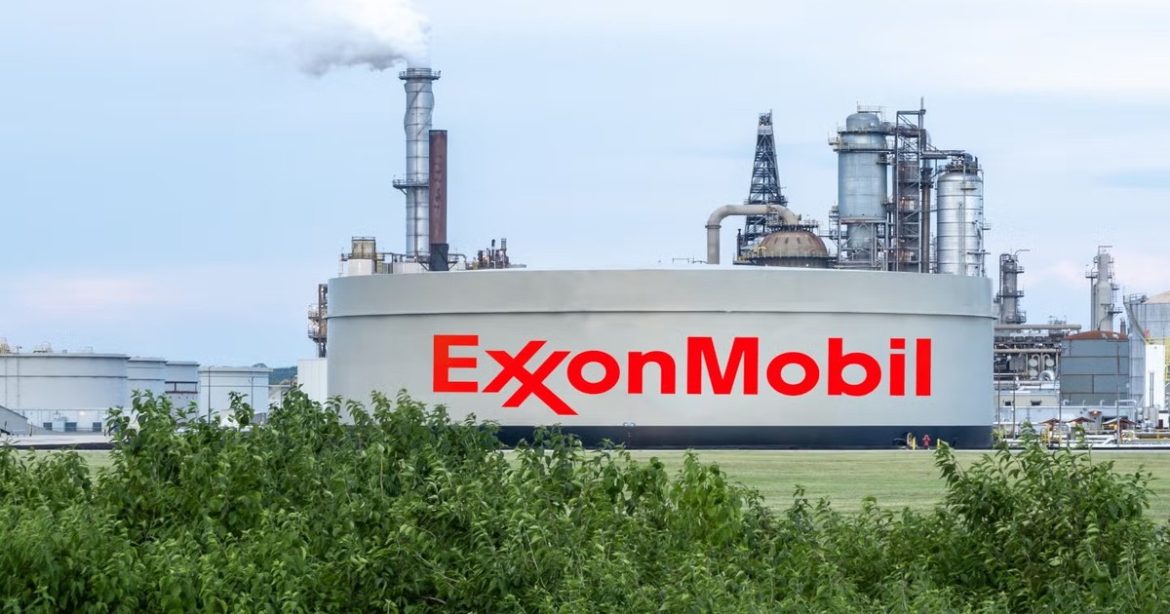
ExxonMobil has awarded about $1.1 billion in pre-investment contracts for critical equipment for the first phase of Mozambique’s Rovuma LNG project, providing the clearest indication yet that the long-delayed development is moving towards a final investment decision in 2026. The contracts, announced on August 17 on behalf of the Area 4 partners, cover subsea production systems, large-bore valves and offshore line pipe for the project in Cabo Delgado, where the development’s economic potential remains closely tied to security, local-content delivery and the government’s ability to convert gas wealth into broader economic gains.
The awards are not the same as a final investment decision, and ExxonMobil and its partners have not yet made the full financial commitment required to build the project. Their purpose is to secure equipment with long manufacturing lead times before the main construction phase, reducing the risk that procurement delays could push back the overall schedule. The move follows an August 7 letter of intent with the SMDC joint venture comprising Saipem, McDermott, Daewoo Engineering & Construction and China Petroleum Engineering & Construction Corporation for limited preliminary engineering and procurement work on the onshore facilities. The initial value of that work was $32 million, with a full contract remaining conditional on FID and government and regulatory approvals.
Rovuma LNG is being developed in the deepwater Area 4 concession of the Rovuma Basin, one of the world’s major undeveloped gas provinces. ExxonMobil Mozambique holds a 25% indirect interest in Area 4 and is the delegated operator responsible for construction and operation of the Rovuma LNG project. Eni and China National Petroleum Corporation are partners through Mozambique Rovuma Venture, while Mozambique’s state-owned Empresa Nacional de Hidrocarbonetos, Korea Gas Corporation and Abu Dhabi’s XRG hold interests alongside them. XRG entered the project after completing its acquisition of Galp’s 10% interest in Area 4 in 2025.
The first phase is designed around an onshore LNG development with a planned capacity of about 18 million tonnes per year, with the project currently described by the partners at approximately 18.6 million tonnes annually. Eni says the development will use gas from the Mamba complex in Area 4 and modular onshore liquefaction trains. ExxonMobil has indicated that the project will be developed in phases, while recent reporting puts the expected final investment decision in 2026.
The significance of the latest contracts lies partly in what they say about the project’s progression after years of delays. Rovuma LNG has been in development for much of the past decade, with earlier plans targeting an investment decision and production dates that were subsequently overtaken by security concerns, market conditions and project restructuring. The latest procurement activity suggests that the partners are now willing to commit capital ahead of FID to preserve the development timetable.
That distinction matters in a project of this scale. LNG developments require long manufacturing periods for specialised subsea equipment, valves, pipelines and liquefaction infrastructure. Delaying procurement until every element of a final investment decision is complete can create schedule risks if equipment suppliers have limited production capacity or long delivery times. By ordering selected long-lead equipment in advance, the Area 4 partners are effectively accepting a degree of pre-FID exposure in exchange for protecting the planned construction schedule.

For Mozambique, however, the economic question is larger than whether the equipment arrives on time. The country discovered some of the world’s largest natural gas resources in the Rovuma Basin more than a decade ago, raising expectations that LNG exports could transform public finances, foreign-exchange earnings and industrial development. Yet security problems in Cabo Delgado have repeatedly delayed large-scale gas investments, demonstrating that resource wealth does not automatically translate into economic development.
The security challenge remains central. The wider Cabo Delgado region has been affected by an Islamist insurgency since 2017, and the deteriorating security environment forced major LNG projects to suspend activities in 2021. TotalEnergies’ neighbouring Mozambique LNG project, located in Area 1, officially lifted force majeure in November 2025 and resumed full project activities in January 2026. President Daniel Chapo and TotalEnergies Chief Executive Patrick Pouyanné announced the restart in Afungi, underscoring the government’s view that improved security had created conditions for renewed investment.
The resumption of Mozambique LNG and the renewed momentum behind Rovuma LNG create a potentially important test for Cabo Delgado. Two major gas developments are now moving forward in a province where economic exclusion, youth unemployment and insecurity have been closely linked in policy discussions. The challenge for Mozambique is therefore not simply to protect project sites. It is to ensure that the economic activity generated by LNG becomes visible beyond the project’s perimeter.
The government and project partners have already begun investing in local skills. In May, ExxonMobil and ENH broke ground on the Centro Tecnológico de Moçambique in Maputo, a $40 million training facility intended to develop the skills needed for Mozambique’s LNG industry. The centre is expected to train up to 250 people a day and is designed to reduce dependence on expatriate workers while strengthening the country’s domestic technical capacity.
Such initiatives will be important because the employment impact of a capital-intensive LNG project can easily be misunderstood. Construction can create thousands of jobs, but once a large LNG facility enters operation, the permanent workforce is much smaller. The more durable economic impact therefore depends on the development of local suppliers, engineering services, logistics companies, fabrication capacity and technical expertise.
ExxonMobil’s own earlier plans for Rovuma LNG emphasised workforce development and the creation of demand for local suppliers. The latest procurement awards will provide an early test of how much of that value chain can be captured by Mozambican businesses. The $1.1 billion in contracts includes international companies, but local participation will matter if Mozambique wants LNG to contribute to industrialisation rather than remain primarily an export platform. Local firms need access to procurement information, technical certification, finance and training if they are to compete for contracts involving complex engineering and equipment.
This is particularly important because the largest economic benefits of extractive projects often arise indirectly. A company supplying equipment, transport, accommodation, catering, engineering, maintenance or professional services can generate economic activity well beyond the project’s direct payroll. But capturing that value requires domestic companies to have the capacity to meet international standards.
The fiscal implications are potentially even larger. The project partners have previously pointed to significant long-term government revenue from Rovuma LNG, while economic studies have projected substantial contributions to Mozambique’s GDP and employment. Such projections, however, depend on LNG prices, production levels, project costs, tax and fiscal arrangements, financing costs and the broader response of the economy. They should therefore be treated as scenarios rather than guaranteed outcomes. The experience of other resource-rich African economies offers a clear lesson: headline resource revenues do not necessarily translate into improved living standards unless governments establish strong systems for managing public income, controlling debt, investing in human capital and maintaining fiscal discipline.
Mozambique has an additional concern because the country has already experienced the consequences of debt and governance problems associated with its resource sector. The so-called hidden-debt scandal severely damaged public finances and investor confidence earlier in the last decade. The arrival of major LNG revenues will therefore place a premium on transparency, expenditure controls and clear mechanisms for ensuring that resource income contributes to productive investment.
The timing of Rovuma LNG is also important for global gas markets. European and Asian buyers have been seeking diversified LNG supplies as countries attempt to reduce exposure to concentrated sources of energy. Mozambique’s location on the Indian Ocean provides access to Asian markets while also offering potential links to European demand through global LNG trade. The country’s gas resources could consequently become part of a broader diversification strategy for international LNG buyers.
But Mozambique is entering the market at a time when the global energy system is changing rapidly. Renewable energy is expanding, governments are tightening climate policies and investors are increasingly scrutinising the emissions intensity of new fossil-fuel developments. For Rovuma LNG, long-term commercial viability will depend not only on gas reserves but also on the ability to remain competitive in a market where buyers increasingly consider carbon intensity, methane emissions and lifecycle emissions.
The project partners have indicated that the development will incorporate technologies designed to reduce emissions intensity. XRG, for example, says the planned Rovuma LNG Phase 1 development is based on an electric-drive design intended to lower the carbon intensity of LNG production. For Mozambique, this presents a difficult policy balance. Natural gas can provide export earnings and potentially support domestic energy access, industrialisation and electricity generation. At the same time, the country must manage the risks of locking a large share of its development strategy into hydrocarbons while the global economy moves towards lower-carbon energy systems.
The answer may lie partly in how gas revenues are used. If LNG income is invested in electricity networks, transport, education, health, manufacturing and renewable energy, gas can potentially provide capital for a broader development transition. If revenues are instead absorbed largely into recurrent expenditure or poorly managed projects, the economic benefits could be much smaller than the value of the resource suggests.
This is where Cabo Delgado’s development needs become especially relevant. The province requires investment not only in security but also in roads, health facilities, schools, water systems, telecommunications and livelihoods. A gas industry operating alongside communities that remain economically excluded would carry both social and political risks. The local-content agenda is therefore more than a procurement issue. It is part of the broader question of whether communities and Mozambican businesses can see tangible economic benefits from a resource developed on their doorstep.
The security dimension remains equally important. The return of investment to northern Mozambique has occurred alongside an evolving security environment rather than the complete disappearance of the insurgency. The reopening of TotalEnergies’ project and the movement of Rovuma LNG towards FID indicate greater confidence, but they do not remove the need for continued security planning.
For investors, security costs will form part of the project’s economics. Protecting personnel, equipment, transport routes and facilities can increase operating expenses, while prolonged instability can disrupt construction schedules and raise insurance and financing costs. The comparison with the neighbouring Mozambique LNG project is instructive. TotalEnergies’ project restarted in January after force majeure was lifted, but the return to full construction followed negotiations over project costs and schedules. Reuters reported that the project faced substantial cost pressures after the five-year suspension.
Rovuma LNG faces the same broader operating environment, although its project structure and development plan differ. The Area 4 consortium is also building a broader LNG portfolio in Mozambique. Eni and partners reached a final investment decision for Coral North FLNG in October 2025, adding another 3.5 million tonnes per year of planned offshore LNG production. Coral South is already operational, giving Mozambique an existing LNG export platform while the larger onshore projects advance.
This emerging cluster could eventually give Mozambique a more substantial position in global LNG markets. It could also create opportunities to develop shared infrastructure, technical expertise and domestic gas-sector capabilities. The country’s state-owned ENH is central to that equation. As a partner in Area 4 and other gas projects, ENH provides Mozambique with direct participation in the country’s hydrocarbon developments. The challenge will be ensuring that its participation strengthens national capacity and fiscal returns while maintaining commercially sustainable project structures.
The latest procurement activity also has implications for African suppliers. International engineering and energy companies are likely to capture the largest specialised contracts, but the scale of the development creates opportunities for African firms in logistics, construction, engineering, accommodation, transport, catering and professional services.Whether those opportunities become substantial will depend on procurement policies and the ability of local firms to meet technical, financial and safety requirements.
Mozambique’s LNG projects therefore represent a broader test of African resource governance. The continent has attracted billions of dollars into oil and gas projects, but the economic outcomes have varied considerably. The difference often lies in institutions, fiscal frameworks, local-content policies and the capacity to convert resource income into productive investment.
Rovuma LNG’s $1.1 billion in pre-investment contracts are consequently an important milestone, but they are not the final measure of progress. The more consequential event will be the final investment decision expected later in 2026. The FID will determine whether the consortium is prepared to commit the much larger capital required to construct the full development. It will also clarify the project’s financing structure, implementation schedule and risk allocation. For Mozambique, that decision will be followed by another set of tests: whether the project can operate securely, whether construction creates meaningful opportunities for Mozambican businesses and workers, whether public revenues are managed effectively and whether the benefits reach communities in Cabo Delgado.
The country is now closer to answering those questions than it has been in several years. The $1.1 billion procurement commitment reduces the distance between engineering plans and physical construction. The SMDC letter of intent adds another layer of preparatory work, while the neighbouring Mozambique LNG and Coral North developments show that Mozambique’s gas industry is moving into a more active investment phase.
But the central economic challenge remains unchanged. Mozambique has an extraordinary natural-gas resource, yet its development impact will depend on what happens after the contracts are signed. LNG exports can generate foreign exchange and government revenue, but they cannot by themselves build an inclusive economy.
The opportunity is to use the investment cycle to develop Mozambican skills, strengthen domestic companies, improve infrastructure and create fiscal space for long-term development. The risk is that security costs, imported equipment, limited local participation and weak revenue management leave the country with a large export industry but a narrower domestic economic transformation.
As Rovuma LNG moves towards a final investment decision, those questions will matter as much as the size of the gas reserves. The $1.1 billion announcement signals that ExxonMobil and its partners are willing to place meaningful capital at risk before FID. For Mozambique, the priority is ensuring that when the larger investment follows, the economic value of the country’s gas is converted into durable national capacity.


