


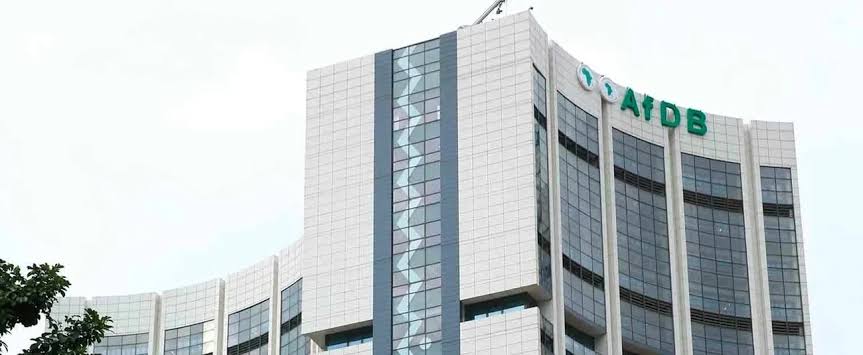
The African Development Bank Group has approved a $5.65 million reimbursable grant through its Sustainable Energy Fund for Africa (SEFA) to pilot a new climate-finance mechanism aimed at expanding off-grid renewable energy in 14 fragile and energy-poor African countries. Matched by an equivalent commitment from the Nordic Development Fund, the initiative will create an $11.3 million Peace Renewable Energy Certificate (P-REC) Aggregation Facility intended to channel hard-currency revenue into mini-grid projects where conventional commercial financing remains difficult to secure.
The facility will be managed by Camco Clean Energy and Energy Peace Partners, the organization that developed the Peace Renewable Energy Certificate label. Rather than relying solely on conventional project finance, the model will use renewable energy certificates generated by qualifying mini grids as a source of upfront funding. Under the structure, the facility will enter long-term purchase agreements with mini-grid developers, providing cash in advance in exchange for the rights to certificates generated by their projects. The certificates can then be sold to multinational companies seeking to finance renewable energy and sustainability-related outcomes.
The target markets include Burundi, the Central African Republic, Chad, the Democratic Republic of Congo, Ethiopia, Liberia, Mali, Niger, Nigeria, Sierra Leone, Somalia, South Sudan, Sudan and Uganda. Together, these countries combine substantial electricity-access deficits with varying degrees of conflict, institutional fragility, currency risk and limited availability of commercial capital, conditions that have historically made conventional infrastructure investment more expensive and difficult to structure.
The facility is expected to support approximately 240,000 new electricity connections and 71MW of renewable energy capacity, potentially providing first-time access to reliable electricity for about 856,000 people across the 14 countries. Around half of those expected beneficiaries are women. The initiative is aligned with Mission 300, the joint African Development Bank and World Bank programme targeting electricity access for 300 million Africans by 2030.
The financing mechanism addresses a particularly difficult part of Africa’s energy-access problem. In many fragile markets, the fundamental challenge is not necessarily the absence of renewable-energy technology but the inability to assemble financing structures that adequately compensate investors for political, currency, offtake and operational risks. Mini-grids can serve communities that are distant from national electricity networks, but their relatively small project sizes can also make transaction costs high compared with the amount of capital being raised.
This creates a financing gap between the needs of communities and the requirements of conventional investors. Commercial lenders typically require predictable revenues, credible counterparties and sufficient security before extending long-term finance. Developers working in fragile or conflict-affected markets may face difficulty meeting those requirements even where there is clear demand for electricity.
The P-REC structure attempts to introduce another revenue stream into that equation. By selling certificates to corporate buyers, the facility can potentially bring forward some of the value associated with the environmental and social attributes of renewable electricity. For developers, receiving payment earlier could improve project liquidity and reduce the amount of conventional debt or equity required during development.
According to João Duarte Cunha, Manager of the Renewable Energy Funds Division and SEFA at the African Development Bank, lack of access to capital for rural electrification remains a major obstacle to universal energy access, particularly in countries affected by conflict and fragility. He described the P-REC facility as an attempt to create an additional source of commercial funding for privately led mini grid projects.
The Nordic Development Fund’s participation provides the other half of the initial financing. NDF, the joint Nordic international financial institution of Denmark, Finland, Iceland, Norway and Sweden, focuses on the relationship between climate change and development in lower-income and fragile countries. Its involvement gives the facility a development-finance layer alongside the African Development Bank’s catalytic capital.
For African governments, the relevance of the model extends beyond electricity connections. Reliable power can affect the operating costs of small businesses, the viability of health facilities, education services, agricultural processing, and local communications infrastructure. In fragile economies, where public institutions often face limited fiscal capacity, decentralised energy can also provide an alternative to extending expensive national grids into sparsely populated or difficult-to-access areas.
The economic implications are particularly important in countries where electricity shortages constrain private sector development. Businesses that depend on diesel generators face exposure to fuel prices, transport costs, and foreign-exchange movements. Renewable mini grids can potentially reduce some of those costs while providing more predictable electricity for productive activities, although their commercial performance will still depend on tariffs, demand, equipment reliability and local operating conditions.
The proposed facility also places corporate climate spending into a different context. Multinational companies are increasingly seeking mechanisms through which sustainability expenditure can be connected to measurable environmental outcomes. P-RECs provide a framework through which that spending can be directed towards renewable-energy projects in communities where electricity access and development needs are particularly acute.
That link between corporate climate commitments and infrastructure finance is significant, but it also raises questions about the integrity and additionality of certificate-based markets. The economic value of the model will depend on whether certificate revenues genuinely provide additional capital for projects that would otherwise struggle to secure financing, rather than simply replacing funding that would have been available through conventional channels.
For investors and development-finance institutions, the pilot therefore represents a test of whether environmental attributes can become a reliable component of project finance in high-risk markets. If certificate purchases generate sufficiently predictable revenues, they could complement concessional finance and help improve the bankability of mini-grid projects. If demand from corporate buyers remains limited or certificate prices are too low, however, the additional financing available to developers could remain modest.
The scale of the facility also highlights the difference between catalytic capital and the overall investment required to address Africa’s energy deficit. An $11.3 million mechanism cannot by itself finance the continent’s electrification needs. Its significance lies instead in testing a financial structure that could potentially attract larger pools of private capital if the initial portfolio demonstrates commercial and development results.
This is particularly relevant to Africa’s wider climate-finance challenge. Many African countries receive significantly less private investment in renewable infrastructure than their energy needs would suggest, partly because investors perceive higher political, currency and regulatory risks. Conventional concessional finance is limited, while governments have restricted fiscal space to absorb those risks through guarantees and subsidies.
The P-REC model attempts to address part of that problem by combining development finance with a market-based revenue mechanism. Camco brings experience in climate and impact investment across emerging markets, while Energy Peace Partners focuses specifically on the intersection of renewable energy, peace, and development in fragile regions.
For the 14 participating countries, implementation will ultimately matter more than the structure of the facility itself. Mini grid developers will need to identify viable sites, secure local approvals, manage community relationships, build reliable systems, and establish sustainable operating models. In conflict-affected areas, security conditions can add another layer of cost and operational risk.
There is also a governance dimension. Energy infrastructure in fragile states can become difficult to maintain when regulatory institutions are weak, or political conditions change rapidly. Ensuring transparent certificate issuance, credible monitoring and verification, and clear ownership of project revenues will therefore be important if the facility is to establish confidence among both developers and corporate buyers.
The initiative comes as African development institutions increasingly seek to move from traditional project-by-project climate finance towards instruments capable of aggregating smaller assets. Aggregation can make fragmented mini-grid projects more attractive to investors by pooling them into a larger portfolio, spreading transaction costs, and potentially diversifying country and project-level risks.
That approach could be particularly useful for off-grid energy, where individual projects may be too small to attract institutional investors but collectively represent a significant infrastructure opportunity. The 71MW target under the facility illustrates the potential scale that can emerge when multiple projects are financed through a common structure.
The broader significance for Africa is therefore not simply the number of people expected to receive electricity. It is whether climate finance can be redesigned to reach markets that conventional capital routinely avoids. The continent’s most persistent energy-access gaps are often concentrated in precisely those places where political, economic, and financial risks are highest.
 The African Development Bank’s facility provides a relatively small but practical experiment in addressing that mismatch. Its success will depend on whether renewable energy certificates can generate predictable additional revenues, whether developers can translate those revenues into new infrastructure and whether corporate demand for the certificates remains strong enough to sustain the model.
For Africa’s energy transition, that distinction is important. Expanding renewable generation in relatively established markets is increasingly supported by conventional investment structures, while the harder problem remains bringing capital into communities where grid extension is expensive, institutions are fragile and commercial risk is high. The P-REC Aggregation Facility is an attempt to close part of that financing gap by connecting climate-related corporate spending directly with energy infrastructure in some of the continent’s most underserved markets.


