


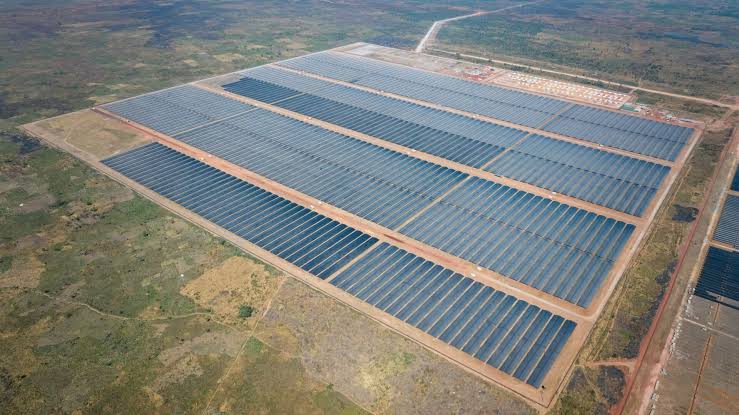
CrossBoundary Energy has commissioned a 233 MWp solar photovoltaic and battery-storage facility at the Kamoa-Kakula copper complex in the Democratic Republic of Congo, providing 30 MW of firm renewable power to one of Africa’s largest mining operations and offering a test of whether private clean-energy infrastructure can reduce the cost and emissions intensity of power-intensive mineral production. The project, which reached commercial operation on August 12 after a power purchase agreement was signed in April 2025, combines 526 MWh of battery storage with solar generation and is among the continent’s largest commercial and industrial renewable-energy installations.
The development is significant because Kamoa-Kakula operates in one of the world’s most strategically important copper-producing regions while requiring a stable electricity supply for mining, processing and associated infrastructure. Kamoa Copper is a joint venture involving Ivanhoe Mines, Zijin Mining Group and the DRC government, making the project relevant not only to the mine’s operating costs and emissions profile but also to the wider debate over how Africa can develop critical-mineral industries without locking new production into carbon-intensive energy systems.
 Unlike conventional solar projects, the facility is designed to provide firm or baseload electricity rather than simply supplying power when sunlight is available. The battery system stores electricity generated during periods of solar production and releases it when required, allowing the mine to use renewable electricity more consistently. CrossBoundary Energy said the system comprises 233 MWp of solar PV and a 123 MVA, 526 MWh battery-energy-storage system.
That distinction is important for mining companies operating in markets where electricity reliability can be as significant a concern as the carbon intensity of generation. Kamoa-Kakula has historically relied on a combination of grid electricity, third-party power purchases and on-site generation. Company filings indicate that approximately 193 MW of generator capacity was installed at the complex at the end of 2025, while power was also being sourced through third-party providers and the Zambia-DRC interconnector.
The solar-and-storage project therefore addresses two pressures at once: the mining industry’s need for dependable electricity and the need to reduce reliance on fuel-based generation. CrossBoundary Energy’s earlier agreement with Kamoa Copper was specifically structured around 30 MW of baseload renewable power and was intended to reduce the mine’s use of fuel generators.
For the DRC, the implications extend beyond the boundaries of the mine. Copper is central to the global energy transition because it is used extensively in electricity networks, renewable-energy equipment, electric vehicles and other electrification technologies. The DRC is therefore positioned at an important intersection of Africa’s mineral economy and the global shift towards lower-carbon infrastructure.
That position creates a difficult policy and investment question. African countries with substantial reserves of copper, cobalt, lithium, manganese and other transition minerals are under increasing pressure to capture more value from these resources while responding to environmental and social expectations from investors and international markets. The energy used to extract and process those minerals is becoming part of that equation.
A mine powered partly by solar and storage does not by itself resolve the wider environmental and governance challenges associated with mineral production. Land use, water consumption, worker safety, community relations, tailings management, biodiversity and the distribution of economic benefits remain material ESG considerations. But the Kamoa project illustrates how energy procurement itself is increasingly becoming part of the sustainability strategy of large industrial operations.
The financing structure is also relevant. The project is being developed by CrossBoundary Energy rather than requiring Kamoa Copper to finance and own the generation infrastructure directly. Kamoa Copper is the sole offtaker under the power purchase arrangement, while the energy assets are owned, operated and funded by the energy providers. This model can allow large industrial consumers to secure dedicated renewable capacity without assuming all of the upfront capital expenditure associated with building and operating a power plant.
Development finance has also played a role in reducing project risk. The Multilateral Investment Guarantee Agency, part of the World Bank Group, disclosed a proposed guarantee of up to $237 million covering certain investment risks associated with the CrossBoundary Energy project. The proposed guarantee includes protection against transfer restriction and currency inconvertibility, expropriation, and war and civil disturbance, illustrating the additional risk considerations that can accompany large infrastructure investments in African markets.
Currency and political risks are particularly relevant to private renewable-energy investment in Africa. Projects frequently generate revenue in local currencies while equipment, debt and other obligations may be denominated in foreign currencies. In countries where exchange-rate volatility is substantial, those mismatches can affect project economics and ultimately the price of electricity. Guarantees and other risk-mitigation instruments can therefore be important in making infrastructure finance commercially viable.
The project also demonstrates the growing importance of battery storage in Africa’s power markets. Solar generation is relatively predictable over a daily cycle but remains dependent on weather and daylight. Batteries can shift electricity production to periods of higher demand, improving the usefulness of solar power for industrial consumers that require electricity throughout the day and night.
This could have broader relevance for African mining operations. Many major mines are located far from strong national grids or operate in electricity systems where generation capacity and transmission infrastructure are constrained. Dedicated renewable-energy systems could offer an alternative to expanding diesel generation or waiting for grid infrastructure to catch up with industrial demand, although the economics will differ by location and project.
The Kamoa-Kakula development is already being expanded. Ivanhoe Mines says the two solar facilities being commissioned have a combined peak solar capacity of 433 MW and 1,107 MWh of battery storage and are expected to provide 60 MW of continuous baseload power once fully ramped up. The company is also advancing plans to increase on-site solar baseload capacity to about 120 MW by the end of 2027 through additional projects.
The expansion highlights another issue for the DRC: whether large industrial projects can contribute to broader improvements in the country’s electricity infrastructure rather than developing largely self-contained energy systems. Kamoa-Kakula’s renewable facilities are dedicated to the mine, meaning their immediate economic benefit is concentrated on industrial operations rather than the wider electricity market. At the same time, the investment demonstrates demand for private power infrastructure in a country where electricity access and reliability remain uneven.
There is also a regional dimension. Kamoa-Kakula’s electricity arrangements are linked to the wider Copperbelt power system spanning the DRC and Zambia. Company disclosures indicate that the mine has purchased electricity through the Zambia-DRC interconnector, while copper products are transported through several regional corridors, including routes to ports in South Africa, Tanzania, Namibia, Mozambique and Angola.
The project’s timing is particularly relevant to the debate over critical minerals. Global demand for copper is expected to remain closely tied to investment in grids, renewable energy and electrification. For African producers, the opportunity is substantial, but so are the risks if mining expansion is accompanied by unreliable power, high operating costs or growing carbon exposure.
The commercial case for renewable mining power will ultimately depend on more than installed capacity. Electricity prices, battery replacement costs, equipment performance, grid availability, financing terms and the mine’s production profile will all influence whether the model can be replicated. The ability to secure long-term power purchase agreements and appropriate risk guarantees will also matter in countries where energy and political risks remain significant.
The project nonetheless points to a broader shift in the relationship between African mining and energy investment. Rather than treating renewable electricity as a separate environmental initiative, large industrial consumers are increasingly considering power supply as part of their operational and ESG strategy. For mining companies, the incentive is not only emissions reduction but also greater control over electricity supply and potentially more predictable operating costs.
For the DRC, that distinction matters as the country seeks to increase the economic value generated from its mineral resources. Renewable power can contribute to a lower-carbon production model, but the larger development question is whether such investments are accompanied by local skills, supply-chain participation, infrastructure development and stronger domestic industrial capacity.
 The Kamoa-Kakula solar-and-storage facility is therefore more than a renewable-energy project attached to a mine. It represents a practical experiment in combining private infrastructure finance, battery technology and Africa’s critical-minerals economy. Its longer-term significance will depend on whether the model can deliver reliable and commercially competitive power while allowing African mineral producers to reduce emissions and retain more economic value from the energy transition.
For Africa’s mining economies, the central question is increasingly not whether renewable power can supply industrial operations, but whether it can do so at the scale, reliability and cost required to support competitive mineral production. The experience at Kamoa-Kakula provides one early indication of how that equation may be tested in practice.


