


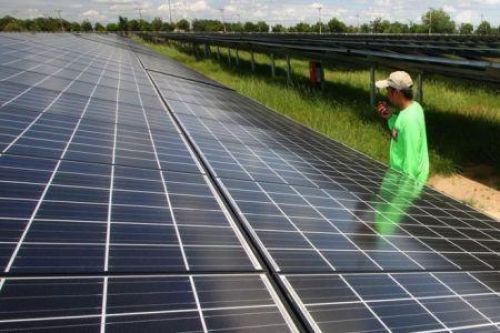
JCM Power has secured the 30-megawatt Manje solar photovoltaic project in Mozambique’s Tete province, marking the Canadian independent power producer’s entry into the country as Maputo seeks to mobilise more private capital to expand electricity generation and accelerate progress towards universal energy access.
JCM Power announced the award on Aug. 25, saying the project was selected under Mozambique’s Renewable Energy Auctions Promotion Programme, known as PROLER. The Manje project was originally placed within a competitive procurement process launched by Mozambican authorities in 2022, alongside a separate 30 MW solar project at Chimbunila in Niassa province.
The award is significant less for the size of the plant than for what it says about Mozambique’s evolving approach to power-sector investment. Rather than relying primarily on public financing or state-led generation, PROLER was designed to bring independent power producers into the market through competitive tenders, with developers expected to finance, design, construct, operate and maintain the facilities.

The programme is supported by the European Union through the Agence Française de Développement, or AFD, and is intended to develop about 120 MW of renewable generation through competitive procurement. Official programme documents identify Manje, Lichinga and Dondo as solar sites, alongside a wind project, while also providing technical assistance for project preparation, environmental and social assessments and grid interconnection.
For Mozambique, the attraction of the model is closely tied to the scale of investment required to close its electricity-access gap. The country’s National Energy Compact, prepared under the Mission 300 initiative, says electricity access rose from 31% in 2018 to about 60% in 2024. The government is targeting universal electricity access by 2030, a goal that requires expansion of both generation and distribution infrastructure.
The same compact sets a target of increasing installed renewable capacity from 2,922 MW in 2024 to 6,073 MW by 2032. Solar photovoltaic capacity is expected to rise from just 98 MW in 2024 to 303 MW, while wind capacity is targeted to reach 245 MW from virtually no installed capacity. Mozambique also aims to mobilise $8.698 billion in private capital by 2030 under the energy compact.
Against that backdrop, Manje provides a relatively small but practical test of whether competitive procurement can translate private-sector interest into new generation assets. The 30 MW plant would represent roughly 10% of Mozambique’s 2032 solar-capacity target if it reaches operation, although the project’s contribution to national electricity supply will depend on its eventual generation profile, grid connection and operating performance.
The project also places JCM Power within a regional investment pattern that is increasingly important to Southern Africa. The company has already developed solar assets in neighbouring Malawi, including the 60 MW Salima Solar PV project and the 20 MW Golomoti Solar project. JCM says Salima reached commercial operations in October 2021, while Golomoti combines solar generation with a 5 MW/10 MWh battery storage system.
That experience could be relevant in Mozambique, where the economics of new renewable projects extend beyond the cost of solar modules. Investors must assess grid capacity, transmission availability, payment security, foreign-exchange exposure, permitting, land requirements and the financial strength of the electricity buyer. PROLER was structured partly to address these barriers, with AFD support including project preparation and mechanisms intended to reduce risks associated with payment by Electricidade de Moçambique, or EDM, the national utility.
Mozambique’s regulator has also continued to refine the framework governing private electricity investment. ARENE, the Energy Regulatory Authority, regulates electricity generation, transmission, distribution and commercialisation, while a new 2026 regulation sets procedures for concessions covering electricity generation, storage, transmission, distribution and related activities.
The regulatory framework matters because Mozambique’s power ambitions are increasingly linked to industrial development. The country has substantial hydroelectric resources and is developing major projects such as Mphanda Nkuwa, while gas remains an important part of the energy system. The government is therefore attempting to expand supply while diversifying the generation mix and improving the reliability of electricity available to households, businesses and industrial users.
Tete gives the Manje project an additional economic dimension. The province is one of Mozambique’s major mining regions, meaning reliable electricity has implications for industrial production, mineral processing and supporting businesses. The challenge is ensuring that additional generation is matched by adequate transmission and distribution infrastructure so that power can reach demand centres rather than remaining constrained by grid bottlenecks.
This issue is particularly relevant to Mozambique because the country’s generation resources and major centres of electricity demand are geographically dispersed. The U.S. Department of Commerce notes that Mozambique’s domestic energy demand is rising and that the Southern African Development Community expects power demand to increase, creating both domestic and regional opportunities for electricity supply and trade.
The Manje award also strengthens JCM Power’s position in a market where private investors are being asked to play a larger role in infrastructure development. JCM’s current management includes Chief Executive Officer Jon Bahen, Chief Investment Officer Joseph Rodriquez and Chief Commercial Officer Muhammed Ali, with the company’s African business development activities including Senior Business Developer Loris Andrys.
In Mozambique, JCM has already been engaging with EDM, ARENE and government institutions as it builds its local presence. The company’s membership in the Mozambican Renewable Energy Association, represented by Loris Andrys, also places it within a local industry network that includes developers, utilities and renewable-energy stakeholders.
For Maputo, however, securing developers is only one stage of the investment process. The eventual impact of Manje will depend on whether the project can move from award to financial close, construction and commercial operation under terms that remain bankable for investors while protecting the interests of the electricity system and consumers. JCM has not publicly disclosed the investment value or a construction timetable for the project.

That distinction is important for Mozambique’s broader energy strategy. Competitive auctions can improve price discovery and bring international expertise and capital into the power sector, but the projects ultimately have to connect to functioning grids and operate within a financially sustainable utility system. The government’s target of mobilising nearly $8.7 billion in private capital by 2030 makes the performance of early projects particularly relevant to future investor confidence.
The Manje project therefore represents more than a 30 MW addition to Mozambique’s proposed solar pipeline. It is an early example of how the country is attempting to convert its renewable-energy potential into investable infrastructure while reducing the pressure on public finances. For communities and businesses, the practical measure will be whether projects such as Manje ultimately translate into more reliable electricity, wider access and sufficient power for economic activity.
For Africa’s broader energy transition, the case also illustrates the importance of regional experience. Developers that have already navigated project finance, construction, grid integration and power-purchase arrangements in neighbouring African markets can potentially reduce execution risks when entering new countries. But Mozambique’s experience will ultimately be judged by delivery: whether competitive procurement can turn announced capacity into operating power plants and whether that electricity can be integrated into a system capable of supporting the country’s next phase of industrial and economic growth.


