


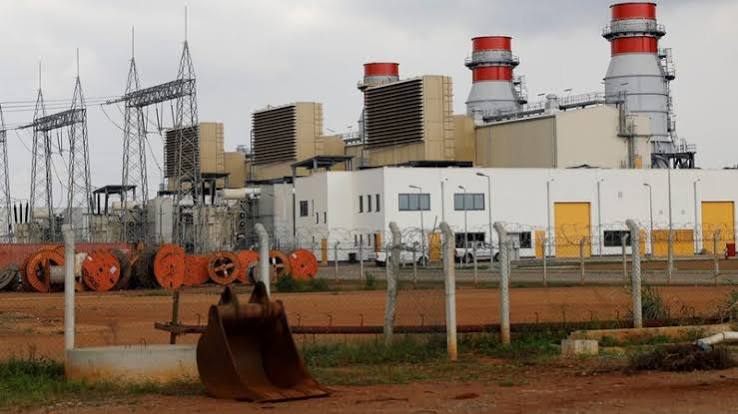
Azura Power has entered South Africa’s electricity market through the acquisition of a significant majority stake in Enpower Trading, giving the pan-African power producer a foothold in a market where private electricity trading, wheeling and renewable energy procurement are becoming increasingly important to the restructuring of the country’s power sector. The transaction, completed on 30 September 2026, is Azura’s first investment in South Africa, although the companies have not disclosed the value of the deal or the exact size of the stake acquired.
Azura operates 752 megawatts of generation capacity across Nigeria, Senegal and Mozambique, with a further 1,372MW in development. The company’s South African investment adds electricity trading to its existing generation platform and gives it exposure to a market in which independent power producers, corporate electricity buyers and private traders are taking on a larger role alongside state-owned utility Eskom.
Enpower holds a private electricity trading licence from the National Energy Regulator of South Africa (NERSA) and participates in the Southern African Power Pool (SAPP) market. The company buys electricity from independent power producers and supplies commercial and industrial customers through existing transmission and distribution networks rather than requiring generators to construct dedicated connections to individual customers.
For Azura, the acquisition provides access to an electricity market undergoing structural reform. South Africa’s Electricity Regulation Amendment Act, which came into effect in January 2025, provides for an open market platform allowing competitive wholesale and retail electricity trading and establishes a framework for an independent transmission system operator. The reforms are intended to increase competition, encourage investment in generation and strengthen energy security.
Electricity wheeling is one of the mechanisms through which that transition is already reaching commercial customers. Under a conventional wheeling arrangement, power generated by a private producer in one location is delivered to an electricity customer elsewhere using an existing Eskom or municipal network. The transaction is primarily a financial arrangement that reconciles generation and consumption through the grid, with network users paying charges for use of the transmission or distribution infrastructure.
The model is particularly relevant to renewable energy developers because it separates the location of generation from the location of electricity demand. A solar or wind project can be developed where resource conditions are favourable, while electricity can be contracted by a corporate or industrial customer elsewhere on the grid. That expands the potential customer base for independent power producers and can provide an alternative route to market beyond traditional utility procurement.
Enpower has been active in this segment for several years. The company says it has provided wheeling services in George since 2022 and in the City of Cape Town since 2024. Cape Town has developed its own wheeling framework, allowing licensed third-party suppliers to sell electricity to customers through the municipal network under bilateral power purchase agreements. From March 2025, the city introduced one-to-one wheeling across its electricity infrastructure at medium and high voltage levels.
Enpower’s role is therefore positioned between generators and electricity users. The company aggregates power from independent producers and matches supply with commercial and industrial demand across multiple locations. It says this model can give customers access to renewable electricity without requiring them to develop their own generation assets, while providing independent power producers with a route to creditworthy customers.
The investment comes at a time when South Africa is attempting to establish a more competitive wholesale electricity market. The South African Wholesale Electricity Market (SAWEM) is intended to create a multi-market structure for electricity trading, with the National Transmission Company South Africa (NTCSA) taking responsibility for market operations. The NTCSA received its Market Operator licence from NERSA in December 2025, while the target for SAWEM implementation was subsequently moved to the third quarter of 2026 as additional regulatory and operational work was required.
The market transition remains under development. NERSA has been consulting on electricity trading rules covering traders, network service providers and generators involved in bilateral agreements and wheeled energy. A 2026 framework for the SAWEM trading platform is also open for stakeholder comment, illustrating that the rules governing participation, market conduct and settlement are still being refined.
Eskom is also developing virtual wheeling, which extends the concept beyond a conventional one-generator-to-one-offtaker arrangement. Its virtual wheeling product allows multiple generators and multiple off-takers to participate in transactions across Eskom and municipal networks, using a financial mechanism to reconcile energy purchases and consumption. The system is designed to broaden access to renewable electricity without requiring a direct physical connection between each generator and customer.
The development of these mechanisms matters for South Africa’s renewable energy investment pipeline. Solar and wind projects require dependable routes to market and bankable offtake arrangements. Electricity traders can aggregate demand, manage contractual relationships and provide an intermediary between generators and corporate customers, potentially reducing some of the transaction complexity associated with fragmented electricity demand.
At the same time, the emergence of private trading does not remove the importance of the public grid. Wheeling depends on transmission and distribution networks that remain regulated and require investment, maintenance and appropriate use-of-system charges. Eskom notes that wheeling allows utilities to recover network costs while enabling privately generated electricity to move to customers in areas that may have weaker renewable resources.
The commercial opportunity is also connected to the changing requirements of large electricity users. Companies facing pressure to reduce emissions, improve energy security or diversify away from dependence on a single electricity supplier can use wheeling arrangements to procure renewable power across multiple sites. Enpower says its aggregation model can enable customers to increase renewable energy penetration across different locations without installing generation assets at every site.
For Azura, the transaction also represents a strategic expansion from owning and developing generation assets towards participating in the market mechanisms that connect generation with demand. Dave Peacock, Azura’s chief executive, has more than two decades of experience in energy and infrastructure, including work on power transactions across African markets. Enpower’s management will remain invested in the business, with co-founder and CEO James Beatty continuing to lead the company.

That continuity could be important as Enpower navigates a rapidly changing regulatory environment. The company’s existing trading licence, relationships with independent power producers and experience in municipal and Eskom-connected wheeling provide a platform from which to participate in the next stage of South Africa’s market reform. Enpower has also said it is preparing for participation in the emerging South African wholesale market.
For South Africa, the broader significance of the transaction lies in the growing role of private capital and specialised market participants in electricity supply. The country’s energy transition is no longer centred only on adding generation capacity. It increasingly involves creating the market structures, trading mechanisms and network arrangements that allow electricity from different generators to reach different categories of consumers.
Azura’s entry therefore comes at a consequential point for the sector. As South Africa works towards a more competitive electricity market, the combination of independent generation, electricity trading, wheeling and emerging virtual-wheeling mechanisms could create additional routes for renewable power to reach commercial and industrial demand. The success of that model, however, will depend on the final regulatory architecture, network capacity, market liquidity and the ability of new participants to manage credit, balancing and settlement risks.
The Enpower acquisition places Azura inside that transition at an early stage. For Africa’s largest electricity market, it also highlights how the next phase of power-sector investment may increasingly involve not only building generation assets, but developing the commercial infrastructure that determines how electricity is bought, sold and delivered across increasingly open electricity markets.


