


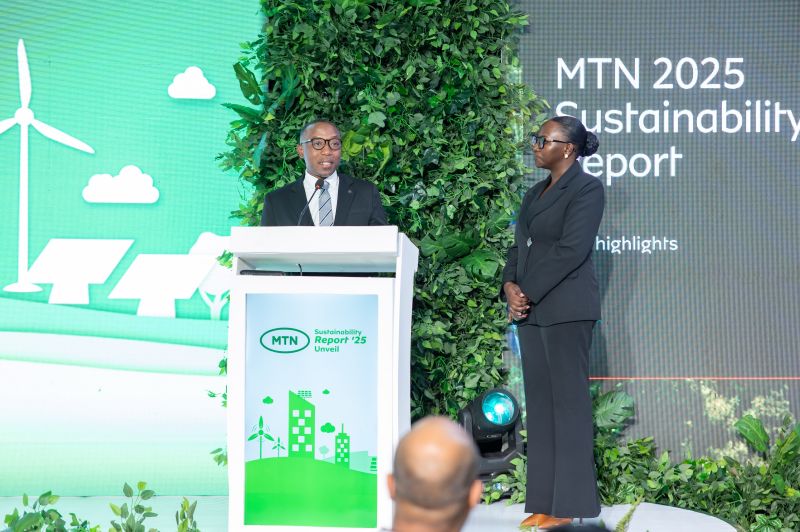
MTN Uganda has reduced its Scope 1 and Scope 2 greenhouse gas emissions by 45% against a 2021 baseline, putting the telecom operator close to its interim target of cutting emissions by 50% by 2030 and highlighting the growing role of renewable energy in powering Africa’s digital infrastructure.
The reduction is part of MTN Uganda’s Project Zero climate initiative, launched as part of the wider MTN Group strategy to achieve net-zero emissions by 2040. The company’s progress has been supported by investments in energy efficiency, renewable power and the solarisation of network infrastructure.
MTN Uganda now operates 3,712 green sites powered by solar and hydropower, demonstrating how telecommunications companies are increasingly looking beyond connectivity to address the energy footprint of expanding digital networks.
“As a technology-led organisation, we recognise that how we power and operate our network is central to our climate footprint and to our long-term sustainability,” Thomas Motlepa, MTN Uganda’s Chief Technology and Information Officer, said in the sustainability report. Motlepa oversees the company’s technical and information operations, placing network energy efficiency at the centre of its decarbonisation strategy.

The company’s approach combines three priorities: reducing energy consumption through efficiency improvements, replacing conventional energy sources with renewables and scaling technologies that can lower the carbon intensity of network operations. One example is a 490 kWh solar installation commissioned at MTN Uganda’s headquarters. The project is expected to save approximately UGX30 million a year in electricity costs, illustrating the potential for renewable-energy investments to deliver both environmental and financial benefits.
For telecom operators across Africa, the economics are increasingly important. Mobile networks require reliable electricity to maintain connectivity, while grid instability and rising energy costs can increase dependence on diesel generators and other backup systems. Renewable energy and energy-efficiency investments can therefore serve as both climate interventions and measures to improve operational resilience.
MTN Uganda’s target extends beyond its direct operations. The company aims to achieve net-zero emissions across Scopes 1, 2 and 3 by 2040, while 70% of its top suppliers by expenditure have pledged to support the group’s net-zero ambition. This reflects the growing recognition that corporate decarbonisation cannot be achieved solely by changing assets owned or directly controlled by a company.
The development also comes as sustainability reporting requirements across Uganda are becoming more structured. The Institute of Certified Public Accountants of Uganda has adopted the IFRS Sustainability Disclosure Standards, while Uganda’s proposed implementation framework provides for mandatory sustainability reporting for listed entities, financial institutions and other specified public-interest entities from 2028, with wider application in subsequent years.
That regulatory direction increases the importance of credible emissions data. MTN Uganda’s 2025 Sustainability Report was independently assured by Ernst & Young under the ISAE 3000 standard, providing external assurance over selected sustainability disclosures. The company also said the report represents its first alignment with IFRS S1 and IFRS S2.
The shift is significant for investors because sustainability reporting is increasingly moving from voluntary corporate communication towards information that can influence assessments of financial risk, resilience and long-term value. IFRS S2, for example, requires companies applying the standard to disclose climate-related targets and the metrics used to measure progress.
MTN Uganda’s performance also fits into a broader group-wide transition. MTN Group reported a 48% reduction in Scope 1 and 2 emissions in 2025 compared with its 2021 baseline, with renewable-energy projects, particularly solar deployments, among the major contributors. For Uganda, the implications extend beyond MTN. Telecommunications infrastructure is becoming increasingly important to economic activity as digital payments, cloud services, e-commerce and mobile connectivity expand. Reducing the energy intensity of that infrastructure can therefore help limit the environmental cost of digitalisation while strengthening the resilience of critical communications systems.

The 45% reduction is consequently more than a corporate climate milestone. It demonstrates how renewable energy, energy efficiency, supplier engagement and credible sustainability reporting can be integrated into the operating model of a major African technology company. The remaining challenge will be maintaining the pace of reductions as data consumption, network infrastructure and digital services continue to expand. Reaching the 50% interim target by 2030 and ultimately net zero by 2040 will require continued investment in clean power, efficient infrastructure and value-chain decarbonisation.


