


Algeria’s state-owned Sonatrach is expanding its role in Niger’s oil industry, moving beyond exploration into field development, drilling, seismic services, petroleum distribution and crude marketing as Niamey seeks to extract greater economic value from its hydrocarbon resources. The latest development centres on the Bilma oil block, where Sonatrach is expected to review the feasibility study and support the preparation of a development plan for a field that Nigerien authorities say could produce more than 20,000 barrels of crude oil per day for about 20 years. The move follows the launch of drilling at the Kafra block earlier this month and a series of agreements between Sonatrach subsidiaries and Niger’s state oil company, Sonidep, covering several parts of the petroleum value chain.
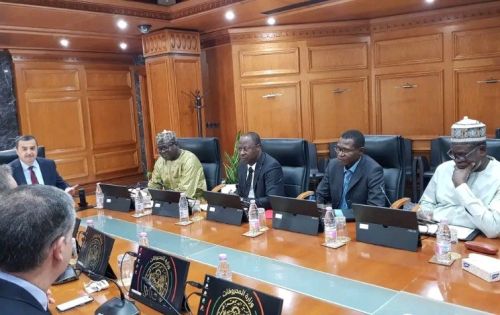
The Bilma development was discussed in Algiers on August 29 between Algeria’s Minister of State and Minister of Hydrocarbons Mohamed Arkab and Sonidep Director-General Ali Seibou Hassane. According to Algeria’s Ministry of Hydrocarbons, the discussions examined the development of Bilma and wider investment and technical cooperation between the two countries. Sonatrach is expected to technically review the existing feasibility study before a development plan is prepared. The production estimate remains subject to the outcome of that technical work rather than representing confirmed commercial output.
Bilma is located across Niger’s Diffa and Agadez regions and has emerged as a potentially important addition to the country’s petroleum portfolio. If the preliminary production estimate is ultimately validated and the project moves into development, the field could add a significant source of domestic crude production over an extended period. For Niger, the economic significance would extend beyond additional barrels. Developing the field would require investment in production infrastructure, transportation, services and potentially processing capacity, creating opportunities for local suppliers and technical employment while increasing the importance of the state’s ability to capture and manage petroleum revenues.

The Bilma discussions come only weeks after Sonatrach and Sonidep began a new exploration drilling programme at Kafra in northern Niger. On August 13, the two companies launched work on four exploration wells in the Kafra permit, including the Kafra South-East 1 well in the Agadez region. The Kafra block covers approximately 23,737 square kilometres and is governed by a production-sharing agreement between Niger and Sonatrach through its subsidiary Sipex.
The Kafra programme is significant because it shifts the Algerian group from a longstanding exploration position towards a more active operational presence in Niger. Exploration drilling will determine whether the geological potential identified through earlier seismic work can support commercially viable production. The programme also includes a technology and skills-development component, potentially giving Nigerien personnel greater exposure to drilling and petroleum-sector expertise.
Sonatrach’s involvement in Niger is not limited to upstream exploration. In June, Sonatrach subsidiaries signed three memorandums of understanding with Sonidep covering seismic acquisition and processing, drilling and petroleum-product distribution. Under the first agreement, Sonatrach’s Enageo will undertake seismic acquisition and processing activities in Niger. A second agreement between Sonatrach’s drilling subsidiary Enafor and Sonidep provides for the creation of a joint venture to conduct oil and gas drilling. The third, involving Naftal and Sonidep, covers petroleum-product distribution, filling centres and training, alongside plans for a joint venture focused on manufacturing, formulating, distributing and storing bitumen.
That breadth matters because it gives Niger access to capabilities across several stages of the petroleum industry rather than limiting the relationship to the extraction of crude. Seismic data is essential for identifying and evaluating underground resources, drilling converts geological prospects into tested wells, while downstream distribution and bitumen production can connect petroleum investment to domestic infrastructure and commercial markets. The partnership has also moved into crude marketing. On August 14, Sonatrach and Sonidep jointly marketed their first cargo of Nigerien Meleck crude from the Sèmè petroleum terminal in Benin. Sonatrach described the shipment as a milestone in the companies’ commercial cooperation and part of its wider African strategy.
The development is relevant to Niger because crude marketing and export logistics have become increasingly important as the country expands production from its Agadem oilfields. Niger’s oil industry has historically faced the challenge of converting upstream resources into reliable public revenue and broader domestic economic benefits. The country began producing oil commercially in 2011, while the expansion of the Agadem field under China National Petroleum Corporation has substantially increased production capacity. Reuters reported in 2025 that the expanded Agadem operation was producing about 90,000 barrels per day, with crude exported through a pipeline to Benin.
Sonatrach’s growing role therefore enters a petroleum sector already undergoing structural change. Niger is attempting to strengthen control over its natural resources while developing the infrastructure and institutional capacity required to translate oil production into economic development. The Algerian partnership offers technical capabilities and market access, but the long-term economic impact will depend on the terms of individual projects, the fiscal arrangements governing petroleum production and the extent to which local firms and workers participate in the value chain.
The downstream component is also becoming more important. Algeria and Niger are working on cooperation around the Zinder refining system, petroleum-product supplies and possible bitumen infrastructure. Sonatrach has already begun supplying Niger with Jet A1 under a commercial agreement with Sonidep, with the first delivery dispatched from Algeria’s Adrar refinery on August 15. For Niger, stronger domestic and regional refining and distribution capacity could reduce some exposure to imported petroleum products and improve the reliability of supplies to transport, aviation, industry and other productive sectors. However, downstream investments also require sustained capital expenditure, reliable logistics and sufficient domestic demand to operate efficiently.
The relationship is also strategically relevant for Algeria. Hydrocarbons remain central to the Algerian economy even as the government pursues diversification. The International Monetary Fund has noted that hydrocarbons accounted for 84% of Algeria’s exports of goods and services in 2023 and around 60% of fiscal revenue, although that share fell to about 50% in 2024. The IMF has continued to stress the importance of economic diversification because dependence on hydrocarbons exposes public finances and external accounts to commodity-price volatility.
Sonatrach’s expansion into Niger can therefore be viewed partly through the lens of Algeria’s effort to deepen its economic and commercial links across Africa. Rather than focusing solely on exporting Algerian hydrocarbons, the company is increasingly positioning its technical subsidiaries, infrastructure expertise and commercial capabilities within African energy markets. The bilateral relationship has also gained momentum after several years of political tension. The expansion of energy cooperation follows a gradual restoration of dialogue between Algiers and Niamey after Niger’s 2023 political crisis. Energy projects provide a practical area for renewed economic engagement, particularly as both countries seek stronger regional trade and infrastructure links.
For Niger, the immediate issue will be whether the expanding partnership can translate into commercially viable oil developments and stronger domestic economic linkages. Bilma remains at the feasibility-review stage, while Kafra is still undergoing exploration drilling. Neither project should therefore be treated as guaranteed future production. Their economic contribution will depend on geological results, investment decisions, development costs, infrastructure requirements and the fiscal terms governing production.
The potential gains are nevertheless significant. New production could increase export earnings and government revenues, while domestic drilling, refining, distribution and petroleum services could create opportunities for local businesses and technical workers. At the same time, greater dependence on hydrocarbons carries fiscal and economic risks if petroleum revenues are not managed effectively or if investment in oil crowds out diversification into agriculture, manufacturing and other productive sectors.
The broader significance of the Sonatrach-Sonidep relationship is that it is developing into an integrated energy partnership rather than a conventional exploration agreement. With Bilma under technical review, Kafra moving into drilling, seismic work being expanded, crude being jointly marketed and downstream cooperation advancing, Algeria is becoming involved across multiple stages of Niger’s petroleum industry.
For Niger, the challenge is to ensure that this growing cooperation supports stronger domestic capacity, transparent resource management and wider economic linkages. For Algeria, the partnership provides Sonatrach with a platform to deploy its technical and commercial capabilities in the Sahel while strengthening bilateral trade. The next stage of the relationship will be determined less by the number of agreements signed than by whether projects such as Bilma and Kafra can move from geological potential and feasibility studies into productive assets capable of generating durable economic value.


