


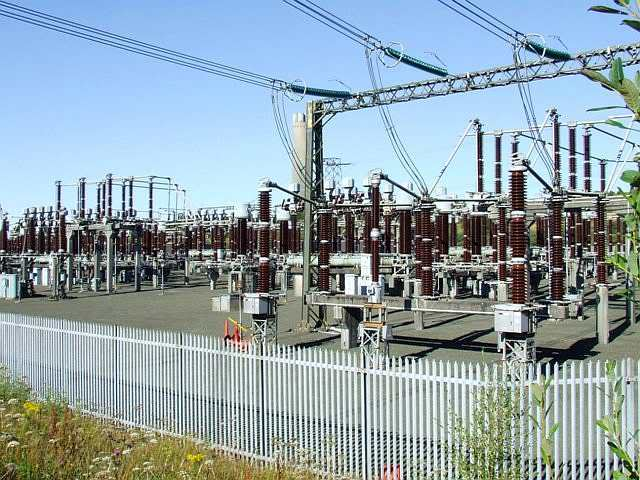
Nigeria’s Transmission Company of Nigeria is moving to embed environmental sustainability, climate resilience and circular economy principles into the planning and management of the country’s electricity transmission network, as the state-owned utility seeks to translate environmental commitments into operational policies, measurable controls and clearer accountability. The shift, discussed during TCN’s Environmental Sustainability Week in Abuja on September 9, reflects a broader recognition that environmental and social risks are increasingly tied to the cost, reliability and delivery of critical power infrastructure.
The initiative comes as TCN faces the practical challenge of maintaining and expanding a transmission system that is central to Nigeria’s economic activity but exposed to physical, operational and financial risks. According to the company’s Executive Director of Finance and Accounts, Chukwuka Ochije, environmental and safety risks can ultimately become financial liabilities when they are not identified, measured and managed. Right-of-way disputes, inadequate environmental safeguards, weak safety systems, poor waste management and infrastructure that is not designed for changing climate conditions can all increase project costs or delay delivery.
 For Nigeria, the issue extends beyond corporate sustainability policy. Transmission infrastructure represents long-term public and commercial investment, and failures in planning can have consequences for electricity reliability, industrial productivity and government finances. The Nigerian Electricity Regulatory Commission’s current performance framework for TCN covers service improvement targets, capital expenditure, operating costs and risk mitigation, while allowing for financing through budgetary allocations, donor funding and public-private partnership models. Integrating environmental and climate risks into that investment framework could therefore influence how future infrastructure spending is assessed and managed.
TCN’s proposed Environmental Health and Safety Framework is intended to provide that institutional structure. The framework covers environmental protection, occupational health and safety, social safeguards, stakeholder engagement, climate resilience, emergency preparedness, compliance monitoring and contractor management. It is designed to operate across the full project cycle, from planning and design through construction, operation, maintenance and eventual decommissioning.
That life-cycle approach is significant for an electricity system where infrastructure can remain in service for decades. Decisions made during procurement or construction can determine future maintenance requirements, exposure to environmental hazards and the cost of eventual replacement or disposal. TCN’s sustainability discussions are therefore moving towards questions that are familiar to infrastructure investors: how assets will perform under changing environmental conditions, how risks will be monitored, who bears the cost when projects encounter delays, and whether materials can be recovered or reused at the end of their useful lives.
Circular economy principles form part of that discussion. Rather than treating equipment and materials as having value only during their initial use, TCN is considering how procurement, maintenance, waste management and end-of-life processes can reduce material losses and recover useful resources. For a large transmission network, this could have implications for the management of electrical equipment, construction materials, metals and other components used across substations and transmission corridors.
The economic rationale is particularly relevant in Nigeria, where infrastructure financing is constrained and capital projects must compete with other public spending priorities. A focus on whole-life costs could change the way investments are evaluated by placing greater weight on durability, maintenance, environmental compliance and resilience rather than concentrating on upfront expenditure. In principle, this can make the environmental dimension of infrastructure investment more closely aligned with conventional financial risk management.
Climate resilience is another area where the distinction between environmental policy and infrastructure economics is becoming less clear. TCN officials have argued that transmission assets need to be assessed against the environmental conditions they are likely to encounter over their operating lives. Extreme weather can damage infrastructure directly, while flooding, erosion, storms and other hazards can increase maintenance requirements and disrupt electricity transmission.
Recent events have demonstrated the exposure of Nigeria’s transmission network to physical risks. In September, TCN declared a force majeure event after the collapse of a 330kV Kainji-Birnin Kebbi transmission tower following heavy winds and rainstorms. The incident affected the transmission of bulk electricity along the corridor and illustrates the operational consequences of infrastructure exposed to severe weather. While individual incidents have multiple causes, the broader challenge for utilities is determining how climate and physical risks should be incorporated into asset design, maintenance and investment decisions.
The social dimension is equally important. Transmission projects require land and rights of way, bringing utilities into direct contact with communities and local economic activities. TCN’s proposed framework includes community engagement, grievance management, livelihood and social impacts, land and right-of-way issues and stakeholder communication. Poor management of these issues can result in disputes, project delays and additional costs, making social safeguards relevant to both project delivery and financial performance.
The framework also places greater emphasis on governance. TCN officials have said policies should establish clear responsibilities, measurable indicators, implementation mechanisms and monitoring arrangements. The company is also planning a database for audits, monitoring activities and management reviews, alongside training, inspections and digital reporting.
That focus on measurement is important as sustainability requirements become increasingly connected to corporate reporting, development finance and infrastructure investment. For state-owned enterprises and utilities seeking external financing, environmental and social safeguards are increasingly part of the assessment of project risk. Stronger internal systems can therefore affect not only regulatory compliance but also an institution’s ability to demonstrate how environmental and social risks are identified and controlled.
Nigeria’s power sector provides a particularly important test case because electricity infrastructure sits at the centre of the country’s industrial and economic ambitions. Reliable transmission is necessary for manufacturing, digital services, commercial activity and households, while weaknesses in the grid can increase reliance on expensive alternative sources of electricity. The cost of transmission failures therefore extends beyond the utility itself and can be reflected in business operating costs, investment decisions and household expenditure.
The transition towards a more sustainable transmission system also intersects with Nigeria’s wider energy transition. The country is seeking to expand electricity access, improve grid reliability and integrate new forms of generation while managing an energy system that remains heavily dependent on fossil fuels. As renewable generation expands, transmission infrastructure will increasingly need to accommodate changing generation patterns, new geographic sources of power and potentially more distributed energy systems.
TCN’s sustainability framework does not by itself resolve those structural challenges. Its significance lies instead in whether environmental and social considerations become embedded in the ordinary processes through which infrastructure is designed, financed, procured, constructed and maintained. The difference between a policy document and an operational system will depend on whether the proposed indicators are consistently applied, whether responsibilities are enforced and whether environmental performance influences investment decisions.
For African power systems more broadly, the Nigerian experience reflects a wider challenge. Utilities across the continent are being asked to expand infrastructure while facing constrained public finances, ageing assets, climate risks and pressure to support cleaner energy systems. The ability to incorporate resilience, resource efficiency and social safeguards into infrastructure planning will increasingly affect the cost and reliability of those investments.
For TCN, the immediate task is to convert the principles discussed during Environmental Sustainability Week into systems that can operate across a large national network. That means linking sustainability objectives to procurement rules, capital planning, contractor management, asset maintenance, environmental assessments and performance reporting.
 The outcome will ultimately be measured not by the number of sustainability policies adopted, but by whether those policies reduce project delays, improve asset resilience, limit environmental liabilities, strengthen community relations and improve the value obtained from infrastructure spending. In Nigeria’s power sector, those are not separate environmental objectives. They are increasingly questions of how the country protects public and private investment in the infrastructure on which economic activity depends.


