


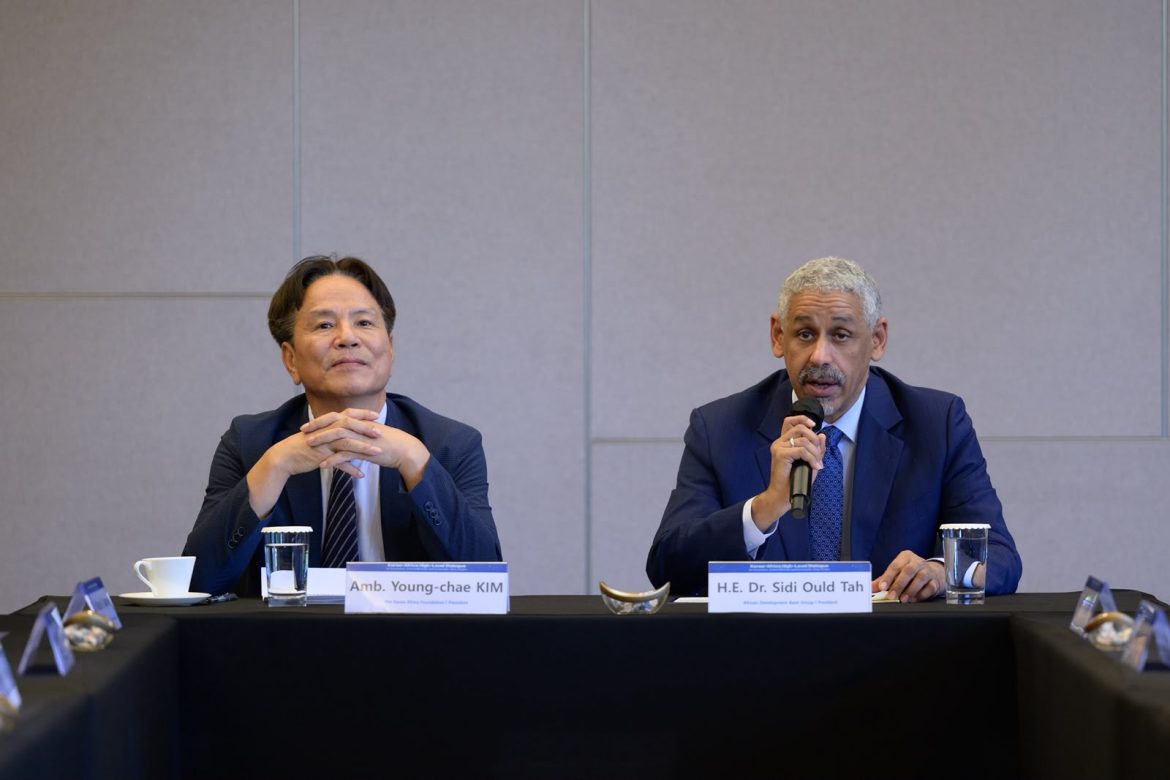
The African Development Bank has presented five regional critical-minerals projects to Korean companies and financial institutions as Africa seeks to attract investment into processing, refining and manufacturing rather than continue relying primarily on exports of unprocessed resources. The discussions in Seoul on 8 September, held ahead of the eighth Korea-Africa Economic Cooperation Ministerial Conference, placed critical minerals alongside infrastructure, energy, manufacturing and sustainable value chains as areas where deeper commercial ties could support Africa’s industrial development.
The meeting comes as demand for minerals used in batteries, renewable-energy equipment, electric vehicles and other technologies increases the strategic importance of Africa’s resource base. For African economies, however, the opportunity is not simply to increase extraction. The larger economic question is whether new investment can create processing capacity, industrial suppliers, skilled employment and infrastructure that allow more of the value generated by mineral resources to remain on the continent.
 According to the African Development Bank, the five regional projects presented to Korean investors cover almost every region of Africa. The bank also outlined guarantee, co-financing and risk-mitigation instruments intended to improve the bankability of projects and address some of the risks that can discourage private investment in African markets.
The emphasis on risk-sharing reflects one of the central constraints facing African industrialisation. Critical-minerals projects frequently require large amounts of capital before they generate revenues, while investors must assess infrastructure gaps, regulatory uncertainty, currency exposure, electricity availability and the reliability of transport networks. For projects involving refining or mineral processing, those requirements can be considerably greater than for extraction alone.
The Korean private sector brings capabilities that could be relevant to this next stage of development. South Korea has built globally competitive industries in electronics, batteries, automobiles, engineering and advanced manufacturing, sectors that depend heavily on secure supplies of critical minerals. Stronger links between Korean companies and African producers could therefore create opportunities to connect mineral extraction with downstream manufacturing, although the extent of those benefits will depend on the structure of individual investments and the infrastructure available around projects.
The discussions also highlighted the importance of infrastructure to the investment proposition. A Korean railway operator participating in the dialogue asked about the African Development Bank’s role in harmonising regulatory frameworks and developing regulations more conducive to foreign investment. An energy and renewable-energy company also sought further information on trends in African electricity markets.
Those concerns point to a broader issue: mineral deposits alone do not create competitive industrial value chains. Mines require roads and railways to move material, ports to reach international markets, reliable electricity for processing and skilled workers to operate increasingly sophisticated facilities. Where these systems are weak, the cost of developing downstream industries can become prohibitive.
Electricity is particularly important. Mineral processing can be energy-intensive, and unreliable power can increase production costs while reducing the attractiveness of locating refining and manufacturing facilities close to mines. For countries seeking to retain more mineral value domestically, investment in generation and transmission may therefore be as important as investment in the mines themselves.
The financing structure will also matter. The African Development Bank’s presentation of guarantees and co-financing mechanisms reflects an attempt to reduce perceived risk and mobilise private capital. The bank highlighted the Pan-African Guarantee Platform, which it is developing under its New African Financial Architecture for Development, as a continental mechanism intended to support risk-sharing and capital mobilisation.
For African governments, such mechanisms could be significant because public budgets alone are unlikely to finance the infrastructure and industrial capacity required to develop continent-wide mineral value chains. At the same time, governments will need to ensure that risk-sharing arrangements do not transfer disproportionate commercial or fiscal risks to the public sector.
The question of local value addition is central to that balance. Exporting raw minerals can generate foreign exchange and government revenues, but processing and manufacturing can create additional economic activity through industrial suppliers, engineering services, logistics, technology and employment. The fiscal benefit can also extend beyond mining royalties if a wider industrial ecosystem develops around resource projects.
Yet local processing is not automatically more profitable. African countries considering downstream investment must contend with global competition, high energy costs, limited domestic markets and the capital requirements of modern refining and manufacturing facilities. Regional integration could help address some of these constraints by allowing producers to serve larger markets through the African Continental Free Trade Area rather than relying exclusively on individual national economies.
This is where regional projects become particularly relevant. A mineral-processing facility serving several countries could achieve greater scale than a plant designed for a single small market, while shared transport and power infrastructure could reduce costs. Such arrangements, however, require coordination among governments on taxation, customs, standards, infrastructure and investment rules.
The environmental and social dimensions are also becoming increasingly important to the economics of critical minerals. As minerals become associated with the global energy transition, investors and international buyers are facing greater scrutiny over how those resources are extracted. Water use, land impacts, biodiversity, worker safety, community relations and emissions can affect both financing conditions and market access.
For Africa, this creates a dual challenge. Countries want to use their mineral resources to accelerate industrialisation and improve public finances, but poorly managed environmental and social risks can generate costly disputes, regulatory delays and reputational damage. Strong governance therefore becomes part of the investment proposition rather than an issue separate from economic development.
The Korean discussions also come at a time when Africa is seeking to diversify its sources of development finance. Competition among global investors for access to critical minerals gives African governments greater potential leverage, but that leverage will depend on their ability to negotiate agreements that support local economic objectives while remaining commercially viable.
The African Development Bank’s role is consequently broader than simply connecting investors with mineral projects. Its financing instruments can help address some of the risks that make African projects difficult to finance, while its regional mandate gives it a potential role in linking mining investment with infrastructure and industrial development.
The immediate outcome of the Seoul meeting is investor engagement rather than confirmed financing commitments. But the direction of the discussions is significant. The focus on concrete projects, guarantees and sustainable value chains suggests that the debate is moving from Africa’s mineral potential towards the practical conditions required to finance and build projects.
For African economies, the test will be whether that interest results in investments that strengthen domestic productive capacity rather than simply expanding commodity exports. Processing more minerals, developing supporting infrastructure and building manufacturing capabilities could broaden the economic contribution of the sector, but doing so will require stable policies, reliable power, efficient transport and financing structures that can withstand the risks of large, long-term projects.
The competition for critical minerals is likely to remain closely linked to the global energy transition, but Africa’s development interest lies beyond supplying the next generation of clean technologies. The more consequential opportunity is to use the demand for those minerals to build industries, infrastructure and skills that remain valuable after individual commodity cycles change.
 The Korea-Africa discussions therefore highlight a fundamental choice for the continent’s resource economies: whether rising global demand for critical minerals becomes another period of intensified extraction or a catalyst for deeper industrialisation. The outcome will depend less on the size of Africa’s mineral reserves than on the investment, institutions and infrastructure capable of converting those resources into lasting economic value.


