


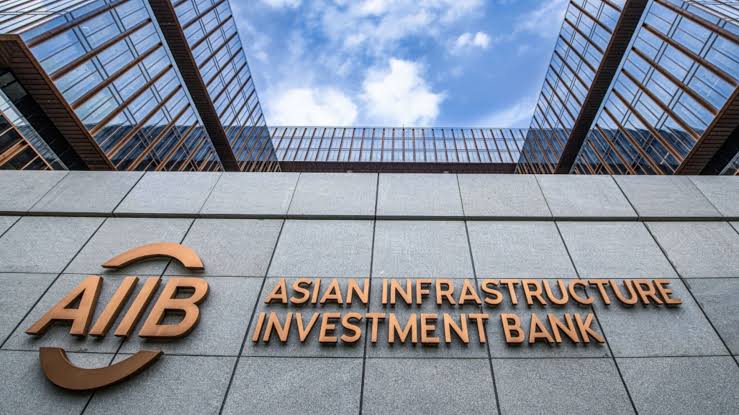
The Asian Infrastructure Investment Bank (AIIB) and the Government of Benin have agreed on a $730 million multi-year infrastructure financing pipeline for 2027–2028, creating a framework for investment in energy, food security, economic resilience and climate policy as the West African country seeks to align infrastructure development with its long-term economic strategy. The agreement, announced on September 24, is AIIB’s first multi-year rolling pipeline in Africa and will support the identification and preparation of projects before they proceed through due diligence and approval.
The arrangement comes as Benin seeks to translate its newly adopted Vision 2060 into longer-term investment programmes while managing the fiscal and climate pressures that accompany rapid infrastructure development. According to AIIB, the indicative $730 million pipeline will include potential operations under its Energy, Food Security and Economic Resilience Facility and climate policy-based financing. Of the amount, $250 million is expected to support policy-based financing linked directly to Vision Benin 2060, although individual projects under the pipeline remain subject to preparation, due diligence and approval.
 For Benin, the significance of the agreement extends beyond the headline financing figure. A rolling pipeline gives the government and a development finance institution a structured mechanism for identifying projects earlier, preparing them for financing and maintaining a longer-term investment programme rather than approaching infrastructure financing as a series of isolated transactions. Benin has also committed resources to AIIB’s Project Preparation Special Fund, signalling an emphasis on the preparation stage, where feasibility studies, technical assessments, safeguards and financial structuring can determine whether infrastructure projects become bankable.
That focus is particularly relevant in a region where the availability of capital is only one part of the infrastructure challenge. Projects in power, transport, water and climate resilience often require substantial preparation before they can attract large-scale financing. Weak project preparation can increase transaction costs, delay implementation and leave governments with infrastructure plans that are difficult to finance on commercial terms. For African economies facing high capital costs, strengthening the pipeline between national development priorities and investment-ready projects is therefore increasingly important.
Benin’s infrastructure requirements also sit within a broader economic transformation. The World Bank has identified investment, industrial expansion and improvements in transport and digital infrastructure as important components of the country’s growth trajectory. Its recent country assessment says Benin’s economy grew by 8% over the first three quarters of 2025, with services and industry among the main drivers, while the Glo-Djigbé Industrial Zone and expanding trade activity are contributing to structural change.
Energy infrastructure remains a particularly important part of that transition. African Development Bank data previously showed that electricity access in Benin increased from 36.5% in 2020 to almost 40% in 2023, while extensive high- and low-voltage network construction was under way. In June 2026, the World Bank also approved a $200 million regional financing package covering Benin, the Central African Republic, Liberia and Sierra Leone to expand access to reliable and clean electricity through distributed renewable-energy systems. The projects illustrate the scale of investment required to connect underserved communities while supporting productive economic activity.
The climate dimension adds another layer to the infrastructure equation. Benin contributes a very small share of global greenhouse-gas emissions but remains highly exposed to climate risks. The World Bank has identified agriculture, urban infrastructure, transport networks, water resources and human development as areas requiring greater resilience. It has also warned that without additional adaptation measures, climate change could result in substantial economic losses over the longer term.
This means that the quality and resilience of infrastructure financed through the new pipeline will be as important as the amount of capital deployed. Roads, electricity networks, water systems and other public assets can lock in costs and vulnerabilities for decades. Integrating climate risks into project design can therefore influence maintenance requirements, service continuity and the long-term fiscal burden on governments.
The financing arrangement also highlights the growing role of policy-based finance alongside traditional infrastructure lending. Rather than directing the entire $730 million towards physical assets, the framework combines potential infrastructure investment with financing linked to economic resilience and climate policy. This reflects a broader shift in development finance towards combining capital expenditure with reforms that can improve the institutional conditions under which infrastructure is planned, financed and maintained.
For Benin, however, this expansion of external financing will need to remain consistent with debt-management objectives. The IMF reported earlier this year that public debt was estimated at 60.5% of GDP in 2024 following a revision to the treatment of several loans, while the country continued to pursue fiscal consolidation and debt-management reforms. The IMF also noted that Benin successfully issued a $500 million seven-year sukuk in January 2026 and reopened a 2038 Eurobond for a further $350 million. The financing environment therefore combines access to international capital with the need for continued attention to debt sustainability and the cost of servicing public liabilities.
The issue is not unique to Benin. Across Africa, governments are being pushed to expand energy, transport, water and digital infrastructure while facing constrained fiscal space and higher financing costs. Development finance institutions are consequently under pressure to help governments develop projects that can attract a wider range of capital, including private investment and blended finance, without transferring excessive risks to public balance sheets.
Benin’s contribution to the AIIB project-preparation fund is significant in this context because project preparation can determine how effectively development finance translates into physical infrastructure and economic activity. For local institutions and businesses, well-prepared projects can create opportunities in construction, engineering, energy services, logistics and maintenance. For communities, the practical test will ultimately be whether investment improves access to electricity, transport, water and other essential services.
The $730 million agreement therefore represents an early-stage financing framework rather than $730 million of immediately approved project spending. Its importance will depend on how effectively projects are selected, prepared, financed and implemented, and whether the resulting infrastructure supports productivity while remaining resilient to climate and fiscal pressures.
 For the wider African infrastructure market, Benin’s arrangement provides another example of how long-term development strategies are increasingly being connected to structured financing pipelines. As governments seek to reconcile economic growth with climate resilience and constrained public finances, the ability to convert national priorities into credible, investment-ready infrastructure programmes is becoming as important as securing the capital itself.


