


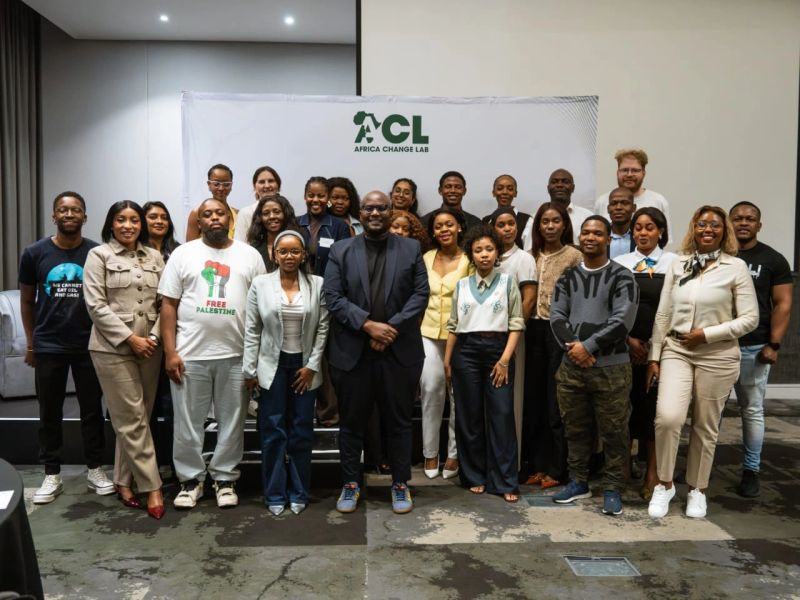
Africa Change Lab has launched a 141-page Beyond Gas: A Campaign Toolkit for South Africa, adding a new research and communications resource to an increasingly consequential debate over fossil gas, energy security, industrial development and the country’s transition towards lower-carbon energy systems. Launched in Johannesburg and reported on September 24, 2026, the toolkit brings together evidence, case studies, audience profiles, message banks and narrative tools intended for communities, journalists, researchers, campaigners and policymakers examining South Africa’s future energy choices. Its release comes as Parliament considers the Gas Bill [B6-2026], legislation intended to modernise the regulatory framework for the gas industry and facilitate investment in gas infrastructure while also providing for socioeconomic and environmentally sustainable development.
The timing places the toolkit within a policy process that could influence how South Africa develops and regulates gas infrastructure over the coming years. Parliament’s Portfolio Committee on Electricity and Energy held public hearings on the Gas Bill in August, receiving 33 written submissions, of which 23 stakeholders requested oral presentations. Industry representatives, regulators, civil society organisations and energy experts participated in the hearings, raising issues ranging from investment certainty and competition to affordability, environmental governance, public participation and the future role of hydrogen in the energy system.
The proposed legislation would repeal the Gas Act of 2001 and establish a new framework covering the orderly development of the gas industry, investment and infrastructure, regulatory oversight, compliance, competition and broad-based black economic empowerment. The Department of Electricity and Energy has said the legislation is intended to create a predictable regulatory environment while strengthening the powers of the energy regulator. Government has also linked the Bill to the Integrated Resource Plan and a forthcoming Gas Master Plan as part of efforts to address future energy requirements and anticipated gas supply constraints.

That regulatory context is important because South Africa’s gas debate is no longer confined to the question of whether the fuel should form part of the country’s energy mix. It increasingly concerns the scale and timing of infrastructure investment, the security of supply, the economics of imported or domestically produced gas, the relationship between gas-fired generation and renewable power, and the potential exposure of businesses and public institutions to long-lived infrastructure decisions.
Africa Change Lab’s toolkit approaches the issue through a public-engagement lens. According to the organisation, its purpose is not to provide a final position on fossil gas but to equip different audiences to examine the assumptions, evidence and distributional consequences associated with competing energy pathways. The publication includes audience archetypes, message banks and case studies intended to translate complex energy questions into forms that can be used in public discussions. Climate Watch Online reported that the toolkit is structured around questions concerning ownership, financial exposure, economic value and the distribution of risks and benefits associated with gas infrastructure.
Those questions have a direct economic dimension. Large energy infrastructure can lock capital into a particular technological pathway for decades, affecting future investment decisions by utilities, industrial companies, financial institutions and governments. The allocation of capital to gas pipelines, terminals, storage facilities, processing plants or gas-fired power generation can therefore influence what financing remains available for other forms of energy infrastructure. At the same time, decisions about energy supply have immediate consequences for industrial competitiveness, electricity reliability and the cost of operating businesses.
South Africa’s policymakers are consequently dealing with several objectives simultaneously. The country needs reliable and affordable energy to support industrial production and economic activity, while also managing emissions and aligning infrastructure decisions with its longer-term transition commitments. The Gas Bill itself reflects this balancing exercise: Parliament says the legislation is intended to strengthen energy security and facilitate infrastructure investment, while its stated objectives also include socioeconomic and environmentally sustainable development.
The debate also has implications for the structure of South Africa’s electricity system. Government has previously argued that gas-to-power projects can help replace coal-based generation and support the transition as the electricity system changes. The Department of Electricity and Energy told Parliament in May that gas would play a role in supporting the transition away from coal through gas-to-power initiatives. At the same time, civil society groups participating in the August hearings raised concerns about environmental governance, methane monitoring and whether gas development is consistent with the country’s just energy transition commitments.
The disagreement is therefore partly about sequencing. Gas can be considered within an electricity system that is adding renewable generation, storage and transmission infrastructure, but the economic implications depend on how long gas assets are expected to operate, how they are financed and how their costs compare with alternatives over their operating lives. For investors and policymakers, the relevant question extends beyond the price of fuel to include infrastructure costs, financing conditions, utilisation rates, carbon exposure, regulatory requirements and the risk that technology or policy changes alter the economics of an asset before it reaches the end of its expected life.
This is where the ownership and financial-risk questions highlighted by Africa Change Lab become relevant to the wider development debate. Energy infrastructure can generate economic activity through construction, employment, manufacturing, logistics and industrial supply chains, but the distribution of those benefits depends on ownership structures, procurement arrangements and the extent of local participation. Similarly, the financial risks can fall differently on utilities, private investors, consumers or the public sector depending on how projects are structured and regulated.
The question of local economic participation is particularly relevant in South Africa’s energy transition. The Gas Bill explicitly includes broad-based black economic empowerment among its objectives, while Parliament’s hearings included discussions about competition and opportunities for smaller operators. The committee also received submissions concerning affordability for low-income households and barriers affecting smaller businesses in the gas market.
For communities, energy policy is ultimately experienced through prices, reliability, employment opportunities, environmental conditions and access to services. This makes public participation more than a procedural element of legislation. The August hearings demonstrated the range of interests involved in the gas debate, with Parliament reporting submissions from industry, regulators, civil society and energy specialists. Committee chairperson Zama Khanyase said the process was intended to help ensure that the legislation balances energy security, economic growth, job creation and environmental sustainability.
The communication challenge is significant because energy policy involves technical concepts that can be difficult to translate into public choices. Questions about gas supply, infrastructure utilisation, methane emissions, power-system flexibility, tariffs and transition pathways can easily become disconnected from the experiences of households and businesses. A resource designed around evidence, case studies and audience-specific communication can therefore become part of the infrastructure of public policy itself, provided users distinguish documented evidence from advocacy positions and campaign messaging.
Africa Change Lab describes itself as a non-profit organisation working to strengthen collaboration around Africa’s climate, energy and development agenda through collective action, research and campaigns. Its stated focus includes government and stakeholder engagement, strategic communications and campaigns, finance and development, and energy and policy reform. The organisation says its broader objective is to support African-led policy reform and development pathways centred on clean energy, economic participation and local ownership.
The organisation’s position places the toolkit within a wider African discussion about how countries can expand energy access and industrial capacity while managing climate and financial risks. South Africa’s choices are particularly significant because its economy has a large industrial and mining base, substantial electricity demand and an energy system historically dominated by coal. Decisions about future energy infrastructure therefore have implications for manufacturing, mining, transport, municipalities and the financial sector.
The country is also dealing with a changing electricity market. In September 2026, Minister of Electricity and Energy Kgosientsho Ramokgopa told Parliament that the government was working on the Electricity Market Transition Paper and reviewing the Electricity Pricing Policy, developments that could affect how electricity markets and investment are structured. The Department of Electricity and Energy has simultaneously continued work on energy security and the financial sustainability of Eskom.
That broader reform agenda means gas policy cannot be examined independently of electricity-market reform, renewable-energy deployment, transmission investment and industrial policy. An investment decision made today may interact with future changes in electricity demand, storage technologies, renewable generation costs and regional power trading. South Africa’s energy transition is consequently becoming a question of portfolio management: how to maintain reliability and economic competitiveness while allocating capital across technologies with different costs, risks and time horizons.
The issue also extends beyond South Africa. Several African economies are considering natural gas as a source of domestic energy, industrial feedstock and export revenue while simultaneously seeking to expand renewable energy and attract climate finance. The choices made by larger markets such as South Africa can influence regional investment expectations, technology supply chains and policy debates. At the same time, African countries have different resource endowments, electricity-access challenges, fiscal conditions and industrial structures, meaning that the economic case for particular energy pathways cannot simply be transferred from one country to another.
For financial institutions, the gas debate also creates a longer-term risk-assessment question. Banks, development-finance institutions and institutional investors financing energy infrastructure increasingly have to assess not only near-term cash flows but also regulatory change, carbon-related policies, technology shifts and the potential for assets to become less competitive over time. Conversely, underinvestment in firm generation, transmission or storage can also create economic risks if electricity systems are unable to meet demand reliably. The financial challenge is therefore one of managing competing forms of transition risk rather than assuming that one technology removes all others.
The Beyond Gas toolkit enters this environment as Parliament continues its consideration of the Gas Bill and government develops the broader policy architecture for the sector. Its significance lies partly in shifting the conversation from a binary argument over whether gas is simply good or bad towards questions about investment, ownership, risk, affordability, environmental impacts and public participation. Those questions do not produce a single policy answer, but they provide a framework through which different energy pathways can be examined against their economic and social consequences.
For South Africa, the immediate policy task is to reconcile energy security with investment certainty, affordability, industrial development and environmental obligations as the electricity system changes. The longer-term issue is whether infrastructure decisions can remain economically viable as the energy system becomes more diversified and climate-related constraints become more important to capital allocation. The 141-page toolkit adds another set of resources to that debate, giving journalists, researchers, communities and policymakers material with which to interrogate the evidence behind competing claims.
The wider African relevance is equally practical. Energy transitions across the continent will require decisions about who finances infrastructure, who owns it, who benefits from new investment and who carries the risks when assumptions change. South Africa’s gas debate therefore provides a case study in a broader development challenge: how African countries can secure reliable energy and build competitive economies while ensuring that long-term infrastructure choices remain compatible with changing markets, climate policy and public priorities.


