


Vodacom has marked one year of commercial virtual wheeling operations in South Africa, highlighting how digital infrastructure and new electricity-market mechanisms can enable large businesses with geographically dispersed operations to access renewable energy without installing generation capacity at every site. The telecommunications company became the first company in South Africa to fully operationalise commercial virtual wheeling at scale in September 2025 after developing the mechanism in partnership with Eskom. The first full operating period, from September 2025 to August 2026, has now provided a year of transaction and settlement experience as South Africa continues to expand private-sector participation in renewable electricity procurement.
The arrangement was originally established through an agreement between Vodacom and Eskom signed in August 2023. The agreement was designed to address a particular challenge faced by businesses with large numbers of electricity consumption points spread across different municipalities and distribution networks. Traditional wheeling arrangements generally involve a generator supplying a specific off-taker through an electricity network, but the model becomes more complex when the buyer has thousands of sites operating across different locations. Vodacom’s virtual wheeling solution was developed to aggregate those electricity demands and match them with renewable generation from independent power producers.
Vodacom Chief Executive Officer Sitho Mdlalose said the partnership with Eskom was developed around four objectives: reducing complexity, using technology to overcome legacy limitations, accessing renewable energy through a commercially viable model and encouraging private-sector participation in addressing South Africa’s energy challenges. The company’s experience is therefore significant not only because of its own renewable-energy objectives but also because it demonstrates how digital systems can be used to manage the administrative and financial processes required when electricity consumption is distributed across a large geographic footprint.
The scale of Vodacom’s operations illustrates the challenge the system was designed to address. The company has more than 15,000 low-voltage sites spread across 168 municipalities in South Africa. Rather than connecting each individual site directly to a renewable generator, the virtual wheeling mechanism aggregates consumption data from the different locations and reconciles it against renewable electricity generated by independent power producers. The system was developed by Mezzanine, a majority-owned Vodacom subsidiary, whose Virtual Wheeling Platform collects, aggregates, processes, accounts for and reports time-of-use electricity data required for Eskom to calculate the buyer’s wheeled-energy refund.
The financial mechanism is important because virtual wheeling does not mean that renewable electricity generated at a solar or wind facility is physically delivered through the grid to each individual Vodacom site. Eskom describes virtual wheeling as a financial mechanism that facilitates the sale and delivery of electricity from independent power producers to end users through the existing transmission and distribution network. Under the system, the end user continues to settle its electricity account with Eskom or the relevant municipality, while Eskom subsequently calculates and pays a refund based on qualifying wheeled energy.
This distinction is central to understanding the potential of the model. Electricity grids already connect generators and consumers across geographical areas, and wheeling allows privately generated electricity to be accounted for when it is supplied to a customer through the network. Eskom notes that wheeling is fundamentally a balancing and financial transaction rather than a system in which the physical electrons produced at one location can be traced directly to a particular customer elsewhere on the grid. Virtual wheeling extends this concept to businesses whose electricity demand is distributed across multiple sites and networks.
The system also depends heavily on data. Consumption at the participating sites must be captured at the required intervals and matched against generation from the contracted independent power producer. Mezzanine says its platform was designed to collect and aggregate generation and consumption data and provide the information Eskom requires to calculate the buyer’s Wheeled Energy Refund. Eskom’s current virtual wheeling framework similarly requires monthly claims, verification and reconciliation before refunds are settled.
Vodacom said the successful processing of monthly refunds over the past year demonstrates that the system can support the transaction process from data management and claim validation through to reconciliation and financial settlement. This is relevant to the broader corporate renewable-energy market because the challenge is not limited to finding renewable generation. Companies operating across multiple locations also need systems capable of accurately measuring consumption, managing contractual arrangements, reconciling generation against demand and ensuring that financial settlements can be completed consistently.
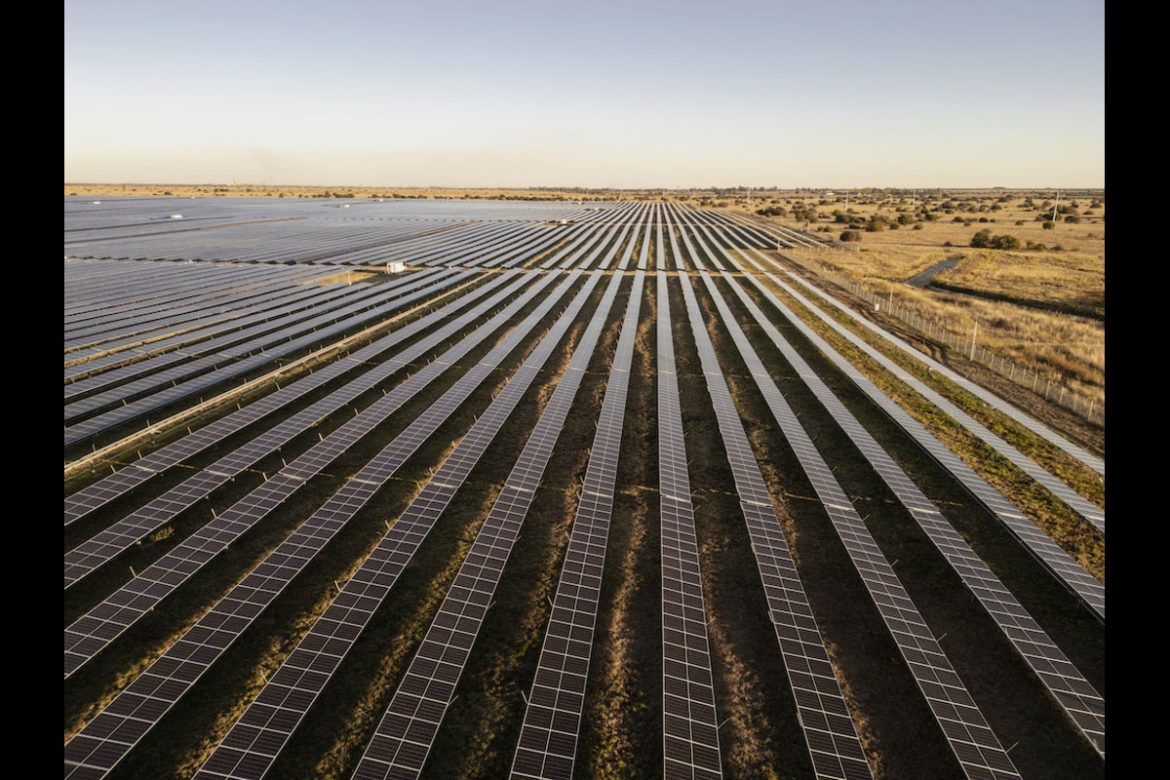
The renewable generation supporting Vodacom’s arrangement comes through a power purchase agreement with independent power producer SOLA Group. Vodacom’s virtual wheeling arrangement became operational in September 2025 using renewable electricity from SOLA’s solar power plant in Virginia in South Africa’s Free State province. SOLA describes the project as Africa’s first multi-offtaker renewable-energy project to include a virtual wheeling arrangement with Vodacom, placing the transaction within the company’s broader experience in corporate renewable-energy wheeling.
The development comes as South Africa’s electricity market continues to evolve beyond the traditional model in which large businesses rely primarily on electricity purchased directly from the national utility. Eskom’s wheeling framework allows privately generated electricity to be transmitted through existing networks to customers in other locations, while its virtual wheeling product provides an additional mechanism for entities representing multiple customers to claim energy purchased from generators. Eskom identifies access to cleaner energy, reduced corporate carbon footprints and support for sustainability initiatives among the potential benefits for businesses.
For companies with concentrated operations, traditional wheeling can already provide a route to renewable electricity procurement. The challenge is greater for businesses such as telecommunications companies, retailers, banks, logistics groups and other enterprises whose electricity consumption is spread across hundreds or thousands of locations. Virtual wheeling creates a mechanism through which such companies can aggregate those consumption points rather than negotiating separate renewable-energy arrangements for every location.
Vodacom’s experience also demonstrates the role of technology in overcoming some of the limitations associated with fragmented electricity infrastructure. The physical electricity network remains unchanged, but digital systems provide the accounting layer required to connect consumption data with renewable generation and financial settlement. This makes the model particularly relevant as South Africa develops a more diverse electricity market in which independent power producers, utilities, municipalities and corporate buyers increasingly interact through different commercial arrangements.
However, virtual wheeling should not be regarded as a standalone solution to South Africa’s electricity challenges. Mezzanine notes that the mechanism does not immediately solve load shedding and that wider benefits for electricity supply depend on sufficient demand from businesses and corresponding private investment in renewable generation. The model can create an additional route for corporate renewable-energy procurement, but its contribution to the electricity system ultimately depends on the development of additional generation capacity, network availability and appropriate market structures.
The model nevertheless forms part of a broader shift towards greater private-sector participation in South Africa’s energy transition. Eskom has been developing new products and approaches to facilitate wheeling, renewable-energy procurement and participation by independent generators. Its wider strategy also includes the development of Eskom Green as a renewable-energy business intended to accelerate renewable-energy availability and support the decarbonisation of the electricity grid.

For Vodacom, virtual wheeling is directly linked to its climate transition objectives. The company has stated that the mechanism supports its ambition to source 100% of its electricity demand from renewable sources. Vodacom’s broader climate reporting indicates that its transition strategy combines energy efficiency, renewable-energy procurement, on-site generation and other mechanisms to reduce emissions associated with purchased electricity.
The significance of the first year therefore extends beyond Vodacom’s own electricity consumption. It provides an operating example of how a company with a highly distributed physical footprint can participate in renewable-energy markets without requiring a renewable generator at each individual site. The experience could be relevant to other businesses facing similar geographical and operational constraints, particularly as corporate demand for renewable electricity grows and companies seek ways to manage energy costs, emissions and energy-security considerations.
The initiative also illustrates how the energy transition increasingly depends on digital infrastructure alongside physical generation assets. Solar and wind projects provide the electricity, transmission and distribution networks move it, while data systems can help manage the increasingly complex commercial relationships between generators, utilities and consumers. In this context, the ability to measure, aggregate and reconcile energy consumption becomes an important component of renewable-energy procurement.
For South Africa, the longer-term relevance of virtual wheeling will depend on whether the model can be replicated across other businesses and whether supporting regulatory, technical and settlement systems can keep pace with wider participation. Eskom’s current framework allows virtual wheeling claims across networks under defined business rules, while the utility continues to refine its products and processes for renewable-energy transactions.
Vodacom’s first year of commercial operations consequently provides a case study in how public-private collaboration, renewable-energy procurement and digital technology can intersect within a changing electricity market. The experience does not remove the need for new generation, stronger networks or broader electricity-sector reforms, but it demonstrates one mechanism through which large companies can participate more directly in South Africa’s renewable-energy transition. As more businesses examine ways to reduce emissions and secure renewable electricity across complex operations, virtual wheeling could become an increasingly relevant part of the country’s evolving corporate energy landscape.


