


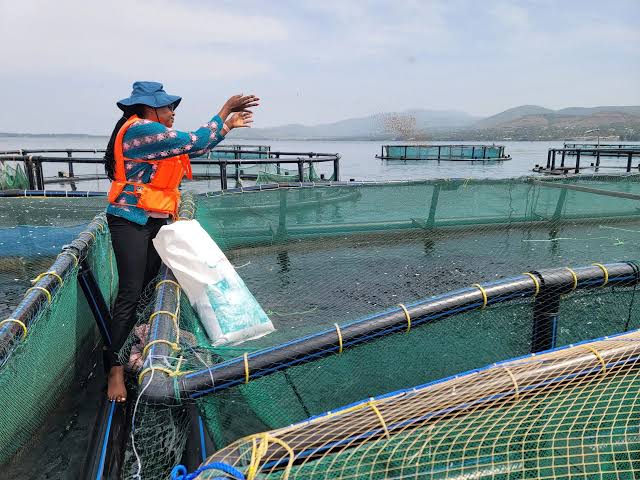
Kenyan aquaculture company Rio Fish has partnered with Ethical Seafood Research (ESR) to strengthen fish welfare practices, improve pre-slaughter and slaughter procedures and begin a pathway towards recognised aquaculture certification, in a move that could extend welfare standards beyond a single farm to a wider network of more than 1,500 fish producers. Announced on September 28, the 24-month collaboration will combine welfare monitoring and training with an assessment against the Aquaculture Stewardship Council (ASC) Farm Standard, placing animal welfare alongside production efficiency, traceability and responsible farming practices in Kenya’s growing aquaculture value chain.
The partnership comes as African aquaculture faces the challenge of expanding food production while improving the environmental, social and operational standards associated with intensive farming. For Kenya, where fish farming has become an important source of food, income and rural enterprise, the implications extend beyond how fish are raised on individual farms. The quality of production practices increasingly affects market access, supply chain credibility and the ability of producers to meet emerging sustainability requirements.

Under the agreement, ESR will train Rio Fish staff in welfare monitoring, low-stress fish handling and the identification of poor welfare using the Five Domains model, while introducing the FAI Tilapia Welfare App to support monitoring. The organisations will also develop protocols for fish handling before slaughter and during slaughter, drawing on experience from ESR’s Harvest Well project in Egypt.
These measures address a part of aquaculture that has received less attention than feed efficiency, water quality and disease management but has growing relevance as production systems become more sophisticated. How fish are handled, transported and slaughtered can affect animal welfare, product quality and operational practices, making welfare management part of the broader question of how efficiently and responsibly a farm operates.
The certification component adds another layer. ESR, which is a qualified Implementer for the ASC Improver Programme, will support Rio Fish through an Aquaculture Improvement Project beginning with a baseline assessment against the ASC Farm Standard. The process is expected to establish time-bound improvement measures and provide technical support as the company works towards certification.
For Kenyan producers, certification can have significance beyond environmental credentials. International buyers, investors and supply chain partners increasingly rely on standards and traceability systems to assess how commodities are produced. In aquaculture, this can make the ability to document farming practices an economic consideration alongside production costs, access to finance and market demand.
Rio Fish’s position in the supply chain gives the initiative a potentially wider reach. The company farms tilapia in cages but also aggregates fish from other producers and provides training to farmers. According to the partnership announcement, its wider producer network includes more than 1,500 farmers. This means practices developed through the collaboration could potentially be transferred through training and technical support rather than remaining confined to the company’s own production operations.
That distinction is important in African agriculture and aquaculture, where production is often fragmented among small and medium-sized producers. Raising standards across a network can be more difficult than improving a single commercial operation because producers differ in access to finance, technology, training, infrastructure and markets. It also means that standards need to be practical enough to operate under local conditions if they are to move beyond formal compliance and become part of routine farm management.
Kenya’s aquaculture sector operates within a broader food and economic system in which fish contribute to nutrition, employment and household incomes. Improvements in production practices therefore have consequences across the value chain, from farmers and aggregators to processors, traders and consumers. At the same time, stronger standards can create new costs for producers where improvements require additional equipment, monitoring, training or changes to existing handling systems.
The certification pathway also highlights a wider issue facing African producers seeking access to sustainability-linked markets: the gap between having responsible practices and being able to demonstrate them through recognised systems. As sustainability requirements become more embedded in procurement, finance and international supply chains, documentation, monitoring and verification can become commercially relevant. Smaller producers may face a disproportionate burden if certification processes are expensive or technically demanding, making shared training and producer networks potentially important mechanisms for reducing those barriers.
The Kenyan initiative also reflects a wider shift in aquaculture sustainability discussions. Across Africa, governments and private investors are looking to aquaculture to supplement capture fisheries and meet rising demand for animal protein while reducing pressure on natural fish stocks. But expanding production brings questions around water use, feed inputs, disease management, farm siting, biodiversity, waste and the social conditions of workers and surrounding communities. Animal welfare is one part of that wider sustainability equation, rather than a substitute for environmental or social safeguards.
For financial institutions and development partners, these issues can increasingly intersect with environmental and social risk management. Aquaculture projects may require investment in cages, hatcheries, feed systems, cold-chain infrastructure, processing facilities and distribution networks. The ability of operators to manage environmental and operational risks can influence the durability of those investments, particularly where production is exposed to climate variability, water-quality changes and market disruptions.
The partnership’s initial 24-month timeframe provides scope for both organisations to assess whether the practices introduced at Rio Fish can be incorporated into routine operations and extended through its farmer network. Its wider significance will depend in part on whether welfare monitoring, improved slaughter practices and certification requirements can be translated into practical systems that producers can maintain as production expands.
For Kenya and other African aquaculture markets, the underlying challenge is increasingly one of scale and implementation. Sustainability standards have limited value if they remain concentrated among a small number of large producers, while poorly designed requirements can impose costs that smaller farmers struggle to absorb. The Rio Fish–ESR collaboration therefore offers a test of whether welfare and certification systems can move from individual farm practices into wider producer networks without disconnecting sustainability requirements from the economic realities of African aquaculture.

As the continent seeks to expand food production, strengthen agricultural value chains and attract investment into sustainable industries, the ability to combine productivity with credible environmental, social and animal-welfare practices is becoming a practical market consideration. In Kenya’s aquaculture sector, that increasingly means demonstrating not only how much fish is produced, but also how it is produced, handled and brought to market.


