


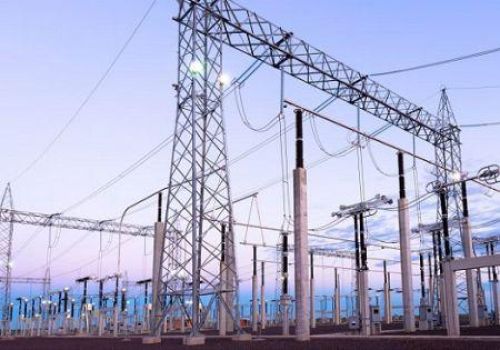
Italian energy company Eni has opened a contractor selection process for a $130 million, 75-megawatt (MW) natural gas-fired power plant in southern Mozambique, advancing plans to expand domestic electricity generation as the country continues to pursue universal electricity access by 2030.
The proposed facility will be located in Temane, in Inhassoro district, Inhambane province. Eni Rovuma Basin B.V.’s Mozambique branch has invited qualified companies to express interest in providing engineering, procurement and construction services, with applications due by 31 October 2026. The process is intended to identify contractors for the plant’s construction, equipment supply, installation, testing and commissioning.
The project was announced in October 2025 by President Daniel Chapo alongside the final investment decision for Eni’s $7.2 billion Coral Norte liquefied natural gas (LNG) development. It forms part of a wider investment programme that links Mozambique’s natural gas resources with electricity infrastructure, although the plant’s eventual contribution to national access will depend on its delivery, connection to the power system and the expansion of distribution networks.

Chapo welcomed Eni’s commitment to infrastructure beyond gas production when Coral Norte was approved, saying the company’s investment reflected a contribution to Mozambique’s sustainable development and energy infrastructure that could directly benefit citizens.
The timing is significant for a country seeking to translate its substantial energy resources into wider economic development. Data presented by state-owned utility Electricidade de Moçambique (EDM) in August 2026 indicated that electricity access covered approximately 70% of the population, leaving around 30% without access. The government’s target is to achieve universal electricity access by 2030, requiring further investment in generation, transmission, distribution and connections for households and businesses.
The 75 MW plant would add generation capacity to this effort, but new electricity production does not automatically translate into new connections. Households in remote or underserved areas may remain beyond the reach of the national grid, while the affordability of connections and the reliability of supply also affect whether electricity infrastructure delivers practical benefits. Mozambique’s challenge is therefore to expand generation alongside the networks and services needed to deliver power to end users.
The proposed plant is distinct from the 450 MW Temane Thermal Power Plant being developed in the same region. That larger facility is designed to use natural gas from the Temane and Pande fields and forms part of Mozambique’s efforts to increase electricity generation and support regional power supply. The two projects illustrate the role of gas-fired generation in the country’s electricity plans, while also making it important to clarify how new capacity will be integrated into the national system.
Eni has operated in Mozambique since 2006 and has become a central participant in the country’s offshore gas industry. Its Coral Sul floating LNG facility began production in 2022, marking Mozambique’s entry into large-scale LNG exports from the Rovuma Basin. Coral Norte, the company’s next major development, is expected to begin production in 2028.
The Coral Norte project has an estimated investment value of $7.2 billion and a planned LNG production capacity of approximately 3.55 million tonnes annually. The development is being undertaken by a joint venture comprising Eni, with a 50% interest, China National Petroleum Corporation (20%), Korea Gas Corporation (10%), Mozambique’s state-owned Empresa Nacional de Hidrocarbonetos (10%) and XRG, an ADNOC subsidiary, with the remaining 10%.
Once Coral Norte enters operation alongside Coral Sul, Mozambique’s LNG production capacity is expected to exceed seven million tonnes a year. The government and project partners view the development as a source of export revenue, investment and potential economic activity. However, the extent to which the gas industry supports broader development will depend partly on how domestic infrastructure, public revenues, local procurement and employment opportunities are managed.
The proposed Temane plant gives that question a domestic electricity dimension. While Coral Norte is designed to supply international LNG markets, the 75 MW facility would be directed towards electricity generation within Mozambique. Its development therefore raises a practical issue for resource-rich countries: how to ensure that investment in export-oriented energy projects is accompanied by infrastructure that supports local economic activity and household needs.
For businesses, additional reliable electricity can help reduce dependence on costly alternatives, improve operating hours and support industrial activity. In areas where supply is constrained, greater generation capacity can contribute to economic growth if the electricity system can transmit and distribute the additional power where demand exists. The scale of those benefits, however, will depend on the plant’s operating performance, gas supply arrangements and integration with EDM’s network.
Mozambique has made progress in expanding access. The World Bank reported that electricity access increased from 31% of the population in 2018 to approximately 60% by the end of 2024, with its ProEnergia programme contributing more than 514,000 household connections between 2020 and 2024. The programme also supported electricity connections for public facilities and commercial enterprises. These results demonstrate that access expansion depends not only on generating capacity but also on sustained investment in distribution infrastructure and the practical delivery of connections.
The country’s National Energy Compact sets a target of universal electricity access by 2030, combining grid expansion with off-grid solutions. This approach recognises that a single infrastructure model may not be sufficient to serve all communities, particularly those in sparsely populated or remote areas. Mini-grids, standalone solar systems and other decentralised options can complement the national grid where extending conventional infrastructure is costly or takes time.
The 75 MW project’s contribution to this broader target will depend on the arrangements for selling and distributing its electricity, as well as coordination between Eni, EDM and the relevant public authorities. The contractor selection process is an important step, but it is not the same as a construction award or confirmation of an operational date. The project will still need to move through procurement, construction and commissioning before the additional capacity becomes available.

Gas-fired generation also presents a longer-term planning question as Mozambique develops its electricity system. Natural gas can provide dispatchable power that can be adjusted to meet demand, but the country must weigh the cost of fuel and infrastructure against the changing economics of renewable generation, storage and grid investment. The World Bank’s National Energy Compact includes plans to expand renewable capacity alongside other generation sources, indicating that Mozambique’s energy strategy will require a mix of supply and access solutions.
For policymakers, the central measure of success will be whether investments in gas resources and electricity infrastructure improve the reliability, affordability and reach of energy services. For Eni, the Temane plant adds a domestic power component to a portfolio more widely associated with LNG exports. For Mozambique, the project represents an opportunity to increase generation, but its wider development value will be judged by the electricity that reaches homes, public institutions and businesses.
With the contractor application deadline set for 31 October 2026, the next stage will be to identify a qualified builder and move the project towards implementation. Meeting the 2030 access target will require continued investment beyond individual power plants, including transmission, distribution, last-mile connections and off-grid systems. The challenge is not simply to produce more electricity, but to ensure that the country’s expanding energy infrastructure delivers tangible benefits across its economy and population.


