


Norwegian renewable energy developer Scatec and the European Bank for Reconstruction and Development (EBRD) have agreed to establish a $221 million renewable energy investment platform in Egypt, creating a shared ownership structure intended to accelerate the development of large-scale solar, wind and battery storage projects while strengthening the country’s energy security.
The agreement, signed on 22 October 2026, gives the EBRD a 40% stake in the new investment vehicle, with Scatec retaining 60% ownership and responsibility for project development, construction and asset management. The bank’s commitment includes approximately $170 million in equity financing, with the remainder provided through project-level guarantees, according to Scatec.
The platform, known as Egypt Renewables Holdings B.V., is designed to finance a portfolio of projects at different stages of development. Its initial investments are expected to include a 40% equity interest in the Obelisk solar and battery storage project, a 51% interest in the Shadwan wind project, and approximately 60% interests in the first phase of the Egypt Aluminium project, also known as Dandara, and the Energy Valley development. Other minority investors will retain interests in the underlying projects.

The partnership marks a shift from financing individual renewable energy projects towards an investment structure in which a development finance institution becomes a direct shareholder across a portfolio of assets. For Scatec, this could provide additional capital to advance projects while sharing investment requirements and risks with a long-term institutional partner. For Egypt, it offers a financing channel for expanding renewable generation and battery storage as electricity demand and pressure on energy supply remain important economic considerations.
Scatec chief executive Terje Pilskog said Egypt had become one of the company’s most important markets, adding that the partnership would bring institutional capital and a long-term commitment to support its regional growth plans. Harry Boyd-Carpenter, EBRD managing director for sustainable infrastructure, said the investment would support Egypt’s energy security and help reduce reliance on imported fossil fuels.
The proposed portfolio is substantial. The EBRD has described the platform’s initial pipeline as targeting the addition of approximately 2.7 gigawatts (GW) of solar capacity, 900 megawatts (MW) of wind generation and 4.2 gigawatt-hours (GWh) of battery storage in Egypt. These figures represent the planned portfolio, not capacity already operating. Delivery will depend on project construction, financing arrangements, grid connections and the completion of the necessary approvals.
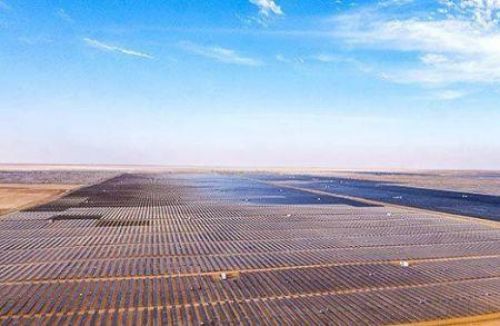
One of the portfolio’s central assets is Obelisk, a 1.1 GW solar photovoltaic project paired with a 100 MW/200 MWh battery energy storage system. The development reached full commercial operations in August 2026, with electricity supplied to the Egyptian Electricity Transmission Company under a 25-year power purchase agreement. Its scale demonstrates how solar generation and storage can be combined to provide electricity during periods when solar output declines, although actual system performance depends on operating conditions and dispatch arrangements.
The EBRD had already participated in financing Obelisk alongside the African Development Bank (AfDB) and British International Investment (BII). The three institutions provided approximately $479.1 million in project financing when the development reached financial close in June 2025. The new platform adds a different financing dimension by giving the EBRD an ownership interest through a broader investment vehicle rather than limiting its role to lending against an individual project.
Shadwan, the platform’s proposed wind investment, is a 900 MW onshore wind project being developed by Scatec in partnership with EDF power solutions. Construction began in October 2026, and the project is expected to generate approximately 4 terawatt-hours of electricity annually once operational, according to Scatec. The company has also been arranging equity partnerships and project financing to support its development.
The other two planned investments extend the portfolio into hybrid solar and storage infrastructure. The first phase of Egypt Aluminium, or Dandara, is planned to combine 1.125 GW of solar generation with 200 MWh of battery storage. Energy Valley is designed as a 1.95 GW solar project paired with approximately 3.935 GWh of battery storage and associated transmission infrastructure. Both developments remain part of the broader project pipeline, meaning their anticipated contribution will depend on financing, construction and commissioning.
The inclusion of storage is particularly important for Egypt’s power system. Solar plants produce electricity primarily during daylight hours, while demand continues into the evening. Batteries can shift part of the electricity generated during high-output periods to times when solar generation falls, helping to manage fluctuations and improve the usefulness of renewable power. However, storage does not replace the need for transmission infrastructure, grid management, dispatchable capacity and adequate investment in electricity networks.
The investment platform also reflects the financing challenges faced by large renewable energy developments in emerging markets. Projects require substantial upfront capital before they begin generating revenue, while their financial viability depends on long-term electricity purchase agreements, reliable payment arrangements and confidence in regulatory and contractual frameworks. Equity partnerships can help distribute capital requirements among several investors and reduce the amount of funding that a single developer must commit to each project.
For development finance institutions, direct equity participation can also provide a way to support projects that require long-term capital and help attract additional private investment. The EBRD has operated in Egypt since 2012 and says it has invested more than €16 billion across 238 projects in the country. Its renewable energy portfolio includes both project lending and support for wider investment structures intended to mobilise private capital.
Scatec has developed a similar approach through its existing Egyptian portfolio. The company entered the market in 2015 and has invested in projects including the 380 MW Benban solar plant and the Obelisk development. It has also brought financial partners into individual projects to share ownership and improve capital efficiency. Under the new platform, Scatec will remain the lead sponsor, engineering, procurement and construction provider, and asset manager for the projects it brings into the structure.
The arrangement could eventually extend beyond Egypt to other markets in the southern and eastern Mediterranean region. Such expansion remains a possibility rather than a confirmed investment commitment in any additional country. Future deployment will depend on the pipeline of bankable projects, the regulatory conditions in prospective markets and the platform’s ability to mobilise further capital.

Egypt’s broader energy strategy provides context for the partnership. The government has been seeking to increase renewable generation, strengthen electricity security and reduce exposure to imported fossil fuels. The projects supported by the platform fall under the energy pillar of the country’s Nexus of Water, Food and Energy initiative, launched during the COP27 climate conference in Sharm El-Sheikh. The programme aims to mobilise private-sector investment in renewable electricity and related infrastructure.
The economic implications extend beyond generation capacity. Large renewable energy developments can create construction and technical jobs, support local service providers and help meet industrial electricity demand. The scale of these benefits, however, will depend on local procurement, skills development, the reliability of power delivery and whether projects translate into competitive electricity costs for businesses and consumers.
The platform’s effectiveness will ultimately be judged by its ability to turn planned capacity into operating assets. The ownership agreement creates a financing framework, but it does not mean that all the targeted projects have reached financial close or completed construction. Each development must still meet its own technical, commercial and regulatory requirements.
For Scatec, the partnership offers a mechanism to expand its Egyptian portfolio while bringing in a major institutional investor. For the EBRD, it provides a direct stake in a pipeline of renewable energy assets with the potential to support electricity security and reduce dependence on imported fossil fuels. For Egypt, the opportunity lies in adding large volumes of solar and wind generation while developing the storage and grid infrastructure needed to integrate that electricity into the national system.
As African and Middle Eastern economies seek to expand renewable generation, the structure offers a potential model for financing portfolios rather than relying exclusively on project-by-project investment. Its wider significance will depend on whether the partnership delivers the planned assets on time, attracts further investment and supports a more resilient electricity system.


