


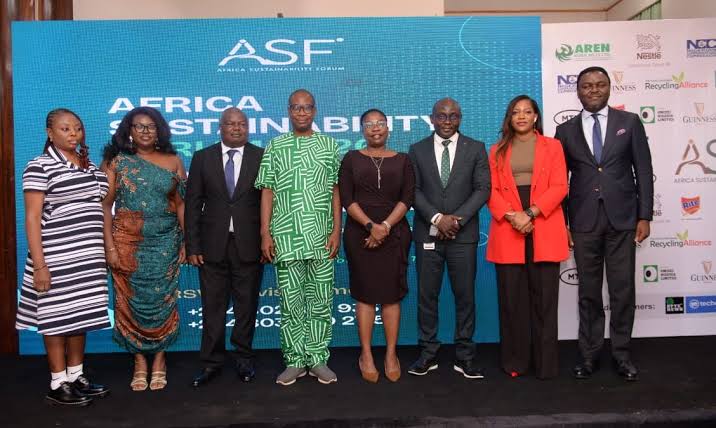
Africa’s transition to a lower carbon economy will depend on expanding affordable electricity, creating jobs and mobilising investment for local industries, speakers at the inaugural Africa Sustainability Forum 2026 said in Lagos, Nigeria, on 26 October, highlighting a financing gap between the continent’s energy needs and available commitments. The forum cited an estimated $15 billion in annual financing requirements for energy access, against less than $2.5 billion committed, underscoring the challenge of aligning climate goals with economic development and the needs of communities still without reliable energy.
The gathering brought together business leaders, policymakers and sustainability professionals to examine how African economies can pursue climate objectives while addressing poverty, infrastructure deficits and the need for industrial growth. Discussions focused on translating sustainability commitments into practical economic outcomes, with energy access, employment and local value addition emerging as central elements of a transition suited to the continent’s development priorities.

In a presentation titled “What Does a Just Transition Mean to Africa?”, Marilyn Obaisa-Osula, Partner and Head of ESG, Sustainability and Climate Change Services and Net Zero Leader for PwC’s West Market Area, identified five priorities: universal access to affordable and reliable energy, decent jobs for a growing workforce, industrialisation and local value addition, a fair distribution of transition costs, and protection for workers and communities dependent on fossil fuel industries.
According to the presentation, approximately 600 million Africans lack access to electricity, while about one billion do not have access to clean cooking. These gaps affect household welfare and economic productivity, limiting the ability of businesses to operate efficiently and constraining opportunities for education, healthcare and industrial development. The figures also illustrate why the continent’s transition cannot be assessed solely through emissions reductions without considering the cost and reliability of energy services.
The financing shortfall is particularly significant for countries seeking to expand electricity networks, develop renewable generation and improve access in underserved rural and peri-urban areas. The forum’s estimate of $15 billion in annual energy access requirements, compared with less than $2.5 billion committed, points to the need for greater mobilisation of public resources, concessional finance, grants and private investment. The figures cited at the event relate to energy access and should not be interpreted as the total financing required for Africa’s wider energy transition.
For governments facing debt-service obligations and competing demands on public spending, the terms of climate finance are as important as its volume. Commercial borrowing can increase the cost of infrastructure projects where revenues are uncertain or electricity tariffs cannot fully cover investment and operating expenses. Grants and concessional loans can reduce that burden, particularly for rural electrification, clean cooking and infrastructure serving low income communities. However, funding must also be matched with credible project preparation, effective procurement and institutions capable of maintaining assets over time.
The forum also placed job creation and industrialisation at the centre of the transition debate. Africa’s growing workforce will require employment opportunities beyond the extraction and export of raw materials. Processing critical minerals, manufacturing components for clean-energy systems and developing regional supply chains could retain more value within African economies, while creating demand for technical skills, logistics and supporting services.
That potential depends on infrastructure and investment conditions. Mineral processing and manufacturing require dependable electricity, transport networks, water supplies and access to finance. Where power is unreliable or expensive, businesses may rely on diesel generation, raising operating costs and emissions. Expanding clean and reliable electricity could therefore support both decarbonisation and industrial competitiveness, provided that new capacity is connected to demand and delivered at prices businesses and households can afford.
The transition also carries distributional risks. Communities and workers dependent on fossil fuel production, transport and related industries may face disruption as energy systems change. Without retraining, social protection and alternative sources of employment, the costs could fall disproportionately on households and regions with limited economic options. The forum’s call for a fair distribution of transition costs reflects the need to integrate employment and social policy into energy planning rather than treating them as separate concerns.
Digital infrastructure was another focus of the discussions. Dr Aminu Maida, Executive Vice-Chairman of the Nigerian Communications Commission, represented at the forum by Oluntunde Osunleye, Principal Manager for Regulatory Services, highlighted the importance of consistent policies in giving businesses and investors confidence to commit capital. His presentation addressed green telecommunications infrastructure and infrastructure sharing, alongside the role of regulation and partnerships in supporting the digital economy.
Telecommunications networks are increasingly important to financial services, public administration, commerce and access to information, but they also depend on reliable electricity and investment in infrastructure. Energy efficient equipment, renewable power and shared infrastructure could help reduce costs and improve service delivery, particularly where operators face high expenses to extend coverage. Achieving these benefits will require coordination between regulators, network operators, energy providers and investors.
The forum’s discussions reflect a wider policy challenge for African governments: climate commitments must be translated into investment that improves energy access, strengthens productive capacity and supports livelihoods. The balance will differ across countries, depending on existing electricity systems, fiscal conditions, industrial priorities and the availability of domestic energy resources. A uniform approach risks overlooking the different costs and development constraints facing economies across the continent.
For investors, the scale of unmet energy demand represents a potential market, but converting that demand into bankable projects will require predictable regulation, viable revenue models and financing structures suited to local conditions. For governments, the challenge is to expand access while avoiding excessive fiscal exposure and ensuring that infrastructure delivers reliable services. For households and businesses, the outcome will be measured in the affordability of electricity, the reliability of supply and the opportunities created for work and enterprise.

The Africa Sustainability Forum 2026 placed these economic considerations at the centre of the green transition debate. Its financing figures underline the gap between energy access ambitions and current commitments, while its focus on jobs, local processing and social protection points to the broader conditions needed for a transition to support development. Whether these priorities translate into lasting gains will depend on how governments, financial institutions and private investors turn commitments into projects that are affordable, productive and accessible to the communities that remain underserved.


