


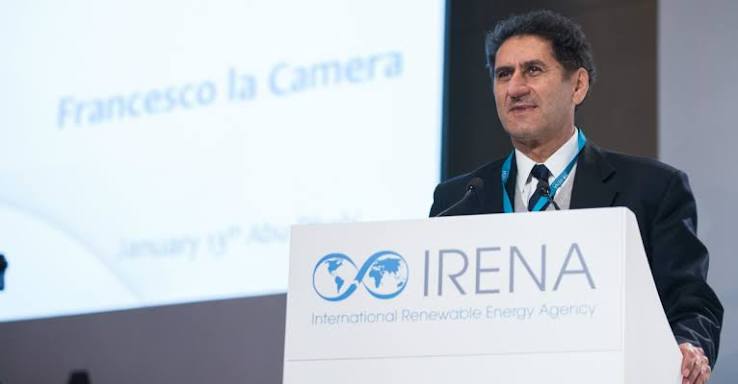
Global renewable energy capacity additions are expected to decline in 2026 after five consecutive years of growth, as electricity grids struggle to accommodate the rapid expansion of solar and wind power. The outlook, outlined by International Renewable Energy Agency (IRENA) Director-General Francesco La Camera on 27 October during Singapore International Energy Week (SIEW), signals a growing infrastructure challenge for the global energy transition, with grid capacity increasingly determining how quickly new renewable energy projects can be brought into operation.
According to La Camera, the volume of renewable energy capacity installed globally in 2026 is likely to fall below the level recorded in 2025. The expected slowdown follows a record year in which the world added 692 gigawatts (GW) of renewable energy capacity, representing a 15.5% increase and bringing total installed capacity to 5,149 GW.
The anticipated decline does not necessarily reflect a loss of momentum in renewable energy investment or project development. Instead, it points to a widening gap between the speed at which renewable power plants are being constructed and the ability of electricity networks to transmit and distribute the electricity they generate. In several major markets, grid limitations are emerging as a constraint on further renewable energy deployment.

The challenge is particularly visible in China, the world’s largest renewable energy producer. La Camera said renewable energy development in the country is slowing because grid infrastructure cannot always absorb all the electricity generated. Similar constraints are affecting Australia and Japan, where the expansion of renewable generation is increasingly dependent on the capacity of existing electricity networks and the pace of grid upgrades.
China’s experience illustrates the consequences of this imbalance. During the first half of 2026, the country curtailed enough renewable electricity to power Mexico for an entire year. Curtailment occurs when electricity generated by power plants cannot be fully absorbed by the grid, forcing operators to reduce output even when renewable resources are available. The scale of the reported reduction highlights the economic and operational costs of developing generation capacity without corresponding investment in transmission and distribution infrastructure.
The implications extend beyond individual markets. China has played a significant role in driving global renewable energy capacity growth, supported by large-scale investment in solar and wind installations. A slowdown in its additions therefore has consequences for global deployment figures. La Camera indicated that growth in other markets is unlikely to compensate fully for weaker expansion in China, although he did not provide a numerical forecast for total global renewable capacity additions in 2026.
The expected slowdown follows a period in which renewable energy has become the dominant source of new electricity generation capacity. In 2025, renewables accounted for 85.6% of all newly installed power generation capacity worldwide, according to IRENA. Solar energy led the expansion, with approximately 510 GW added during the year, while wind power contributed a further 159 GW.
These figures demonstrate the scale at which renewable generation has expanded, but they also expose the limitations of treating installed capacity as the sole measure of progress. Electricity generated by solar and wind projects must be transported to consumers, balanced against demand and integrated into power systems that were often designed around different generation patterns. Without sufficient grid infrastructure, additional renewable capacity may not translate into an equivalent increase in usable electricity.
The International Energy Agency (IEA) has identified grid infrastructure as a major obstacle to the energy transition. At least 3,000 GW of renewable energy projects worldwide are awaiting grid connections, reflecting the growing backlog between project development and access to electricity networks. The scale of this pipeline suggests that the challenge is no longer limited to securing land, financing or technology for new power plants. Grid access and network readiness have become central considerations in determining whether projects can proceed to commercial operation.
For governments and energy investors, the shift raises questions about how capital is allocated across the power sector. Investment has increasingly focused on expanding renewable generation, but transmission lines, substations, distribution networks and system flexibility require substantial funding and long development timelines. Where these investments lag behind new generation, projects risk facing connection delays, reduced output or uncertainty over their commercial viability.
The challenge is also relevant to emerging and developing economies, including African countries seeking to expand renewable energy while improving electricity access. Solar and wind projects offer opportunities to diversify power generation, reduce dependence on fossil fuels and serve communities that remain underserved by national grids. However, weak transmission networks, limited distribution capacity and inadequate system planning can restrict the benefits of new generation investments.
For African energy markets, the issue is not simply whether more renewable energy projects can attract finance. It is whether electricity systems can connect, transport and distribute the power reliably. Countries pursuing large-scale solar and wind development will need to align generation plans with grid expansion, storage, regional power interconnections and more flexible electricity markets. This is particularly important where renewable projects are developed far from major demand centres or where existing networks have limited capacity.

The global experience also highlights the importance of integrating grid development into renewable energy planning from the outset. Investment in generation and network infrastructure must progress together if new capacity is to deliver its intended contribution to electricity supply. This requires stronger coordination between governments, utilities, regulators, project developers and financiers, alongside regulatory frameworks that provide clarity on connection processes and investment responsibilities.
The expected decline in global renewable capacity additions in 2026 therefore marks a significant point in the energy transition. After years of rapid growth in solar and wind installations, the next phase will depend increasingly on the infrastructure needed to accommodate them. With thousands of gigawatts of projects awaiting grid connections, the ability to modernise electricity networks may prove as important as the ability to build new renewable power plants.
For the global energy sector, the measure of progress is shifting from how much renewable capacity can be installed to how much of that capacity can be connected, integrated and used. Without corresponding investment in power grids, the expansion of renewable generation risks outpacing the systems required to deliver its benefits.


