


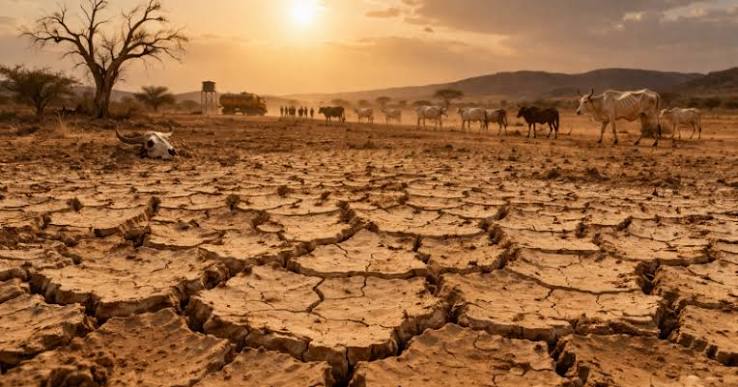
Developed countries provided $28.2 billion in climate adaptation finance to developing economies in 2024, less than one-tenth of the estimated $305 billion needed annually by 2035, according to a United Nations report released on November 4, raising concerns over how African governments will finance infrastructure resilience, protect livelihoods and manage mounting climate-related economic risks. The findings come ahead of COP31 in Antalya, Türkiye, where governments are expected to discuss climate finance commitments and the gap between funding pledges and the needs of vulnerable countries.
The United Nations Environment Programme’s 2026 Adaptation Gap Report says international public adaptation finance increased by only $1 billion in 2024, remaining far below the level required to support developing countries as extreme weather intensifies. The report estimates that annual adaptation financing needs could reach $420 billion by 2035, increasing the pressure on governments and development institutions to mobilise additional resources.
For Africa, the shortfall has direct implications for public finances, infrastructure investment and economic stability. Many countries face growing exposure to drought, floods, water shortages and extreme temperatures, while limited fiscal space constrains their ability to finance adaptation through domestic budgets. The financing gap could leave governments increasingly dependent on external support to maintain essential infrastructure and protect communities from climate-related disruptions.
According to the report, the $28.2 billion provided by developed countries in 2024 was substantially below the $40 billion annual adaptation finance target that developed countries had committed to reaching by 2025. A subsequent international commitment to triple adaptation finance to $120 billion annually by 2035 would still cover only a fraction of projected requirements.
The gap is particularly significant for African economies where climate exposure intersects with infrastructure deficits, agricultural dependence and public debt pressures. Flooding can damage roads, bridges, electricity networks and water systems, while prolonged drought can reduce agricultural production, weaken rural incomes and increase pressure on food prices. Governments may consequently face higher reconstruction costs and additional demands for public spending at the same time that economic activity and revenue collection are under strain.
The report’s findings also highlight the difference between financing climate mitigation and adaptation. While investments in renewable energy and emissions reduction can attract private capital through commercial returns, adaptation projects often involve public goods whose benefits are difficult to monetise. Flood protection, early warning systems, resilient roads, water infrastructure and agricultural support can reduce economic losses, but they may not generate revenue streams sufficient to attract conventional investors.
That distinction matters for African governments seeking to mobilise private finance without transferring excessive costs to public budgets or households. Commercial financing may support infrastructure with predictable revenue, but projects serving vulnerable communities often require grants, concessional loans or public investment to remain affordable.
The UN report says financing from development banks and between developing countries has increased, with those flows more than doubling from $3.8 billion in 2019 to $9.6 billion in 2024. Multilateral development bank financing is also estimated to have risen substantially in 2025.
Those flows provide additional sources of capital, but they do not resolve the scale of the adaptation requirement. Development banks can help finance infrastructure and provide technical support, while South-South cooperation may expand access to investment and expertise. However, the terms of financing remain important for countries already managing debt-service obligations and competing demands for public spending.
For African finance ministries, the challenge is increasingly one of fiscal risk management. Climate-related damage can create unplanned expenditure, weaken public assets and reduce revenue from agriculture, tourism and other climate-sensitive sectors. Where governments rely on borrowing to respond to disasters, the cost of recovery can further restrict resources available for long-term development.
The implications extend to local communities. In rural areas, changing rainfall patterns and prolonged dry periods can affect crop production, livestock, water availability and household incomes. In urban centres, flooding and heat can disrupt transport, electricity supply, sanitation and public health services. Adaptation finance therefore has consequences for the reliability of essential services and the economic security of households, not only for environmental outcomes.
The report also raises concerns about the financing available to countries with the greatest vulnerability. According to reporting on the assessment, least developed countries received 16% less adaptation support in 2024 than in 2022. Developing countries accounted for 99% of the 765 million people affected by floods and landslides between 2020 and 2025, underscoring the concentration of climate-related impacts in economies with limited resources to respond.
The scale of these impacts has implications for Africa’s development priorities. Investments in resilient agriculture could help reduce exposure to rainfall variability, while stronger water infrastructure could support households, businesses and irrigation systems. Climate-resilient transport and energy networks could also reduce disruption to trade and public services during extreme weather events.
However, the effectiveness of adaptation finance depends on how resources are allocated and implemented. Governments need project preparation capacity, reliable climate risk data, procurement systems and institutions able to monitor spending and outcomes. Without these systems, additional finance may not translate into infrastructure that withstands climate shocks or reaches communities facing the greatest risks.
The financing gap also raises questions about the balance between grants and loans. Concessional lending can make adaptation projects more affordable, but additional borrowing may increase fiscal pressure where projects do not generate direct revenue. Grants can reduce that burden, particularly for basic infrastructure and services in vulnerable communities, although the availability of grant finance remains limited.
As African countries prepare for COP31, the adaptation finance debate is likely to centre on whether existing commitments can be delivered and whether financing arrangements reflect the needs of vulnerable economies. The international climate finance target agreed at COP29, alongside the subsequent commitment to increase adaptation funding, will be assessed against the resources actually provided and the conditions attached to them.
The Green Climate Fund and multilateral development banks remain important channels for financing adaptation, but their resources are not sufficient to meet the projected needs of developing countries. The scale of demand also means that domestic revenue, private investment and regional financial institutions will remain part of the financing landscape, even as governments seek more concessional international support.
For Africa, the central issue is whether adaptation finance can be mobilised on terms that support resilience without worsening debt vulnerabilities. The continent’s infrastructure, agriculture and public services require investment that accounts for climate risks over the life of projects, rather than treating adaptation as an additional cost after damage has occurred.

The UN assessment makes clear that current funding levels remain far below projected requirements. For African governments, the consequences will be reflected in the cost of maintaining infrastructure, protecting livelihoods and managing climate-related shocks. The ability to close that gap will depend not only on new commitments, but on whether finance reaches the countries, institutions and communities that need it and whether it supports durable improvements in economic resilience.


