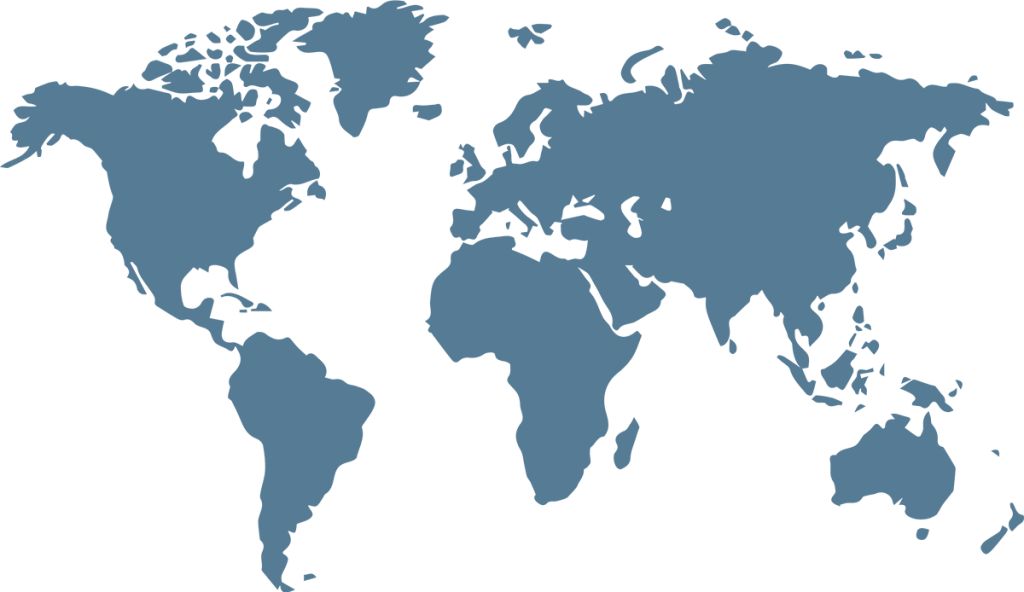


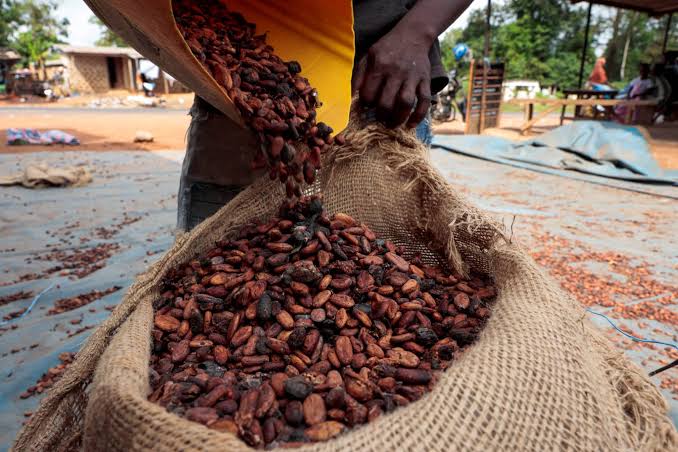
West African cocoa farmers, exporters and cooperatives are accelerating efforts to map farms and establish supply chain traceability ahead of the European Union’s deforestation regulation taking effect on December 30, 2026, as the region’s cocoa industry faces mounting compliance costs and potential disruption to a market that absorbs a substantial share of its production. The regulation, known as the EU Deforestation Regulation (EUDR), requires companies placing cocoa and other covered commodities on the European market to demonstrate that their products were not produced on land deforested after December 31, 2020, and comply with relevant laws in their countries of origin.
The deadline places particular pressure on Nigeria, Ghana and Côte d’Ivoire, which together account for a significant share of global cocoa production. West Africa produces about 70% of the world’s cocoa, while the European Union remains the region’s largest destination market. For farmers and exporters, the ability to document where beans were grown is increasingly becoming a condition of maintaining access to international buyers, with implications for export earnings, rural incomes and the region’s position in global agricultural supply chains.

The regulation has already undergone several changes to its implementation timetable. Regulation (EU) 2025/2650, published in December 2025, established December 30, 2026, as the deadline for large and medium-sized operators, while micro and small operators are subject to a later date of June 30, 2027. According to legal analysis of the European Commission’s May 4 simplification package, Brussels has indicated that no further postponement is expected.
Although the obligations primarily fall on companies placing products on the European market, the requirements extend through the supply chain to the farms where cocoa is produced. Importers must establish traceability to the plots of land supplying each consignment, making farm geolocation, documentation and supply-chain management central to compliance.
For smallholders, the transition is already changing how cocoa is sold. In South Western Nigeria, farmer Ojo Ayaninuola initially resisted allowing exporters to digitally map his farm, according to ESG News. He later agreed after Sunbeth Global, which purchases his entire crop, warned that failure to comply could jeopardise access to European buyers.
The experience illustrates how a regulation designed for international operators can influence decisions at the farm level. Nigeria has approximately 300,000 mostly small-scale cocoa farmers, many of whom operate through buying agents, cooperatives and exporters rather than directly with international buyers. Industry estimates cited by Modern Diplomacy suggest farmers producing more than half of Nigeria’s cocoa could struggle to meet the requirements, although the precise number of affected producers remains uncertain.
The cost of establishing traceability is another source of pressure. Sunbeth said it spent three years mapping 124,000 hectares covering approximately 60,000 tonnes of cocoa, at a cost of $30 to $70 per tonne. Starlink Global and Ideal said it had spent between $40 and $80 per tonne on mapping and tracing since 2023, according to the same report.
Those expenses can weigh heavily on exporters operating with narrow margins, particularly where European buyers have not agreed to absorb the additional costs. Mapping, data management, verification and maintaining separate records for compliant supply can increase operating expenses before exporters receive any premium for meeting the requirements.
The burden is likely to be uneven across the industry. Large exporters may have the financial resources, technical capacity and established relationships needed to map farms and maintain traceability systems. Smaller exporters and cooperatives may face higher costs per farmer, particularly where producers are dispersed across rural areas or lack formal land documentation.
For farmers, compliance increasingly involves more than registering a name or providing a location. According to EUDR Navigator, farms smaller than four hectares can be recorded using a geographic point, while larger plots require polygon boundaries. Every contributing plot must be covered, without sampling. The requirement creates a substantial data collection task for supply chains that aggregate cocoa from numerous small farms.
The implications extend to how cocoa is purchased and handled after harvest. ExportReady.africa says verified cocoa must remain separate from unverified beans after purchase, while certification schemes such as Rainforest Alliance and Fairtrade do not replace the evidence required under EUDR. Exporters will therefore need systems that connect farm records to purchasing, storage, processing and shipment documentation.
That could reshape relationships between farmers, cooperatives and traders. Producers who are registered and linked to compliant supply chains may retain access to established buyers, while those whose farms remain unmapped could face fewer purchasing options. The regulation does not directly prohibit farmers from selling cocoa outside Europe, but alternative markets may not offer equivalent prices, volumes or established commercial relationships.
National traceability systems are developing at different speeds. Ghana has established a framework through the Ghana Cocoa Board, including a traceability system, deforestation-risk methodology and forest map, according to Next Big Farm. The EU ambassador to Ghana publicly commended the country’s progress in May.
The stakes are substantial for Ghana’s export economy. Cocoa accounts for 95% of the export value of the seven commodity groups covered by the regulation, according to the same source. The sector supports rural employment, foreign exchange earnings and economic activity across farming, transport, processing and trading.
Côte d’Ivoire has introduced electronic producer cards for cocoa purchases from the start of the 2026/27 season on September 1. However, the implementation has encountered operational difficulties. According to the cited report, Reuters reported on September 9 that traders and cooperatives were struggling to use the system, with some field agents lacking payment terminals, bags and seals.
The challenges demonstrate that digital traceability depends on more than policy adoption. Systems must function in rural areas, farmers need to be registered accurately, and purchasing agents must have the equipment and training to record transactions. Delays or gaps in those processes could affect the ability of exporters to demonstrate that cocoa meets the regulation.
For governments, the implications extend beyond individual exporters. ExportReady.africa estimates that Sub-Saharan Africa could lose up to $11 billion in annual export revenue if exporters cannot meet EUDR requirements. The figure is an industry estimate rather than an official forecast, but it illustrates the potential scale of exposure if compliant supply cannot be maintained.
Any reduction in cocoa exports could affect foreign-exchange receipts, rural employment and government revenue in countries where the sector is economically significant. The impact would also extend to transport operators, local traders, cooperatives and businesses supplying farming inputs and services.
The timing adds to existing pressures on cocoa producers. Ghanaian farmers are already facing a difficult start to the 2026/27 season, with Reuters reporting on November 3 that unusually heavy rainfall in some regions and drought and prolonged heat in others had damaged flowers and reduced early harvests. Farmers are hoping for improved production by March, although recovery remains uncertain.
Weather-related production risks and compliance costs could compound one another. Lower output may reduce the volume available for export, while traceability requirements determine which beans can enter particular markets. For exporters, the combination could increase competition for documented supply and make it more difficult to maintain established trading relationships.
European buyers also face potential supply constraints. Sustainability Consultant Nicko Debenham, a former global cocoa trader, told Reuters there was a distinct possibility that in the early days of the law, EU importers won’t be able to get enough compliant cocoa” from indirect or third party shippers.
Sovran Commodities has warned that buyers without geolocated supply by the fourth quarter could compete for a smaller pool of compliant cocoa, potentially at higher prices. That could strengthen the position of exporters and cooperatives that have already completed mapping, while leaving smaller producers and traders exposed to reduced demand or additional costs.
The regulation also raises questions about who should pay for compliance. Farm mapping and traceability generate information that benefits importers, exporters and regulators, but the costs are often incurred by suppliers in producing countries. Without clearer cost sharing arrangements, farmers and local exporters may absorb expenses that reduce the value of their earnings or limit their ability to invest in production.
For West African governments, the challenge is to maintain market access while ensuring that compliance does not deepen existing inequalities in the cocoa sector. Public traceability systems, technical assistance, accessible farm registration and support for cooperatives could help reduce the burden on smallholders. Their effectiveness will depend on whether the systems reach farmers who are not already connected to formal export channels.
The regulation also creates an opportunity to strengthen land use information and environmental monitoring. Reliable farm boundaries and supply chain records could help governments identify deforestation risks and improve oversight of agricultural expansion. However, those benefits will depend on data quality, clear land rights and safeguards against excluding farmers whose documentation is incomplete.
The remaining weeks before the December deadline will test the capacity of exporters, cooperatives and national systems to complete the required mapping and records. Côte d’Ivoire’s electronic producer card system must become operational across purchasing networks, while Nigeria’s exporters face the task of extending traceability to farms that have not yet been registered. Ghana’s established framework will also need to demonstrate that its records can support the documentation required by European buyers.
For cocoa growing communities, the immediate issue is whether their farms can be identified and connected to compliant supply chains before the deadline. The regulation does not make sustainability certification or a digital record a guarantee of continued market access, but the absence of traceability could leave producers dependent on buyers operating outside the European market.

West Africa’s cocoa industry is therefore entering a transition in which environmental compliance is becoming a commercial requirement. The outcome will depend not only on whether exporters can meet the regulation, but also on how the costs, infrastructure and responsibilities are distributed across the supply chain. For farmers whose incomes depend on cocoa sales, the practical measure will be whether the new systems preserve access to buyers while allowing them to remain economically viable.