

Africa’s Green Economy Summit (AGES) has unveiled 20 projects across 13 African countries seeking more than US$500 million in investment, as the platform prepares to bring investors, financiers and project developers together in Cape Town in February 2027.
The projects, featured in the summit’s newly released Infrastructure Deal Book and SMME Deal Book, span renewable energy, sustainable agriculture, battery reuse, clean technology manufacturing and resource efficiency. The publications provide prospective investors with information on project development stages, capital requirements and commercial models ahead of the summit’s fifth edition, scheduled for 23–26 February 2027 at the Century City Conference Centre in Cape Town, South Africa.
The investment pipeline includes larger infrastructure proposals and smaller businesses seeking financing to expand production, commercial partnerships and market reach. The initiative is designed to give investors a structured view of opportunities across different sectors and African markets, while enabling project developers to engage with financing partners through curated meetings and pitch sessions.

Among the infrastructure proposals is MamboAnesu Energy’s phased solar development in Zimbabwe, which is planned to reach a total capacity of 200 megawatts. The project is among the larger energy investments featured in the publication, alongside agricultural developments incorporating renewable energy and digital management systems.
Eden Menia Egypt Farm in Egypt is another featured project, combining modern irrigation systems, renewable energy and digital farm management. The model brings energy and water efficiency into agricultural production, areas that are increasingly relevant to investment in food systems as producers face resource constraints and climate-related risks.
Kenya’s Spiro ESS is featured for its proposed programme to repurpose electric motorcycle batteries into stationary energy storage systems. The initiative seeks to extend battery lifecycles beyond their initial use in electric mobility, potentially creating a secondary market for battery storage applications.
The proposed model links electric transport with electricity storage, providing a route for batteries that may no longer meet the demands of vehicle use but could remain suitable for stationary applications. Its commercial viability will depend on battery condition, safety, testing, refurbishment costs, storage performance and the economics of deployment.
The inclusion of battery reuse reflects a broader opportunity for businesses to develop circular economy models around electric mobility, where materials and equipment can retain value through multiple applications rather than being discarded after their initial service life. The Infrastructure Deal Book also features projects at different stages of preparation, with the publication intended to help financiers assess the development status, investment requirements and commercial structures of prospective developments rather than treating all proposals as equally mature.
The SMME Deal Book, meanwhile, focuses on enterprises developing products and services across clean energy, manufacturing, sustainable agriculture and climate technology. Nigeria’s Powerbox Energy Systems, which manufactures modular solar and battery systems locally, is among the businesses featured.
South Africa’s Adsorb Technologies is also included for its production of activated carbon using agricultural and forestry residues. The company’s approach converts biomass waste into a material used in industrial applications, potentially linking resource recovery with value-added manufacturing. The profiles in the SMME publication outline plans for business expansion, production growth, commercial partnerships and broader market access. For smaller enterprises, access to capital remains closely tied to the ability to demonstrate revenue potential, customer demand, production capacity, business viability and the ability to scale operations.
The two Deal Books are intended to improve investor access to information on these businesses and projects before the summit, allowing participants to identify opportunities aligned with their investment mandates. The announcement comes amid expanding renewable energy deployment globally. According to the International Renewable Energy Agency’s Renewable Capacity Statistics 2026, the world added 692 gigawatts of renewable power capacity in 2025, while Africa recorded an annual addition of 11.3 GW, its largest on record.
Although renewable energy represents a significant portion of the investment pipeline, the projects featured in AGES extend beyond electricity generation to include agriculture, manufacturing, mobility and resource efficiency. This reflects the broader scope of green economy investment, where financing opportunities increasingly involve businesses supporting infrastructure, production systems and resource management.
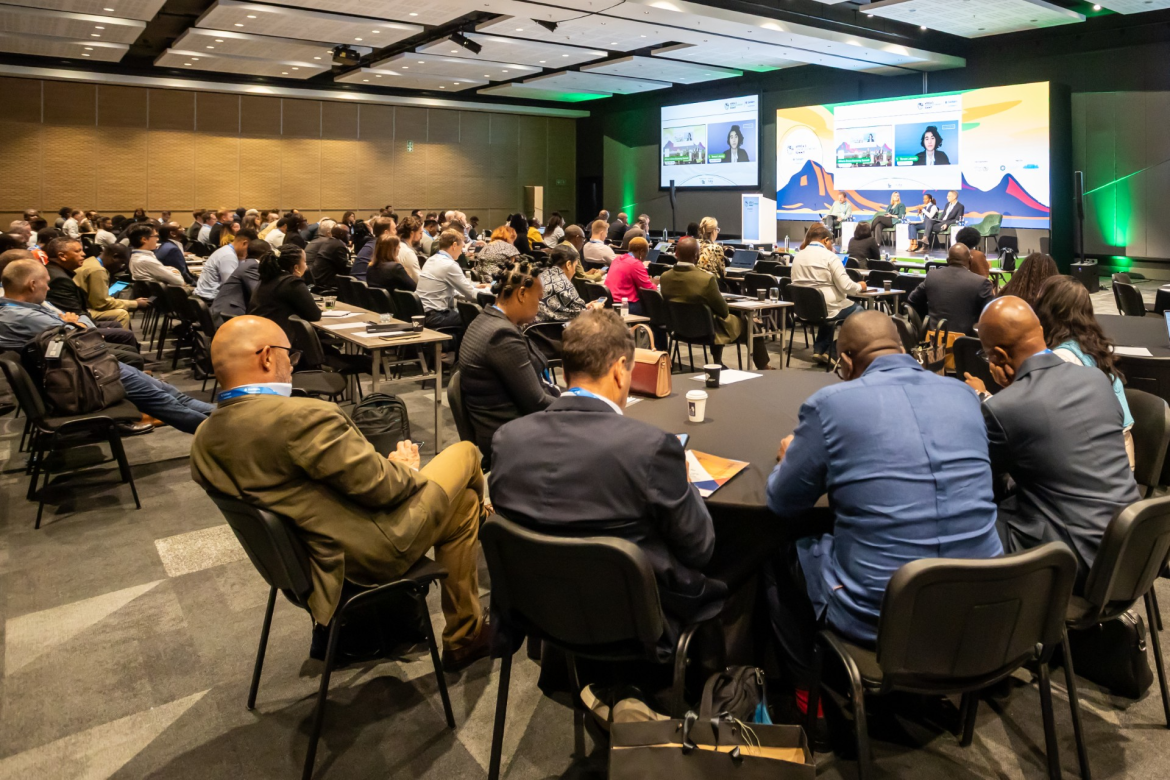
The summit’s investment-matching model seeks to move beyond networking by connecting developers with potential capital providers through structured engagement. Investors can review projects in advance, while pitch sessions and curated meetings provide opportunities to discuss financing requirements, partnerships and implementation pathways. Gertrude Ogojiaku, chief executive of Asoba, who participated in a previous edition of the summit, described the event as a platform for conversations, investment opportunities and networks that reflected the growing momentum behind African green economy initiatives.
Spiro Mobility chief executive Kaushik Burman said collaboration with asset financiers, banks, infrastructure investors and solar and energy-storage providers is important to scaling electric mobility operations across Africa. He said platforms such as AGES provide opportunities to bring stakeholders together and develop partnerships needed to accelerate growth. The fifth edition of AGES is expected to build on this investor-focused approach, bringing together project developers, businesses, policymakers, financial institutions and investors around opportunities spanning the continent.
While the US$500 million pipeline represents capital sought by the featured projects rather than secured investment, the publication of the Deal Books provides a clearer starting point for investor engagement. The extent to which the proposals progress will depend on financing commitments, project preparation, commercial agreements, regulatory conditions and implementation capacity. The summit is scheduled to take place from 23 to 26 February 2027 at the Century City Conference Centre in Cape Town.