


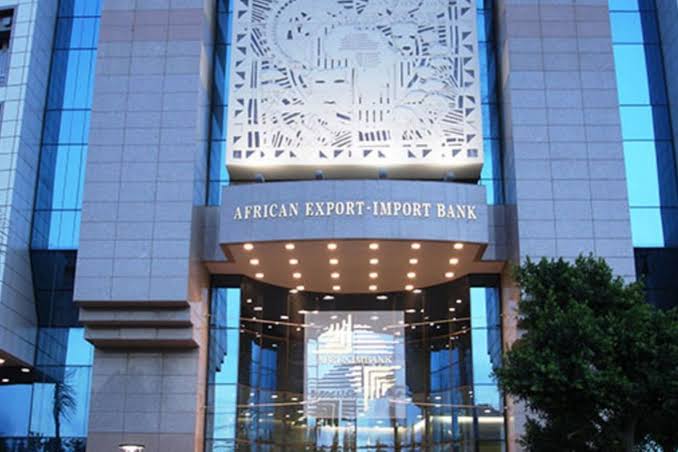
The African Export-Import Bank (Afreximbank) has approved a US$200 million financing facility to support the second phase of Algeria’s Hassi Bir Rekaiz (HBR) oil field development, marking a significant milestone in African cross-border infrastructure financing and reinforcing the continent’s growing ambition to finance its own strategic energy assets. The financing, announced on 20 July, will support Shoreline Power Company Limited, a Nigerian energy company, alongside its co-borrowers, including engineering and construction firm Arkad SpA, as they execute part of a broader US$980 million Engineering, Procurement and Construction (EPC) contract aimed at expanding one of Algeria’s emerging oil production hubs.
The transaction represents more than a conventional project finance deal. According to Afreximbank, it is the institution’s first financing supporting a sub-Saharan African company participating in a major North African energy infrastructure project, illustrating how African financial institutions are increasingly facilitating investments that strengthen continental value chains rather than relying predominantly on external capital.
The financing arrives at a time when African governments are placing greater emphasis on regional economic integration under the African Continental Free Trade Area (AfCFTA), while simultaneously seeking to improve energy security, industrial competitiveness and infrastructure connectivity. Large-scale energy projects increasingly require not only substantial capital but also stronger participation by African engineering firms, contractors and financial institutions capable of retaining greater economic value within the continent.
Under the approved facility, US$110 million will finance contractual guarantees and working capital requirements for Arkad as it executes its portion of the EPC contract. The remaining US$90 million will operate as a revolving credit facility enabling Shoreline Power and its subsidiaries to finance gas pipeline infrastructure and other eligible energy projects in Nigeria and additional African markets.
According to Afreximbank, the investment is expected to increase production capacity at the Hassi Bir Rekaiz field to between 50,000 and 60,000 barrels of oil per day, while creating nearly 6,000 direct and indirect jobs during construction and operational phases. The project is also expected to strengthen Algeria’s foreign exchange earnings through increased hydrocarbon exports while supporting local industrial activity across engineering, logistics, manufacturing and technical services.
The Hassi Bir Rekaiz development forms part of Algeria’s broader strategy to maintain its position as one of Africa’s leading energy producers while responding to rising international demand for diversified oil and natural gas supplies.
According to the Organization of the Petroleum Exporting Countries (OPEC), Algeria remains one of Africa’s largest oil and natural gas producers, with hydrocarbons accounting for approximately 90% of export revenues and a significant share of government income. Continued investment in upstream production therefore remains central to the country’s fiscal stability, foreign exchange generation and long-term economic planning.
The latest financing follows the signing earlier this year of an engineering, procurement and construction contract valued at more than US$1 billion between Sonatrach, Algeria’s national oil and gas company, and international engineering partners responsible for executing the second development phase of the Hassi Bir Rekaiz field.
According to Sonatrach, expanding production capacity forms part of a broader programme aimed at maintaining output levels while supporting Europe’s continued diversification of energy imports following significant changes in global energy trade flows over recent years.
The strategic importance of Algeria’s hydrocarbon sector has increased considerably since Europe accelerated efforts to diversify away from traditional energy suppliers. According to the International Energy Agency (IEA), Algeria has emerged as one of Europe’s most important alternative natural gas suppliers through both pipeline and liquefied natural gas (LNG) exports, strengthening its geopolitical and commercial significance within Mediterranean energy markets.
However, the significance of the Afreximbank financing extends beyond Algeria’s oil production. The transaction forms part of the Bank’s Engineering, Procurement and Construction (EPC) Initiative, a programme specifically designed to increase African participation in major infrastructure development projects that have historically been dominated by international contractors and financiers.
According to Afreximbank, strengthening indigenous engineering capacity remains essential if Africa is to retain a greater proportion of the economic value generated by infrastructure investment. African engineering firms frequently possess technical capabilities but encounter financing constraints when competing for large-scale contracts requiring substantial working capital, guarantees and performance bonds.
By supporting Shoreline Power and Arkad, Afreximbank is attempting to close that financing gap while encouraging greater collaboration between companies operating in different African regions.
The financing also demonstrates how outcomes from the Intra-African Trade Fair (IATF 2025) are beginning to translate into commercially viable investments. The Hassi Bir Rekaiz transaction is among the projects linked to agreements concluded during the trade fair held in Algiers, where businesses and institutions announced approximately US$50 billion in trade and investment commitments.
The growing role of Afreximbank in financing energy infrastructure reflects broader efforts to strengthen intra-African trade and industrialisation. According to the African Development Bank (AfDB), Africa requires between US$130 billion and US$170 billion annually to meet its infrastructure investment needs, while current financing gaps remain estimated at between US$68 billion and US$108 billion each year. Mobilising African capital to finance African infrastructure therefore remains an increasingly important development priority.
Energy infrastructure occupies a particularly important position within this agenda. Reliable oil, gas and electricity infrastructure supports industrial production, manufacturing competitiveness, transport systems and regional trade while generating fiscal revenues that finance public services and economic development programmes.
The revolving credit facility supporting pipeline and gas infrastructure in Nigeria further reflects the interconnected nature of Africa’s evolving energy economy. Nigeria continues implementing major investments aimed at expanding domestic gas utilisation, reducing gas flaring and strengthening industrial energy supply under its “Decade of Gas” initiative. Additional financing mechanisms capable of supporting pipeline construction and associated infrastructure may therefore contribute to broader regional energy integration.
The transaction also demonstrates an evolving model of African development finance. Rather than financing projects solely through sovereign borrowing, institutions such as Afreximbank increasingly structure facilities that leverage private sector participation while supporting commercially viable infrastructure investments capable of generating long-term economic returns. From a continental perspective, the financing illustrates how regional financial institutions are gradually assuming larger roles in sectors traditionally dominated by multilateral development banks or export credit agencies from outside Africa.
According to the African Union’s Agenda 2063, strengthening regional infrastructure, industrialisation and intra-African trade remains central to achieving long-term economic transformation. Cross-border investments linking companies, financial institutions and strategic industries across different African regions contribute directly to those objectives.
For Algeria, expanding Hassi Bir Rekaiz strengthens one of the country’s most important export industries while reinforcing energy supply resilience. For Nigeria, the participation of Shoreline Power demonstrates how indigenous energy companies are increasingly expanding beyond domestic markets into continental infrastructure opportunities.
For Africa more broadly, the transaction represents another example of how African financial institutions are supporting projects that combine industrial development, regional integration and private sector growth.
As infrastructure financing requirements continue to increase across the continent, the ability of African institutions to mobilise capital for strategic projects may become as significant as the infrastructure itself. The Hassi Bir Rekaiz financing therefore illustrates not only investment in an oil field, but also the gradual emergence of a more integrated African energy and financial ecosystem capable of supporting the continent’s long-term economic transformation.


