


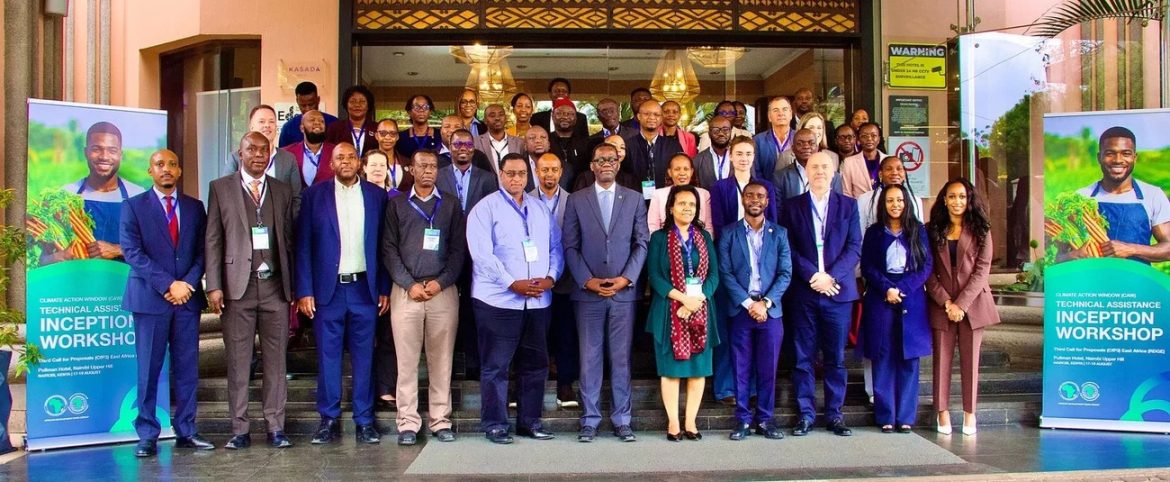
Project teams from East and Southern Africa have completed a series of preparation workshops aimed at moving climate initiatives from design into approval, financing and implementation under the African Development Fund’s Climate Action Window, as governments across the two regions confront mounting pressure from drought, floods, food insecurity and climate-related economic losses. The workshops, held in Nairobi and Pretoria in August and September 2026, brought together national institutions, development agencies and technical partners to address project design, budgets, implementation arrangements and outstanding requirements ahead of financing decisions. The African Development Bank Group said the technical-assistance portfolios are expected to help enable about $407 million in climate finance in East Africa and $225 million in Southern Africa.
The process is part of a broader effort by the African Development Fund, the concessional financing arm of the African Development Bank Group, to increase the flow of climate finance to its most vulnerable member countries. The Climate Action Window was established under the Fund’s 16th replenishment cycle to support adaptation, mitigation and technical assistance across the 37 countries eligible for ADF resources. Its financing can cover project preparation, institutional capacity, climate-policy readiness and green-finance initiatives, areas that are increasingly important as African governments seek to convert climate priorities into bankable investments.
The Nairobi workshop, held from August 17 to 19, brought together 27 project teams representing national ministries and agencies alongside international and regional institutions including the World Resources Institute, International Livestock Research Institute, African Technology Policy Studies Network, TradeMark Africa, Pan African Climate Justice Alliance, UNDP, FAO, UNICEF, the World Meteorological Organization and the Global Green Growth Institute. A second workshop was held from August 31 to September 1 at the African Development Bank’s Southern Africa Regional Office in Pretoria, bringing together teams from Zambia, Zimbabwe, Malawi, Lesotho, Madagascar and Mozambique, among other countries and institutions.

The focus on project preparation reflects one of the persistent constraints in African climate finance: the distance between climate needs and projects capable of attracting and absorbing capital. Governments may identify urgent adaptation or mitigation priorities, but translating those priorities into projects with credible technical designs, budgets, safeguards, implementation structures and measurable results can take substantial time and institutional capacity. Technical assistance can therefore play a role before large-scale financing reaches the ground.
During the workshops, project teams reviewed activities, results frameworks, budgets and implementation arrangements while identifying gaps that could prevent projects from moving into disbursement. The process also assigned responsibilities for completing revisions and meeting fiduciary and legal requirements. For development financiers, such preparation is closely linked to the ability to move resources efficiently once projects receive approval.
Farai Kanonda, Regional Operations Manager for Energy and Infrastructure at the African Development Bank’s Southern Africa Regional Development, Integration and Business Delivery Office, said the potential value of the technical-assistance projects extends beyond the individual grants. The objective, he said, is to strengthen institutions, prepare larger investments and unlock additional climate finance for the region.
That leverage is central to the Climate Action Window’s design. According to Dr James Kinyangi, the Window’s coordinator, its resources are intended to catalyse at least three times their value in additional financing from governments, development partners and private capital. If that mobilisation objective is achieved, relatively limited project-preparation resources could become part of a wider financing pipeline for climate-related infrastructure and resilience investments.
For East and Southern Africa, the timing is significant. Climate risks are already affecting agricultural output, electricity generation, infrastructure and household incomes. The World Meteorological Organization’s assessment of Africa’s 2024 climate conditions found that aggregate cereal yields in Southern Africa were 16% below the five-year average, with Zambia and Zimbabwe recording declines of 43% and 50%, respectively. The region also experienced damaging drought conditions that contributed to reduced hydropower production and prolonged electricity disruptions.
East Africa has faced a different but equally costly combination of climate extremes. The WMO reported that exceptionally heavy rains during the March-to-May 2024 season caused severe flooding in Kenya, Tanzania and Burundi, affecting more than 700,000 people. The same assessment highlighted how droughts, floods and other climate shocks are increasingly affecting food and water security, health, livelihoods and economic activity across the continent.
The risks are continuing into 2026 and 2027. In August, the World Food Programme warned that strengthening El Niño conditions could cause food security to deteriorate for more than 18 million people across East and Southern Africa, representing an increase of about 26% against regional baseline averages. Southern Africa was identified as particularly exposed because many households depend on rain-fed agriculture.
Those conditions reinforce the economic case for moving climate finance beyond emergency response. Drought-resistant agricultural systems, resilient water infrastructure, improved climate information, renewable-energy investments and stronger disaster-preparedness systems require financing before climate shocks become humanitarian and fiscal crises. The effectiveness of such investments, however, depends partly on whether projects are prepared well enough to attract and absorb financing.
This is where the Climate Action Window’s technical-assistance component becomes relevant. Project preparation can include feasibility studies, institutional strengthening, policy development and other work required before infrastructure or programmes can reach financial close. For governments with limited fiscal space and constrained technical capacity, access to such support can reduce some of the early-stage barriers that prevent climate priorities from becoming investment opportunities.
The regional workshops also illustrate the importance of partnerships. The project teams included national governments, United Nations agencies, research institutions, civil-society organisations and development organisations. Such partnerships can help bring together technical knowledge, implementation capacity and access to different sources of finance, although the eventual performance of individual projects will depend on country-level execution and institutional coordination.
The Climate Action Window is being supported by contributions from development partners including the United Kingdom, Germany, Switzerland, the Netherlands, Ireland and Norway. Together, these partners have contributed about $450 million to the mechanism, according to the African Development Fund. The resources demonstrate the role of donor-backed concessional finance in building a pipeline that could subsequently draw in additional public and private investment.
The East and Southern Africa cohorts form part of 67 technical-assistance projects selected across Africa under the Climate Action Window’s third call for proposals. The Fund says the Window is already supporting 98 climate investments covering adaptation, mitigation and project-preparation technical assistance. The scale of the portfolio reflects a wider effort to build a pipeline of climate investments rather than treating each project as an isolated financing transaction.
For Southern Africa, the potential $225 million in climate finance associated with the technical-assistance portfolio comes at a time when governments are managing the economic consequences of drought, electricity shortages and agricultural losses. Zambia and Zimbabwe, in particular, experienced major climate-related agricultural and hydropower disruptions in recent years. Strengthening the preparation of climate investments could help governments move from crisis management towards projects that address underlying vulnerabilities.
East Africa faces its own investment requirements, ranging from climate-resilient agriculture and water systems to early-warning infrastructure and adaptation planning. The region’s exposure to floods, droughts and variable rainfall makes the quality of climate information and preparedness systems particularly relevant to public planning. The WMO has called for greater investment in climate services, infrastructure, data-sharing and early-warning systems across Africa.
The development-finance implications extend beyond climate policy. Poorly prepared projects can struggle to reach financial close, delay disbursement or fail to attract co-financing. Strong preparation, by contrast, can make it easier for development banks, governments and private investors to assess technical feasibility, financial structures, implementation risks and expected development outcomes.
For African governments, this creates a practical link between institutional capacity and climate finance mobilisation. Having climate strategies and national targets is only one part of the financing process. Governments also need project teams capable of translating those priorities into investment proposals with credible budgets, procurement structures, safeguards, monitoring systems and implementation plans.
Dr Alex Mubiru, Director General of the African Development Bank Group’s East Africa Regional Development, Integration and Business Delivery Office, said the success of technical assistance should ultimately be measured by what follows the preparatory work: stronger institutions, better-prepared investments, increased access to climate finance and projects moving from concept into implementation.

The next stage will therefore be critical. Following the workshops, recipient institutions are expected to complete agreed revisions, close outstanding fiduciary and legal requirements and work with African Development Bank task managers and the Climate Action Window Secretariat to submit projects for approval. The objective is for the projects to move into disbursement and implementation without unnecessary delays.
That transition from preparation to implementation is particularly important as climate risks become more immediate and development budgets remain constrained. The financing gap for African adaptation remains substantial, while governments face competing demands for health, education, infrastructure, energy and social protection. Climate finance that can unlock larger pools of capital therefore has significance beyond individual environmental projects.
The Climate Action Window’s approach also reflects a broader shift in development finance towards using concessional resources to prepare investments that can attract additional funding. For East and Southern Africa, the potential value lies not only in the grants supporting project preparation but in whether those grants create a pipeline of investments capable of drawing in larger volumes of public and private capital.
Ultimately, the workshops place project readiness at the centre of Africa’s climate-finance challenge. The region does not lack climate-related investment needs; the more immediate constraint is often the capacity to convert those needs into credible, financeable and implementable projects. As droughts, floods, food insecurity and energy disruptions continue to impose economic costs, the ability to move climate investments efficiently from concept to construction will increasingly influence how effectively scarce climate finance protects infrastructure, livelihoods and public resources.
The African Development Fund’s Climate Action Window is designed to address part of that gap. Its significance for East and Southern Africa will depend on what happens after the workshops: whether projects secure approval, whether financing is mobilised, and whether the resulting investments deliver measurable improvements in resilience, productivity and economic security for communities facing increasingly volatile climate conditions.


