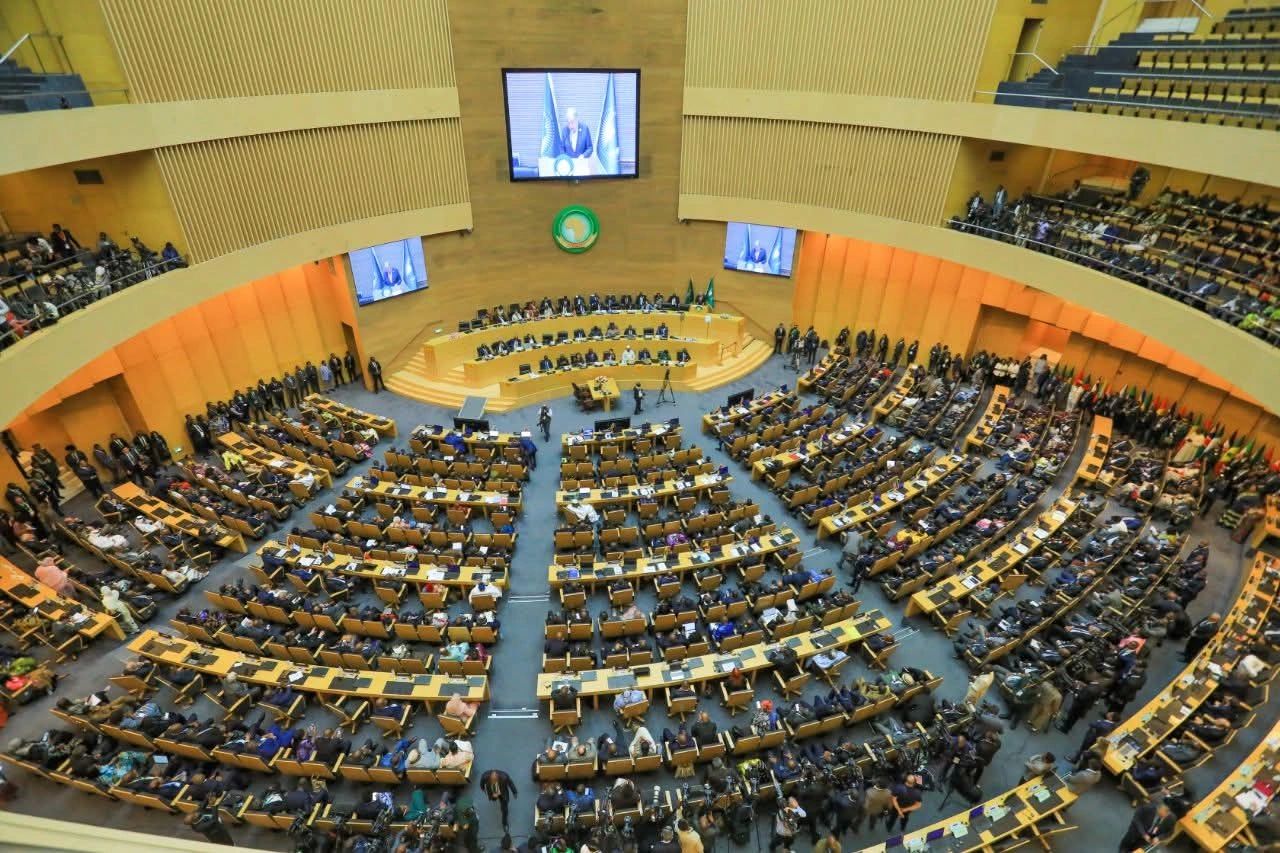

African leaders gathered at the African Union headquarters in Addis Ababa on 14 and 15 February placed water security and sanitation at the centre of the continent’s policy agenda, launching the AU’s 2026 theme at the 39th Ordinary Session of the Assembly of Heads of State and Government and formally elevating access to water as a strategic development, climate and economic priority.
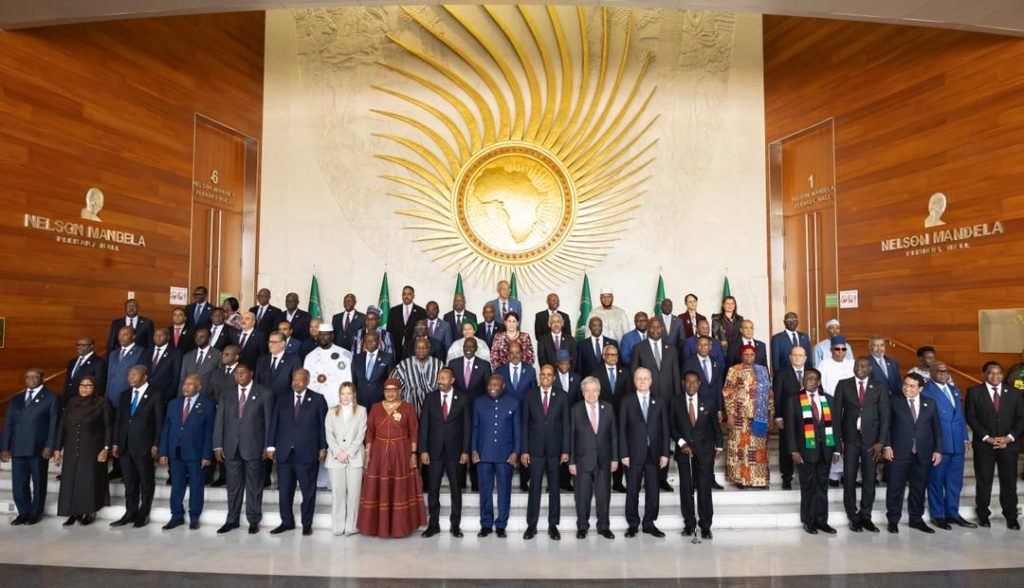
The two-day summit, attended by heads of state and government from the AU’s 55 member states alongside senior continental officials, regional economic communities and multilateral partners, unfolded against a backdrop of mounting water stress, climate volatility and fiscal constraint.
Leaders endorsed the theme, “Assuring Sustainable Water Availability and Safe Sanitation Systems to Achieve the Goals of Agenda 2063,” framing it not as a sectoral initiative but as a cross-cutting development imperative tied to food security, industrialisation, public health and conflict prevention.
Baseline figures presented in the lead-up to the Assembly underscored the scale of the challenge. An estimated 400 million people across Africa lack access to water for daily use, while more than 800 million are without basic hygiene services. Water-related diseases, including cholera, diarrhoea and typhoid, continue to exact a heavy toll, contributing to significant mortality and productivity losses.
In economic terms, unreliable water and sanitation systems translate into higher health expenditures, lost working hours and weaker competitiveness in urban and industrial zones.
Addressing the Assembly, AU Commission Chairperson Mahmoud Ali Youssouf described water as a collective good central to both development and stability. He linked the 2026 theme directly to Agenda 2063, the Union’s long-term development blueprint, noting that sustainable water management underpins agricultural transformation, energy generation, infrastructure expansion and climate resilience. He also situated the discussion within a broader geopolitical context marked by weakened multilateralism, tightening external financing and institutional fragility in parts of the continent.
The economic framing was reinforced by Claver Gatete, Executive Secretary of the UN Economic Commission for Africa, who characterised water and sanitation as foundational economic infrastructure. Industrial parks, logistics corridors and agro-processing hubs require predictable water supply to operate competitively.
Without reliable systems, manufacturing costs rise and value addition slows, reinforcing Africa’s reliance on raw material exports. Agriculture, which accounts for the majority of freshwater withdrawals on the continent, remains largely rain-fed, exposing food systems to erratic rainfall and prolonged drought.
Financing emerged as a central constraint. Continental estimates indicate that achieving universal access to water and sanitation by 2030 would require annual investment exceeding $30 billion, well above current public spending levels. Many governments face limited fiscal space and elevated debt-servicing burdens, complicating efforts to scale infrastructure.

The AU Commission outlined a roadmap centred on governance reforms, policy coordination, partnerships and innovative financing mechanisms designed to mobilise both public and private capital.
On the margins of the summit, discussions extended to the architecture of African development finance. A delegation from the Intergovernmental Authority on Development (IGAD), led by Executive Secretary Workneh Gebeyehu, joined other Regional Economic Community leaders in consultations with the President of the African Development Bank Group, Sidi Ould Tah.
He presented a vision for a New African Financial Architecture aimed at deepening financial integration, strengthening coordination among African financial institutions and mobilising sustainable resources for continent-wide development in line with Agenda 2063. IGAD signalled support, noting alignment with its Strategy 2026–2030 and endorsing the principle of African-led financing solutions to underpin regional integration.
Climate governance also featured prominently in deliberations. Delegates reviewed outcomes from COP30, assessing implications for Africa’s development priorities, climate finance architecture and the balance between mitigation commitments and adaptation needs.
Particular attention was given to strengthening Africa’s collective negotiating posture in future United Nations climate processes. Leaders reflected on the Second Africa Climate Summit held in Addis Ababa in September 2025 and took stock of progress under the African Leaders Nairobi Declaration on Climate Change and Call to Action, identifying areas requiring renewed political momentum.
The Assembly further examined the African Action Plan on Carbon Markets and progress towards operationalising an African Gold Standard for carbon market initiatives. The emphasis was on environmental integrity, transparency and ensuring that carbon market mechanisms generate measurable developmental value for African economies. Reports from the African Climate Commissions highlighted achievements but also pointed to coordination gaps across regional initiatives.
Beyond the thematic focus, leaders reviewed the report of the Peace and Security Council on conflicts in Sudan, the eastern Democratic Republic of the Congo, the Sahel and the Horn of Africa, and considered issues related to the African Standby Force and AU institutional reforms. A briefing on the November 2025 G20 Leaders’ Summit in South Africa reflected the Union’s expanded role in global economic governance following its admission as a permanent G20 member.
The summit concluded with the election of Burundi’s President Évariste Ndayishimiye as Chairperson of the African Union for 2026, succeeding Angola’s President João Lourenço under the Union’s rotational system. The leadership transition, while procedural, places responsibility for advancing the water and sanitation agenda within a broader mandate that includes climate diplomacy, financial reform and conflict management.
By elevating water security to the centre of continental strategy, the 39th Summit repositioned access to water and sanitation as determinants of fiscal resilience, industrial competitiveness and social stability.
Engage with us on LinkedIn: Africa Sustainability Matters