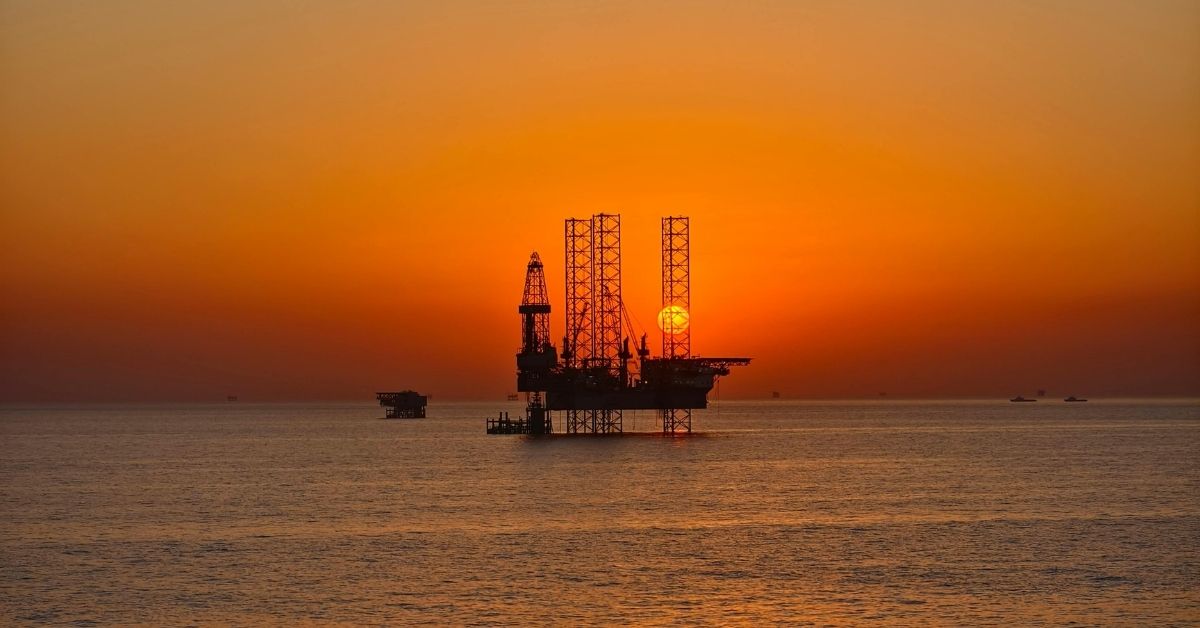

Today, 26 January 2026, offshore crews working in Benin’s coastal waters completed drilling on a new oil production well that is expected to begin producing in early February, marking a small but consequential moment for one of West Africa’s least prominent oil producers. The AK-2H well, operated by Akrake Petroleum Benin in the Sèmè Field, sits a few kilometres off the coast near the town of Sèmè-Podji and is part of a field that has quietly underpinned state revenues during periods of economic strain.
Read also: Benin’s offshore Seme Oil Field targets January restart after technical setbacks
The drilling phase has now ended. Engineers are preparing the well for production by installing screens across the reservoir and lowering an electrical submersible pump that will lift oil to the surface once operations start. Alongside the well work, two offshore vessels, a mobile production unit and a floating storage and offloading ship, are being finalised. Together, they form the basic infrastructure that will allow oil to be processed offshore and shipped for export without the need for permanent platforms.

Benin’s offshore oil story is modest when compared with its neighbours. Nigeria pumps close to two million barrels a day. Ghana produces hundreds of thousands. Benin’s output, when it resumes, will be a fraction of that. Yet the country’s experience with the Sèmè Field shows how even small volumes can matter in a low-income economy. Previous production cycles helped support public finances and reduce exposure to fuel import costs at moments when fiscal space was limited.
The timing is important. Benin, like many African states, is caught between competing pressures. On one side is the global push toward decarbonisation, backed by climate finance and development partners encouraging rapid expansion of renewable energy. On the other is the reality that oil and gas revenues still pay for roads, schools and hospitals in countries where tax bases are narrow and borrowing costs are rising.
Electricity supply in Benin remains fragile. The country imports a significant share of its power and relies on gas-fired plants for stability. Solar projects are expanding, but they do not yet generate the scale of revenue needed to replace fossil fuel income. For policymakers, the question is not whether to pursue clean energy, but how to fund that transition without undermining economic stability.
The Sèmè Field itself is a reminder of how Africa’s energy transition is unfolding unevenly. Offshore production limits the need for large onshore facilities and reduces land-use conflict, but it brings its own environmental risks. Coastal communities in southern Benin are already dealing with erosion and flooding linked to climate change. Any offshore activity is therefore closely watched, both for its economic contribution and its environmental footprint.
Akrake Petroleum’s parent company, Rex International Holding, operates oil assets in Europe, the Middle East and Africa and has emphasised targeted development rather than aggressive exploration. In Benin, this has meant focusing on known reservoirs rather than opening new acreage. For the government, this approach offers a degree of predictability at a time when long-term energy planning is increasingly complex.
African countries with existing oil and gas assets are also currently weighing how to extract remaining value without locking themselves into pathways that conflict with climate commitments. International investors, meanwhile, are becoming more selective, often favouring short-cycle projects that can generate returns quickly while policy frameworks evolve.
Read also: Corporate climate targets go mainstream as 10,000 companies win SBTi validation
When production begins in February, the volumes from AK-2H will not shift global energy markets. What they may do is provide Benin with a narrow financial window. How that window is used, whether to plug budget gaps, invest in energy infrastructure or support climate-resilient development, will determine how this latest chapter in the Sèmè Field fits into the country’s broader sustainability story.
Engage with us on LinkedIn: Africa Sustainability Matters