


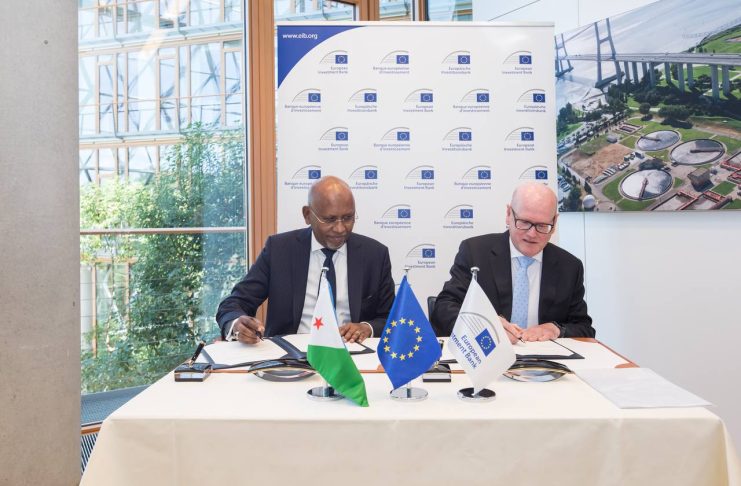
Benin has secured €100 million ($114 million) in financing from the European Investment Bank (EIB) and the International Bank for Industry and Commerce (BIIC) to expand access to finance for agricultural businesses, strengthen domestic agro-processing and improve the resilience of strategic value chains that supply both regional and European markets. The agreement, announced on 14 July, will channel long-term financing to small and medium-sized enterprises (SMEs) and mid-sized companies operating across Benin’s agricultural sector, with at least 70% of the funding earmarked for cotton, soybean and cashew value chains. The initiative forms part of the European Union’s Global Gateway strategy and reflects growing international investment in Africa’s agricultural transformation as governments seek to increase local value addition, improve food security and enhance export competitiveness.
The financing comes at a pivotal moment for Benin’s economy, where agriculture remains the backbone of economic activity despite persistent structural challenges. According to the International Fund for Agricultural Development (IFAD), agriculture contributes nearly 30% of Benin’s gross domestic product (GDP) and provides employment for approximately 70% of the country’s workforce. While agricultural exports have driven economic growth over the past decade, limited access to finance, climate-related risks and inadequate processing capacity continue to constrain productivity and reduce the sector’s ability to generate higher-value exports.
The new financing agreement seeks to address these constraints by improving credit availability for businesses operating throughout agricultural value chains rather than focusing solely on primary production. According to the European Investment Bank, strengthening financing across processing, storage, logistics and value addition will help create more integrated and resilient supply chains capable of serving both domestic industries and international markets.
The largest share of the investment will support cotton and textile production, reinforcing Benin’s ambition to process more of its cotton domestically before export. Cotton remains the country’s largest export commodity and one of West Africa’s most important agricultural products. However, much of the value generated from cotton has traditionally accrued outside producing countries through overseas processing and manufacturing.
Expanding domestic textile and cotton processing could enable Benin to capture a greater share of the industry’s value chain while creating industrial employment and increasing export earnings. Enhanced traceability systems supported through the programme are also expected to strengthen supply chain transparency, an increasingly important requirement for European buyers seeking to meet evolving environmental, social and governance (ESG) standards.
Beyond cotton, the financing will support soybean processing, a sector that has attracted increasing attention as international demand for plant-based protein and animal feed continues to expand. Investments are expected to improve processing capacity, diversify export markets and strengthen supply security for European manufacturers seeking reliable sourcing partners outside traditional production regions.
The programme will also expand investment in cashew sorting and processing, enabling Benin to retain more economic value from one of its fastest-growing agricultural exports. West Africa accounts for a significant proportion of global raw cashew production, yet much of the crop continues to be exported for processing in Asia before reaching international consumer markets. Increasing domestic processing capacity has become a strategic objective across several African cashew-producing countries seeking to create jobs, increase export revenues and strengthen industrial development.
According to the European Investment Bank, at least 70% of the financing will be directed toward these three priority sectors, supporting stronger commercial linkages between West African producers and European markets. The agreement is being implemented under the “Women for Stronger Communities and Growth” initiative, reflecting the growing emphasis among development finance institutions on inclusive agricultural development. Alongside expanding access to finance for agribusinesses, the programme aims to strengthen the resilience of women entrepreneurs, farming communities and vulnerable households facing increasing exposure to climate-related shocks and food insecurity.
Across Africa, women play a central role in agricultural production, food processing and rural trade, yet they continue to face disproportionately limited access to finance, land ownership, extension services and formal markets. According to the Food and Agriculture Organization (FAO), improving women’s access to productive resources can significantly increase agricultural productivity while strengthening household food security and rural incomes. Climate resilience also forms an important component of the financing programme. Agriculture across West Africa is becoming increasingly vulnerable to changing rainfall patterns, prolonged droughts, flooding and rising temperatures, all of which affect yields, production costs and farmer incomes. Strengthening access to finance allows agricultural businesses to invest in irrigation, improved storage facilities, climate-smart technologies and more resilient production systems capable of adapting to changing environmental conditions.
Despite considerable progress in agricultural modernisation over recent years, structural constraints continue to limit the sector’s growth potential. Benin has implemented successive Government Action Programmes (PAG 2016–2021 and PAG 2021–2026) alongside its Strategic Plan for Agricultural Sector Development, introducing reforms aimed at expanding mechanisation, improving irrigation infrastructure and strengthening agricultural value chains. These reforms have contributed to increased agricultural production and improved export performance, particularly in cotton, which has positioned Benin among Africa’s leading cotton producers. Nevertheless, limited rural financing remains one of the sector’s most persistent challenges.
According to the African Development Bank, inadequate access to affordable credit continues to constrain investment by African SMEs, particularly in agriculture, where businesses often face higher risks associated with weather variability, commodity price fluctuations and limited collateral. Expanding financial inclusion for agribusinesses has therefore become a priority across the continent as governments seek to accelerate rural industrialisation and food system transformation. The partnership between the EIB and BIIC also aligns with the European Union’s Global Gateway strategy, through which the EU aims to mobilise up to €300 billion globally for sustainable infrastructure, digital connectivity, clean energy, health, education and resilient supply chains. Agriculture has become an increasingly important component of the initiative as Europe seeks to diversify sourcing relationships while supporting sustainable economic development in partner countries.
For African economies, Global Gateway investments present opportunities to attract long-term financing into sectors capable of generating employment, increasing exports and strengthening regional value chains. However, development experts note that maximising these opportunities will depend on complementary investments in transport infrastructure, energy access, logistics systems, digital technologies and institutional capacity.
The Benin financing agreement reflects a broader shift in international development finance away from supporting commodity exports alone and towards strengthening integrated value chains that generate greater domestic economic value. By expanding local processing, improving supply chain resilience and increasing access to finance, the initiative seeks to create stronger links between agricultural production, industrial development and international trade.
As African countries pursue the objectives of the African Continental Free Trade Area (AfCFTA) alongside broader industrialisation strategies, investments in agro-processing are increasingly recognised as essential for reducing dependence on raw commodity exports while strengthening regional manufacturing capabilities. Processing agricultural products closer to production areas not only creates employment opportunities but also increases export earnings, supports rural development and enhances resilience against global commodity price volatility.
For Benin, the €100 million financing package represents more than an agricultural investment. It illustrates how blended finance partnerships between African financial institutions, multilateral lenders and international development partners are becoming central to modernising agriculture, expanding industrial value chains and building more resilient economies capable of responding to both climate risks and evolving global market demands.


