


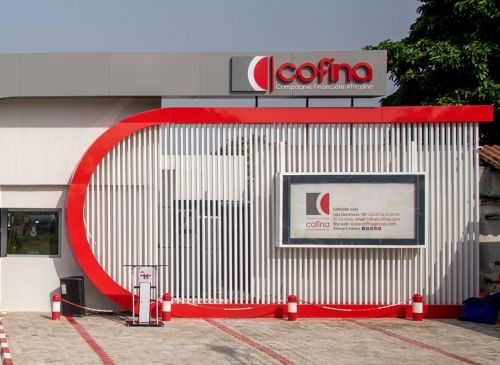
The West African Development Bank (BOAD) has approved a CFA10 billion ($14.3 million) refinancing facility for COFINA Côte d’Ivoire to expand medium-term financing for small and medium-sized enterprises and industries, while directing lending towards financial inclusion, women’s entrepreneurship and green projects. Approved at BOAD’s 152nd Board of Directors meeting in Lomé on September 24, 2026, the facility represents a significant injection of wholesale funding into Côte d’Ivoire’s mesofinance market, where financial institutions are seeking to serve businesses that remain too large for conventional microcredit but often lack the scale, collateral or financial history required by traditional banks.
The transaction comes as access to appropriate business finance remains an important constraint for smaller firms in Côte d’Ivoire. According to the World Bank’s 2023 Enterprise Survey, access to finance was identified as a major or very severe obstacle by a substantial share of surveyed firms, while the underlying survey data show that smaller enterprises continue to face greater financing constraints than larger businesses. The Enterprise Surveys are based on representative firm-level research into the operating environment faced by private-sector companies and cover issues including finance, infrastructure, competition and business performance.
BOAD has not disclosed how the CFA10 billion facility will be divided among SMEs and small industrial companies, women-owned businesses, financial-inclusion initiatives and green projects. Its board resolution specifies that the refinancing line will support medium-term financing for PME/PMI while promoting financial inclusion, green projects and female entrepreneurship. The absence of an allocation breakdown means the eventual development impact will depend on how COFINA translates those priorities into its lending pipeline.
For COFINA Côte d’Ivoire, the facility arrives as the institution continues to expand a business model positioned between conventional banking and microfinance. Founded in 2014, the company describes itself as a mesofinance institution, targeting entrepreneurs and businesses whose capital requirements have moved beyond traditional microcredit but who can still face difficulties obtaining bank financing. By December 2025, COFINA Côte d’Ivoire reported more than 90,000 customers, total assets of CFA139 billion, outstanding loans of CFA76 billion and deposits of CFA69 billion.
The new BOAD facility is therefore equivalent to roughly 13.2% of COFINA Côte d’Ivoire’s outstanding loan portfolio at the end of 2025. That comparison provides a useful indication of the scale of the refinancing line relative to the institution’s existing balance sheet, although the ultimate amount of additional lending generated will depend on loan maturities, pricing, risk management and the extent to which the new resources are recycled into additional medium-term credit.
The mesofinance model has particular relevance in African markets where a large population of businesses operates between the informal and formal economies. Entrepreneurs can have established revenues and viable business models but still lack the collateral, audited financial records or credit histories typically required by commercial banks. At the same time, their financing requirements can be too large or too long-term for conventional microfinance products. Institutions such as COFINA attempt to occupy that middle segment.
The financing challenge is particularly important for smaller enterprises because investment is often financed from internal resources when external credit is unavailable or too expensive. Earlier World Bank Enterprise Survey data for Côte d’Ivoire, for example, showed that small firms relied more heavily on internal funds for investment than larger companies. The World Bank’s current Enterprise Survey programme continues to track access to finance as one of the key indicators of the business environment across economies.
The issue is not simply the volume of credit available but its structure. A business investing in machinery, processing equipment, storage, renewable-energy systems or expansion into a new market may require financing over several years before the investment generates sufficient cash flow. Short-term working-capital facilities cannot always meet those needs. BOAD’s decision to specify medium-term investment finance therefore points towards the financing requirements of businesses seeking to build productive capacity rather than simply meet immediate liquidity needs.
The focus on green projects adds another dimension. Côte d’Ivoire’s private sector is increasingly exposed to the investment requirements associated with energy efficiency, climate resilience, sustainable agriculture and environmental standards. For SMEs, however, the upfront cost of technologies such as efficient machinery, renewable-energy systems or climate-resilient production infrastructure can be a barrier even where the investments could reduce operating costs or improve long-term resilience.
Development-finance institutions have increasingly used credit lines to help financial intermediaries build this type of lending capacity. COFINA’s partnership with the European Investment Bank provides an example. In 2023, EIB Global and COFINA finalised a €16.1 million, or about CFA10.5 billion, credit line for Côte d’Ivoire to finance SMEs and mid-sized companies in agricultural value chains. The programme included targets around women’s economic participation, climate action and environmental sustainability.
By May 2024, COFINA Côte d’Ivoire had already extended 24 loans under that EIB-backed programme to eligible agricultural cooperatives, including 22 in the cocoa sector. The loans then totalled about €2.1 million, or CFA1.4 billion. The EIB programme also included technical assistance aimed at helping COFINA and its customers prepare for environmental and social requirements affecting agricultural exports to European markets.
That experience is relevant to the new BOAD facility because it demonstrates how development finance can operate through domestic or regional financial institutions rather than lending directly to every business. A development bank provides wholesale capital and, in some cases, technical support; the local financial institution then identifies borrowers, manages the lending relationship and takes responsibility for credit assessment and portfolio management.
Such structures can also reduce some of the distance between development-finance capital and smaller businesses. Large development institutions generally cannot efficiently serve tens of thousands of small enterprises directly. Intermediaries with local branches, customer relationships and knowledge of domestic markets can perform that distribution function.
Women-led enterprises are another area where this intermediary model could become significant. BOAD has explicitly identified female entrepreneurship as one of the priorities for the COFINA facility, although no target share of the CFA10 billion has been announced. The effectiveness of that commitment will therefore depend on how COFINA defines eligible businesses, structures its products and measures the participation of women entrepreneurs in the resulting portfolio.
The same applies to financial inclusion. Côte d’Ivoire has made progress in expanding access to financial services, but inclusion is not necessarily equivalent to access to appropriately structured investment finance. A small entrepreneur may hold a bank account or use digital payments while still being unable to secure the medium-term credit required to purchase equipment, expand a business or enter a new market.
The distinction is important for economic development because productive finance can influence whether small enterprises remain survival-oriented or build the capacity to employ more workers, increase output and integrate into formal value chains. In Côte d’Ivoire, sectors such as agriculture, food processing, trade and services provide important channels through which SME financing can translate into broader economic activity.
Agriculture is particularly relevant. Côte d’Ivoire is one of Africa’s major agricultural economies, with cocoa at the centre of its export structure and extensive networks of farmers, cooperatives, processors, traders and service providers. Financing gaps can arise at multiple points in those value chains, from farm-level investment to storage, processing, logistics and compliance with increasingly demanding international sustainability standards.
The EIB-backed COFINA programme illustrates how this can intersect with climate and environmental finance. Under that programme, at least 70% of funds were targeted at agricultural value chains, while cross-cutting priorities included women’s entrepreneurship and green investment. The initiative was also connected to evolving European environmental and deforestation requirements affecting agricultural exports.
BOAD’s latest facility has a broader mandate, but its emphasis on green projects creates an opportunity to extend this approach beyond agricultural value chains. SMEs investing in energy efficiency, waste management, renewable energy, cleaner production or climate-resilient infrastructure can face the same financing problem as other growing businesses: the investment may be economically rational over time but difficult to fund through short-term or expensive credit.
The regional context is also significant. BOAD is the development-finance institution of the West African Economic and Monetary Union and increasingly uses refinancing lines to channel capital through commercial and specialised financial institutions. At its September 2026 board meeting, BOAD approved CFA157.5 billion in new operations across the region, including agricultural resilience, private-sector finance, energy and other development priorities. The COFINA transaction forms part of that wider effort to use regional development finance to support productive investment.
This approach matters because the financing requirements of West African economies are considerably larger than the balance sheets of development institutions alone. Development banks can therefore have a wider effect when their capital is used to strengthen local financial intermediaries, extend loan maturities, support new products and encourage commercial institutions to reach underserved businesses.
For COFINA, the challenge will be converting the refinancing line into a portfolio that combines financial sustainability with measurable development outcomes. Medium-term SME lending can carry higher credit and operational risks than conventional corporate lending, particularly when borrowers operate in volatile sectors or face climate-related shocks. Strong underwriting, portfolio diversification and risk management will consequently remain important as the institution expands.

For borrowers, the practical measure of the facility will ultimately be whether it changes the availability, maturity and cost of financing. A larger credit line does not automatically close a financing gap if businesses remain unable to meet lending requirements or if the resulting products are too expensive. The structure of the loans, eligibility criteria and distribution through COFINA’s network will therefore matter alongside the headline value of the BOAD commitment.
The transaction also highlights the growing intersection between financial inclusion and sustainable finance in West Africa. Women-led enterprises, smaller industrial companies and green businesses are often discussed as separate development priorities, but they can share a common constraint: access to capital that matches the timing and scale of their investments.
BOAD’s CFA10 billion facility places those issues within a single refinancing operation. Its impact will depend on implementation, but the structure reflects a broader evolution in African development finance, where regional development banks increasingly seek to use financial intermediaries to reach businesses that conventional capital markets and large banks do not consistently serve.
For Côte d’Ivoire, the significance of the facility therefore extends beyond the $14.3 million headline. It adds another source of medium-term liquidity to a financial institution with more than 90,000 customers and a CFA76 billion loan book, while connecting SME finance with the country’s wider priorities around industrialisation, entrepreneurship, financial inclusion and the green transition.
The longer-term question is whether such refinancing structures can help create a deeper market for productive SME finance, in which businesses can move progressively from small-scale credit towards larger commercial financing as their revenues, governance and investment capacity develop. If that happens, development finance can have an effect beyond the original facility by helping build financial institutions and credit markets capable of serving the next generation of African businesses.


