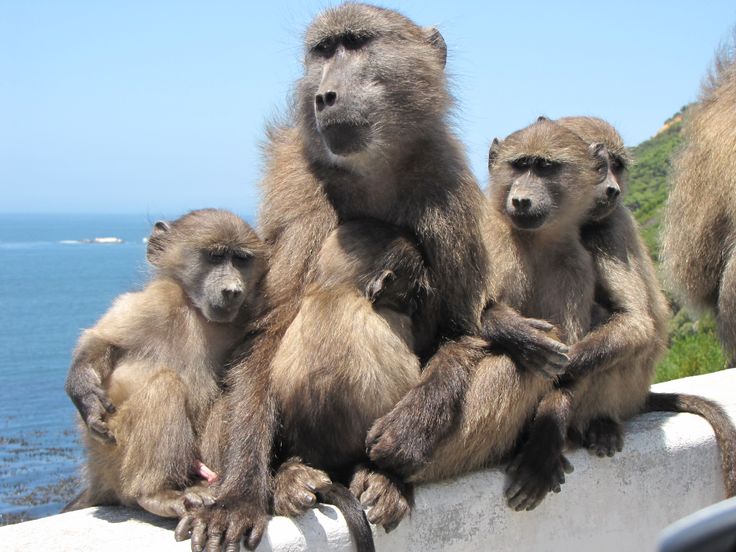

Authorities in Cape Town have unveiled a revised baboon action plan aimed at reducing escalating conflicts between humans and the region’s chacma baboons (Papio ursinus), whose population has grown from roughly 360 in 2000 to more than 600 by 2024.
The plan, which combines nonlethal interventions with measures that include euthanasia, has sparked debate among conservationists, animal welfare advocates, and urban planners on how best to reconcile wildlife conservation with human safety and sustainable urban living.
Read also: Ghana bans mining in forest reserves, testing the future of environmental enforcement
The updated strategy outlines a multi-pronged approach. It proposes erecting baboon-proof fences monitored by trained rangers, relocating certain troops to less urbanized areas, and establishing a 1.5-hectare sanctuary where select males undergo vasectomies to manage population growth.
The northern subpopulation is capped at 250 baboons and the southern at 175; exceeding these thresholds for more than six months could trigger euthanasia of older, sick, or injured animals.
Authorities note the plan reflects both ecological realities and public safety concerns. Cape Town’s urban sprawl increasingly overlaps with the natural ranges of baboon troops, creating frequent incursions into residential neighborhoods in search of food. Municipal services, such as unprotected garbage bins, have unintentionally encouraged this behavior, exacerbating human-wildlife conflict.

Local NGOs and animal welfare groups argue that the plan overemphasizes lethal control rather than addressing root causes. Green Group Simonstown (GGST) has consistently advocated for immediate deployment of baboon-proof bins to limit food access, pointing to prior research showing that secure waste management reduces urban raids while allowing baboons to forage naturally within available vegetation. GGST warns that relying on euthanasia as a primary tool risks undermining long-term conservation and public trust.
The Cape Peninsula Baboon Management Joint Task Team (CPBMJTT), which drafted the plan, includes representatives from South African National Parks (SANParks), CapeNature, and the City of Cape Town. The task team has confirmed that baboon-proof bins will be rolled out in high-impact areas by May 2026, a measure intended to complement fences, relocation efforts, and sanctuary management.
Read also: How Tanzania is using Nature-Based Solutions to secure the future of its Tourism industry
Beyond immediate human-baboon conflict, the plan has wider sustainability implications. Part of the baboons’ habitat overlaps with a UNESCO World Heritage Site, placing the conservation of these primates within an international ecological framework.
UNESCO has confirmed it received the revised plan on December 18 and is reviewing it in consultation with the International Union for Conservation of Nature (IUCN). The review will determine recommendations and supportive measures to protect both the baboon populations and the broader ecological integrity of the heritage site.
The Cape Town case underscores a broader challenge across Africa and the world: balancing biodiversity conservation with urban expansion and human safety. Rapid population growth, urbanization, and climate pressures are increasingly bringing humans and wildlife into conflict, raising questions about the long-term viability of coexistence strategies.
South Africa’s experience with baboons highlights the need for integrated approaches that combine infrastructure, community engagement, and ecological stewardship.

Experts note that successful wildlife management requires more than reactive measures. Population monitoring, habitat restoration, and community education are critical, as are investments in urban planning that anticipate ecological interactions. The Cape Peninsula initiative illustrates that addressing human-wildlife conflicts in a sustainable way is as much about social systems and behavior as it is about fences or sanctuaries.
As Cape Town moves to implement its new plan, the city will face scrutiny not only from conservationists but also from residents, international bodies, and other African nations observing approaches to urban-wildlife coexistence. The unfolding process will offer lessons on how cities across the continent can integrate environmental responsibility, social well-being, and urban development in a manner that supports long-term sustainability.
With the plan in place, the success of Cape Town’s strategy will be measured not just by the reduction of baboon incursions, but by its ability to demonstrate a balanced, humane, and environmentally conscious approach to living alongside wildlife in a rapidly urbanizing Africa.
Engage with us on LinkedIn: Africa Sustainability Matters
Engage with us on LinkedIn: Africa Sustainability Matters