


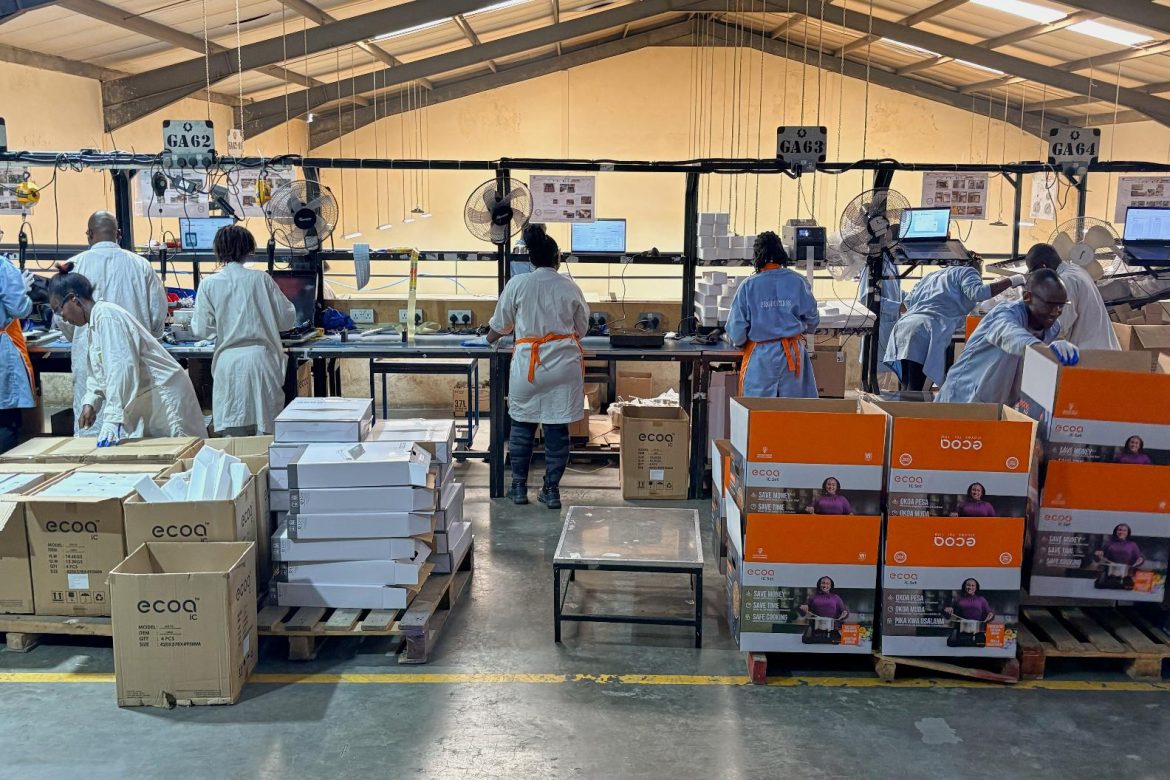
Carbon credit financing is emerging as an important source of capital for Africa’s clean cooking transition, helping households access cleaner stoves and electric cooking technologies that would otherwise remain unaffordable, as nearly 1 billion people across the continent continue to lack access to clean cooking. The model is attracting investors, governments and development institutions because it can reduce upfront consumer costs while generating carbon revenues from lower emissions, but its expansion is also exposing the sector to regulatory, verification and market risks that could determine whether carbon finance can support clean cooking at the scale Africa requires.
 The financing model is becoming increasingly visible in Kenya, where Nairobi-based BURN has distributed more than 7.3 million cookstoves across 11 African countries. Under the model, investors provide capital to subsidise the upfront cost of cooking technologies and later recover returns through revenues generated from carbon credits associated with reductions in the use of charcoal, firewood and other polluting fuels. An efficient biomass stove that might otherwise cost about $40 can be sold for as little as $5 after carbon subsidies, while induction cookers can be financed through carbon credits and pay-as-you-go arrangements.
For households, the significance is less about carbon markets than the economics of daily energy use. In Nairobi, Mary Kavutha, a businesswoman and mother of two, moved from charcoal cooking to an induction cooker and told the Associated Press that her electricity costs for several meals were lower than what she had previously spent on charcoal. Such changes illustrate the central constraint facing Africa’s clean cooking transition: technologies may exist, but adoption depends heavily on whether households can afford them and whether reliable energy infrastructure is available.
According to the International Energy Agency, nearly 1 billion people in Africa still lack access to clean cooking, contributing to around 850,000 premature deaths each year from household air pollution. The agency estimates that closing the continent’s clean cooking gap could require more than $2 billion in annual investment through 2040, including spending on household equipment as well as fuel storage, bottling facilities and distribution networks. The financing challenge is therefore larger than the cost of supplying individual households with improved stoves; it extends across the energy infrastructure needed to make modern cooking fuels and technologies commercially viable.
The scale of the financing gap has placed carbon markets alongside public finance, development lending and private investment as part of the emerging clean cooking funding mix. The IEA said in July that new financial commitments to clean cooking in Africa had reached $900 million, in addition to the $2.2 billion committed at the inaugural 2024 Clean Cooking Summit. Of the earlier commitments, about $740 million had already been deployed across 22 African countries. The agency also reported 121 new clean cooking policies across more than 30 countries, representing countries where about 80% of Africans without access to clean cooking live.
Carbon finance is particularly significant because clean cooking has historically struggled to compete for capital with larger energy and infrastructure projects. Carbon revenues can effectively reduce the retail price paid by households while giving investors a potential future revenue stream. For African companies operating in low-income markets, that structure can make the difference between a product being technically available and being commercially accessible.
But the dependence on future carbon revenues creates a different category of financial exposure. Carbon projects require upfront capital, while credit revenues depend on verified emissions reductions, project performance, market prices and regulatory approvals. Any delay in certification, changes in government policy or weakness in demand for credits can therefore affect the cash flow of companies whose business models depend on the market.
Kenya’s experience with KOKO Networks illustrates the institutional risks. The clean-cooking company ceased operations in January after a dispute over government authorisation for the sale of carbon credits, highlighting how regulatory decisions can affect the viability of businesses built around carbon-market revenues. The episode has raised broader questions about the governance of carbon projects, including the allocation of carbon rights, government authorisation procedures and the reliability of revenue assumptions used by investors.
The credibility of the underlying credits is another constraint. Carbon-financed clean cooking projects must demonstrate that claimed emissions reductions are real, measurable and attributable to the intervention. The sector has responded with more extensive monitoring technologies, including digital usage data, connected devices and other forms of verification designed to strengthen confidence in the credits. These systems can improve transparency, but they also add technical and administrative requirements that smaller project developers may struggle to absorb.
The issue is particularly important for African governments because carbon finance increasingly intersects with national climate policy and public revenue systems. Governments are being asked to establish rules governing authorisation, ownership, environmental integrity and the treatment of emissions reductions generated within their borders. Weak or unpredictable regulatory systems can discourage investment, while overly complex approval processes can delay projects whose economics depend on timely carbon revenues.
The African Union has also placed clean cooking within a broader continental energy and development agenda. The bloc has identified the heavy dependence on traditional biomass as a challenge affecting household health, forests, energy security and economic productivity. The policy discussion is increasingly moving away from treating clean cooking as a narrow household welfare issue and toward recognising it as part of Africa’s wider energy infrastructure and climate-finance challenge.
The economic consequences extend beyond household fuel bills. Women and girls in many communities continue to bear a disproportionate share of unpaid work associated with collecting biomass, while exposure to household air pollution imposes costs on health systems and reduces productive time. At the same time, heavy dependence on charcoal and firewood contributes to pressure on forests and local ecosystems. Expanding cleaner cooking therefore has implications for household expenditure, labour productivity, public health, land use and natural-resource management.
There is also an industrial dimension. Scaling clean cooking requires manufacturers, distributors, digital payment providers, energy companies and financial institutions capable of serving fragmented and often low-income markets. Greater demand for locally produced stoves and components could support manufacturing and employment in African economies, provided governments and investors can create predictable market conditions and avoid models that depend excessively on imported equipment or volatile international carbon revenues.
The IEA’s recent assessment suggests that Africa’s clean cooking transition will require a combination of technologies rather than reliance on a single fuel. LPG, electricity, advanced biomass, biogas and other modern cooking solutions each have different infrastructure and affordability requirements across African markets. The financing challenge is therefore closely linked to the development of power grids, fuel distribution networks, storage facilities and consumer-finance systems.
For investors, the clean cooking market is consequently becoming a test of whether carbon finance can operate as a dependable development-finance instrument rather than simply as a source of additional project revenue. For governments, the priority is to ensure that carbon-market rules are sufficiently clear to attract capital while protecting environmental integrity and public interests. For households, the measure of success remains simpler: whether cleaner cooking is affordable, reliable and practical enough to replace charcoal, firewood and other polluting fuels.
Africa’s clean cooking challenge is ultimately a financing and infrastructure problem as much as a technology problem. Carbon credits can help close part of the affordability gap by bringing forward capital that households and many local businesses cannot provide themselves. But the experience of carbon-financed projects across the continent also shows that market access depends on credible measurement, predictable regulation and institutions capable of managing the financial and environmental claims attached to carbon reductions.
 As African governments seek to mobilise private capital for climate and energy priorities, clean cooking provides a particularly important test of that model. The sector combines a large unmet development need with measurable emissions reductions and a direct household market. Whether carbon finance can turn those characteristics into durable investment will depend not only on the availability of credits, but on the strength of the institutions, infrastructure and markets that underpin them.


