


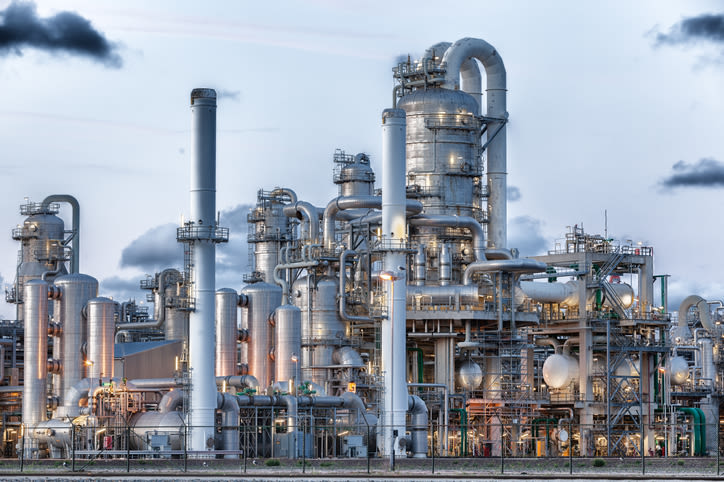
The Republic of Congo’s economy is projected to accelerate sharply in 2026 as expanded liquefied natural gas (LNG) production boosts hydrocarbon exports, government revenues and public investment, underscoring the increasingly important role that natural gas is expected to play in Africa’s evolving energy landscape.
According to a report published by Fitch Solutions on 29 July 2026, Congo’s gross domestic product (GDP) is forecast to grow by 5.2 per cent in 2026, up from an estimated 2.5 per cent in 2025, largely driven by the expansion of the Congo LNG project and higher hydrocarbon production.
The improved outlook follows the completion of Phase II of Congo LNG, an offshore liquefied natural gas development designed to commercialise the significant gas reserves of the Marine XII block. Operated by Italian energy company Eni, the expansion began operations in February 2026, increasing the project’s total liquefaction capacity to approximately three million metric tonnes of LNG annually, equivalent to around 4.5 billion cubic metres of natural gas.
According to Eni, the first development phase has an annual production capacity of 600,000 tonnes, meaning the second phase substantially increases the project’s export potential while strengthening Congo’s position within the global LNG market.
Fitch Solutions estimates that the additional infrastructure will drive an overall 27.2 per cent increase in hydrocarbon production during 2026. Natural gas output is expected to rise by 128 per cent, while oil production is projected to grow by a more moderate 8.8 per cent, reflecting the increasing contribution of gas to Congo’s energy sector.
The expansion comes as African gas-producing countries seek to monetise natural gas reserves amid rising global demand for LNG, particularly from European and Asian markets pursuing energy diversification and lower-carbon alternatives to coal. For Congo, greater gas exports could provide an important source of foreign exchange while supporting fiscal stability and financing broader economic development.
The increase in hydrocarbon production is also expected to strengthen government finances. Higher export earnings, together with relatively supportive oil prices, are projected to increase fiscal revenues, enabling authorities to expand public expenditure while maintaining macroeconomic stability.
Reflecting the improved revenue outlook, the Congolese government revised its 2026 national budget in July, increasing planned expenditure by 10.4 per cent compared with the original budget and by 16.5 per cent relative to the revised 2025 budget.
According to Fitch Solutions, the additional spending will primarily support government goods and services and current transfers while maintaining discipline over the public-sector wage bill. Reduced imports following the completion of major LNG construction activities are also expected to improve the country’s external trade balance, as demand for imported engineering equipment and capital goods declines.
Household consumption is forecast to remain resilient despite temporary inflationary pressures. Consumer prices increased 4.5 per cent year-on-year in May, compared with 0.6 per cent in March, largely reflecting higher food and transport costs.
Fitch Solutions expects average inflation to rise from 2.7 per cent in 2025 to 3.5 per cent in 2026. However, higher government revenues generated through hydrocarbon exports are expected to provide fiscal space for targeted subsidies that could help moderate energy costs and protect household purchasing power.
Monetary policy is also expected to support domestic demand. Continued liquidity injections and lower reserve requirements introduced by the Bank of Central African States (BEAC) are anticipated to encourage private-sector lending, while increased public transfers should strengthen disposable incomes and consumer spending.
As a result, household consumption growth is projected to improve modestly to 2.7 per cent in 2026, compared with an estimated 2.5 per cent in 2025. Despite the stronger short-term outlook, Fitch Solutions expects economic growth to moderate to 3.5 per cent in 2027 as hydrocarbon production stabilises following the completion of major LNG investments and international energy prices gradually soften.
The report notes, however, that geopolitical developments remain an important source of uncertainty. A prolonged escalation of tensions involving the United States and Iran, for example, could sustain higher global oil prices, increasing Congo’s export earnings, fiscal revenues and foreign currency inflows beyond current projections.
Conversely, lower energy prices or weaker global demand could reduce hydrocarbon revenues, reinforcing the importance of economic diversification beyond the extractive sector.
For Africa, Congo’s experience highlights both the opportunities and limitations associated with resource-driven growth. While large-scale energy investments can generate substantial fiscal revenues, attract foreign investment and strengthen export performance, long-term economic resilience will depend on translating resource wealth into broader investments in infrastructure, industrial development, agriculture and human capital.
Natural gas is increasingly being positioned as a transition fuel capable of supporting industrialisation while contributing to lower-emission energy systems. Across Africa, countries including Mozambique, Senegal, Mauritania, Tanzania and the Republic of Congo are expanding LNG developments to strengthen export revenues while seeking to leverage gas resources for domestic power generation and industrial growth.
The performance of Congo LNG will therefore be closely watched as an indicator of how strategically managed gas investments can contribute to fiscal sustainability, energy sector development and broader economic transformation in resource-rich African economies navigating an increasingly complex global energy transition.


