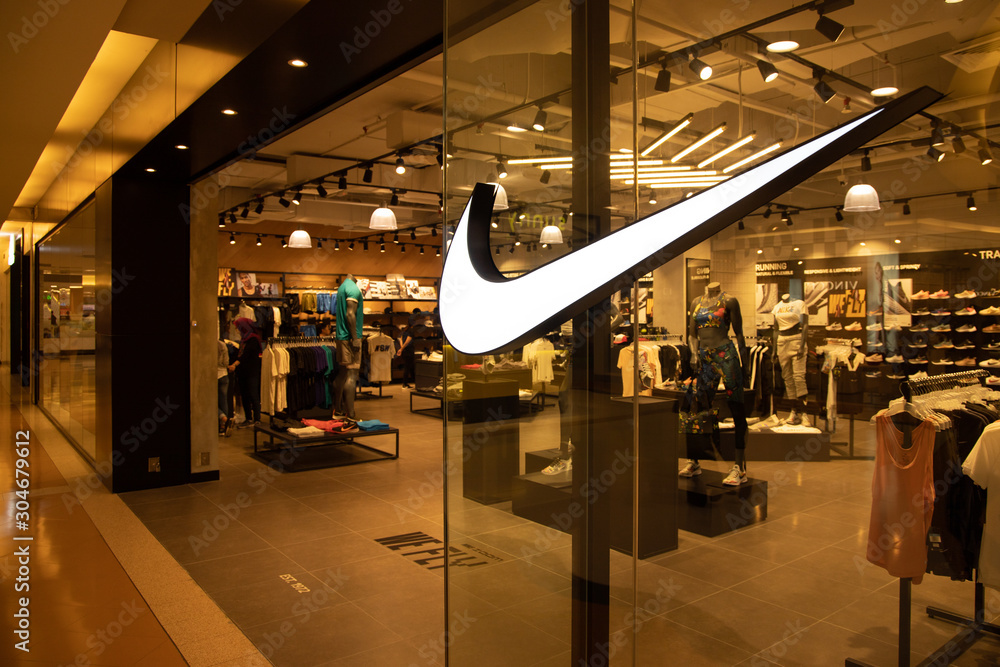
UK regulators have banned a series of adverts from Nike, Superdry and Lacoste after ruling that the brands misled consumers by promoting their products as “sustainable” without demonstrating how those claims were justified. The decision, announced by the country’s Advertising Standards Authority after a review of paid-for Google ads, raises pressing questions about how companies communicate environmental performance at a time when shoppers, regulators and investors are increasingly alert to the risks of exaggerated green marketing.
Read also: TotalEnergies ordered to revise climate messaging after landmark Paris Court ruling
The adverts had used phrases such as “sustainable materials”, “sustainable style”, and “sustainable clothing”, with no detail on what made the products environmentally responsible. When asked for evidence, each company gave general statements about progress in reducing environmental footprints, but the watchdog ruled this was insufficient and lacked the clarity required under UK advertising rules.
Those rules demand that environmental claims must be backed by what regulators describe as a “high level of substantiation”, particularly when a brand uses absolute terms that imply minimal or no environmental harm.

In the Nike advert under scrutiny, the brand promoted tennis polo shirts while asserting that the garments incorporated “sustainable materials”. The company argued that the claim was intended as a broad signpost to its wider product range, not necessarily to the individual polo shirts featured in the advert.
That distinction, however, was not visible to consumers, who would reasonably understand the statement to apply to the items being marketed. The regulator found that the absence of detailed explanation created a misleading impression and banned the advert.
A similar issue arose in Superdry’s case. Its advert suggested that shoppers could “unlock a wardrobe that combines style and sustainability”, a declaration that the company said was not intended to imply that all its garments qualified as sustainable. But the regulator found the wording ambiguous and likely to leave consumers believing that the entire Superdry range met a sustainability threshold that had not been proven.
In its ruling, the authority noted that the retailer had not shown evidence that its products had no detrimental environmental effects when assessed across their lifecycle.
Read also: EFRAG unveils ESRS knowledge hub as EU tightens global Sustainability Reporting rules
Lacoste’s advert targeted parents by describing its children’s range as “sustainable clothing”. The company maintained that it had worked for years to reduce the carbon footprint of its products and acknowledged that terms like “eco-friendly” or “green” are difficult to substantiate absolutely. Regulators agreed on the difficulty but stressed that such absolute claims should not be used without clear explanation. The advert was banned because Lacoste could not demonstrate that its garments delivered the environmental benefits implied by the language used.
The three rulings form part of a wider enforcement strategy in the United Kingdom, where scrutiny of green marketing has intensified as more brands position themselves as environmentally conscious. The Advertising Standards Authority has been using artificial intelligence tools to identify adverts whose sustainability messaging may be inconsistent with the evidence behind them. Its recent actions, spanning the fashion, consumer goods, and financial sectors, reflect a broader shift toward demanding greater precision in environmental communication.
For Africa, the implications are significant. As countries across the continent expand their climate-related industries, from electric mobility and solar manufacturing to regenerative agriculture, green marketing is becoming a strategic asset for companies seeking investors and customers.
The global crackdown on unverified sustainability claims highlights a risk: businesses that rely on vague or unsubstantiated environmental messaging may erode consumer trust and provoke regulatory intervention. This matters particularly for African manufacturers and retailers who aim to enter European and UK markets where environmental compliance is increasingly tied to trade access.

In markets such as South Africa, Kenya, Morocco and Egypt, regulators have begun reviewing local advertising codes to align them with global norms. South Africa’s Competition Commission recently warned against “greenwashing” in consumer goods, after surveys showed that products marketed as environmentally friendly often lacked credible certification.
In Kenya, where sustainable textile production is gaining momentum through cotton-to-fabric value-chain revitalization, several industry players are already exploring stricter product labelling to avoid similar pitfalls. As African firms grow their export ambitions, especially in apparel, leather and processed goods, failure to substantiate green claims could invite penalties or exclusion from major marketplaces.
The European Union’s Corporate Sustainability Reporting Directive, which begins phasing in across industries, will require detailed environmental disclosures from companies operating or selling within its borders. African suppliers working with global brands, including those in the garment and footwear sectors, will increasingly be subject to these verification requirements. The UK ruling underscores a future in which sustainability claims are not merely marketing language but audited assertions with financial and reputational consequences.
Read also: EU parliament delays deforestation-free supply chain law to 2026, raising global trade questions
For consumers, the decision signals a shift toward greater transparency at a time when sustainability labels influence purchasing behavior. Research from the UN Environment Programme shows that global consumer interest in sustainable fashion has grown steadily, but so too has the prevalence of misleading claims. In the absence of clear standards, shoppers risk making decisions based on incomplete information, undermining both trust and genuine environmental progress.
Nike has acknowledged the regulator’s findings and stated that it will take the necessary steps to ensure clarity in future advertising. Superdry and Lacoste were contacted by the regulator for comment on the ruling. All three brands have been instructed to ensure that future adverts clearly explain the basis of any environmental claims and demonstrate evidence when using strong terms such as “sustainable”.
Advertising that exaggerates environmental benefits may appear benign, but it shapes public perception of sustainability at a time when accurate information is crucial to global climate efforts. As the transition toward low-carbon economies accelerates, especially in Africa where infrastructure, energy systems and supply chains are rapidly evolving, precise communication becomes not just a marketing issue but a matter of public accountability.
Regulators are signaling that vague promises will no longer suffice. Companies trading on their green credentials must now prove them.
Engage with us on LinkedIn: Africa Sustainability Matters