


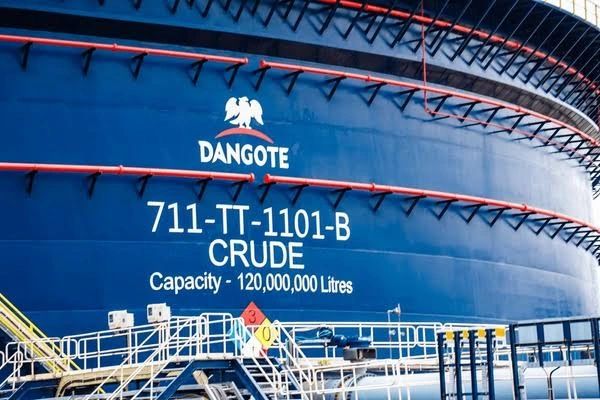
Dangote Industries has unveiled plans to finance its proposed 700,000-barrel-per-day refinery in Kenya through a combination of internal cash flows, bond financing and proceeds from a planned initial public offering (IPO), marking another major step in the company’s strategy to reshape Africa’s petroleum refining landscape and reduce regional dependence on imported fuels.
The planned refinery, to be constructed on Lamu Island along Kenya’s coast, is expected to become East Africa’s largest refining facility and a major regional energy infrastructure investment. The project forms part of Dangote Industries’ broader Vision 2030 strategy, which seeks to expand the group’s refining capacity to 2.1 million barrels per day and achieve annual revenues of approximately US$100 billion. Edwin Devakumar, Vice President for Oil and Gas at Dangote Industries, told Reuters on 7 July 2026 that the company would rely on a blended financing model combining internally generated funds, debt capital markets and equity proceeds from planned share offerings.
While the company has not disclosed the final cost of the Lamu refinery, the scale of investment is expected to be comparable to Dangote’s flagship refinery in Lagos, Nigeria, which cost more than US$20 billion before entering commercial operations. The Lagos facility has become one of the largest refinery projects in the world and represents the foundation of Dangote’s strategy to increase Africa’s domestic refining capacity.
“The site has been selected, soil tests are ongoing and design and engineering work has started,” Devakumar told Reuters, indicating that early development activities for the Kenya project are already underway. Construction is expected to take approximately three years once the project moves into the full development phase.
For Kenya and the wider East African region, the refinery represents a strategic investment aimed at addressing long-standing vulnerabilities in petroleum supply chains. Many countries in the region rely heavily on imported refined fuels, exposing economies to international price fluctuations, foreign exchange pressures and supply disruptions. A large-scale domestic refinery could reduce import dependency while strengthening regional energy security. Kenya currently serves as a key fuel distribution hub for several neighbouring countries, including Uganda, Rwanda, South Sudan and parts of the Democratic Republic of Congo, making additional refining capacity potentially significant for regional markets.

The financing approach reflects the growing role of private capital markets in supporting large-scale infrastructure development across Africa. Rather than relying solely on traditional project finance structures, Dangote is combining corporate resources, debt instruments and equity markets to fund its expansion plans. A major component of this strategy is the planned listing of shares in the Lagos refinery. Dangote intends to sell between 5% and 10% of the refinery’s equity to public investors, allowing the company to raise additional capital while expanding ownership participation. Industry analysts have estimated the Lagos refinery’s valuation at between US$40 billion and US$50 billion.
The refinery has also demonstrated growing access to international capital markets. In July 2026, the Lagos refinery raised US$750 million through a five-year international bond issuance carrying a 7.5% interest rate. The transaction, arranged by JPMorgan Chase, Bank of America and Standard Chartered, marked the facility’s first international bond issuance and highlighted investor appetite for African industrial infrastructure assets. The Kenya refinery is also part of Dangote’s wider effort to establish a continental refining network. Under Vision 2030, the company plans to increase total refining capacity to 2.1 million barrels per day through expansion of its Lagos operations and construction of the Lamu facility.
The Lagos refinery, which began commercial operations after years of development, has already altered Nigeria’s petroleum market dynamics by helping the country move from being a major importer of refined fuel products towards becoming a potential exporter. The facility has attracted interest from other African countries seeking alternative fuel supply sources. In June 2026, a delegation from the Republic of the Congo visited the Lagos refinery to explore opportunities for petroleum product imports, reflecting growing regional interest in Africa-based refining capacity.
For Africa’s energy sector, Dangote’s expansion highlights a broader effort to address the continent’s refining deficit. Despite being home to some of the world’s largest crude oil reserves, many African countries have historically exported crude oil while importing refined petroleum products due to limited domestic processing capacity. This imbalance has contributed to significant foreign exchange outflows and increased exposure to global fuel market volatility. Expanding refining capacity could therefore have implications beyond energy supply by supporting industrial development, job creation, trade integration and improved energy resilience.
However, large-scale refining projects also face complex challenges. They require substantial upfront capital, reliable feedstock supply, technical expertise and stable regulatory environments. The long-term success of the Lamu refinery will depend on effective project execution, market demand and the ability to integrate the facility into regional fuel distribution networks. The project also emerges during a period of global energy transition, where oil and gas investments are increasingly being evaluated alongside climate commitments and shifting energy demand patterns. For African economies, the challenge remains balancing immediate energy security and industrial development needs with longer-term efforts to diversify energy systems and reduce emissions.
https://www.aecweek-registration.com/2026/
Dangote’s strategy reflects this tension. While the company is expanding fossil fuel infrastructure, it is also positioning itself as a major industrial player capable of strengthening Africa’s economic self-reliance through domestic processing and regional supply chains. If successfully implemented, the Lamu refinery could become a major component of East Africa’s energy infrastructure and reinforce Kenya’s role as a regional economic hub. It would also represent another milestone in Dangote Industries’ ambition to build one of Africa’s largest integrated industrial platforms.
For the continent’s refining sector, the development signals a shift from reliance on imported petroleum products towards greater domestic processing capacity. The outcome of projects such as Lamu will determine whether Africa can capture more value from its energy resources while strengthening economic resilience across regional markets.


