


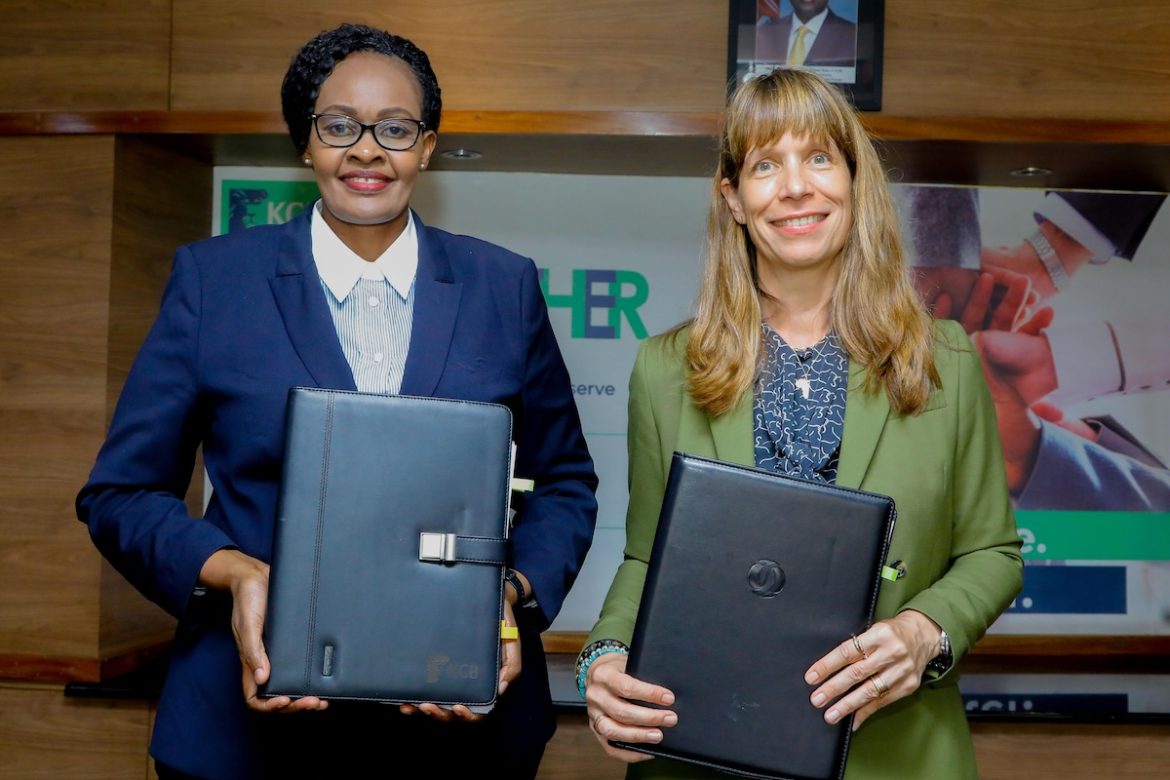
KCB Bank Kenya has secured a US$100 million (KSh12.9 billion) financing facility from the European Bank for Reconstruction and Development (EBRD), marking the multilateral lender’s first investment in Kenya’s financial sector and reinforcing the growing role of commercial banks in financing climate action alongside private sector development. Signed on 28 July, the facility will channel credit to micro, small and medium-sized enterprises (MSMEs), with 30% of the financing earmarked for green investments and 35% reserved for women- and youth-led businesses, aligning financial inclusion with Kenya’s climate and economic development priorities.
The financing comes as Kenya seeks to accelerate investment in renewable energy, climate-smart agriculture and sustainable enterprises while addressing one of the country’s most persistent development challenges: limited access to affordable finance for small businesses. MSMEs account for the overwhelming majority of businesses in Kenya and contribute significantly to employment and economic activity, yet many continue to struggle to secure long-term financing for business expansion and technology upgrades.
The structure of the EBRD facility reflects an evolving approach to development finance, integrating environmental sustainability, financial inclusion and private sector growth within a single financing framework rather than treating them as separate policy objectives. According to the two institutions, directing dedicated funding towards green projects while prioritising women and youth entrepreneurs is intended to strengthen business resilience and support Kenya’s transition to a low-carbon economy.
Speaking during the signing ceremony, EBRD Managing Director for Sub-Saharan Africa, Dr Heike Harmgart, said the partnership would help expand financing to businesses capable of delivering both economic growth and environmental benefits.
“By partnering with KCB Bank, we are helping to channel much-needed financing to MSMEs, the engines of job creation and economic growth. We are particularly pleased that this facility will contribute to the transition to a greener economy and will expand opportunities for women and young entrepreneurs,” Harmgart said.
Beyond providing capital, the European lender will offer technical assistance to KCB Bank through specialised advisory services and staff training designed to strengthen the bank’s capacity to identify, evaluate and finance environmentally sustainable investments. Such support has become an increasingly important feature of green finance programmes, recognising that financial institutions require specialised expertise to assess climate-related investment opportunities and risks.
For KCB Bank, the facility builds on an expanding sustainable finance portfolio that has grown alongside Kenya’s broader climate agenda. Managing Director Annastacia Kimtai said the financing reinforces the bank’s commitment to increasing investments in sectors that deliver both commercial returns and environmental benefits.
“We remain committed to sustainable finance by increasing investments in renewable energy, climate-smart agriculture and other green projects that contribute to Kenya’s climate ambitions while creating long-term economic value,” Kimtai said.
The latest facility complements KCB’s existing track record in sustainable lending. According to the bank, it has already disbursed more than KSh48.8 billion in green financing supporting renewable energy, energy efficiency, sustainable agriculture and other climate-related investments. In parallel, the bank has extended more than KSh156 billion in financing through its Female-Led and Made Enterprises (FLME) programme, illustrating the increasing convergence between gender-inclusive finance and sustainable development objectives.
The transaction also reflects the growing importance of financial institutions in mobilising private capital for Africa’s climate transition. According to the African Development Bank, Africa requires between US$130 billion and US$170 billion annually in infrastructure investment, with clean energy, climate adaptation and resilient agriculture accounting for a substantial share of future financing needs. Domestic commercial banks are increasingly expected to play a larger role in bridging this investment gap by directing capital towards projects that support national climate commitments.
Kenya has emerged as one of Africa’s leaders in sustainable finance, supported by an ambitious policy framework that includes the National Climate Change Action Plan, the Kenya Green Finance Taxonomy and commitments under its Nationally Determined Contribution (NDC) to reduce greenhouse gas emissions while strengthening climate resilience. The country’s financial sector has increasingly aligned lending practices with these objectives through green bonds, sustainability-linked financing and dedicated climate investment facilities.
The EBRD’s entry into Kenya’s banking sector also signals growing international confidence in the country’s financial institutions and broader investment environment. Although the bank has traditionally focused on Europe, Central Asia and parts of North Africa, it expanded its mandate into sub-Saharan Africa in 2023, identifying Kenya, Benin, Côte d’Ivoire, Ghana, Nigeria and Senegal among its initial countries of operation.
According to the World Bank, access to finance remains one of the principal constraints affecting MSME growth across sub-Saharan Africa. Limited collateral, high borrowing costs and short loan tenures continue to restrict investment in productivity-enhancing technologies, particularly among smaller enterprises and businesses led by women and young entrepreneurs. Integrating concessional development finance with commercial lending can help reduce these barriers while encouraging investment in sectors that support long-term economic resilience.
The facility’s emphasis on green investments is particularly relevant as Kenyan businesses increasingly face pressure to improve energy efficiency, adopt cleaner technologies and strengthen resilience to climate-related risks. Renewable energy systems, climate-smart agricultural practices, water conservation technologies and sustainable manufacturing processes are becoming increasingly important for maintaining competitiveness while responding to changing environmental conditions.
For women- and youth-led enterprises, expanded access to affordable financing could support business growth in sectors ranging from agribusiness and manufacturing to renewable energy services and digital innovation. According to the International Finance Corporation (IFC), closing the financing gap facing women-owned businesses alone could unlock substantial economic gains across emerging markets while creating new employment opportunities.
The combination of financial resources and technical assistance also reflects a broader shift in development finance towards building institutional capacity alongside capital provision. Strengthening banks’ ability to assess environmental risks, evaluate green investments and monitor sustainability outcomes can improve the quality of lending while supporting more effective deployment of climate finance.
As Kenya continues implementing its long-term climate and economic transformation agenda, partnerships between international financial institutions and domestic commercial banks are likely to play an increasingly important role in mobilising private investment. The success of the KCB-EBRD facility will ultimately be measured not only by the volume of credit disbursed but also by its contribution to expanding sustainable enterprises, improving financial inclusion and accelerating investment in technologies that support Kenya’s transition towards a more resilient and low-carbon economy.


