


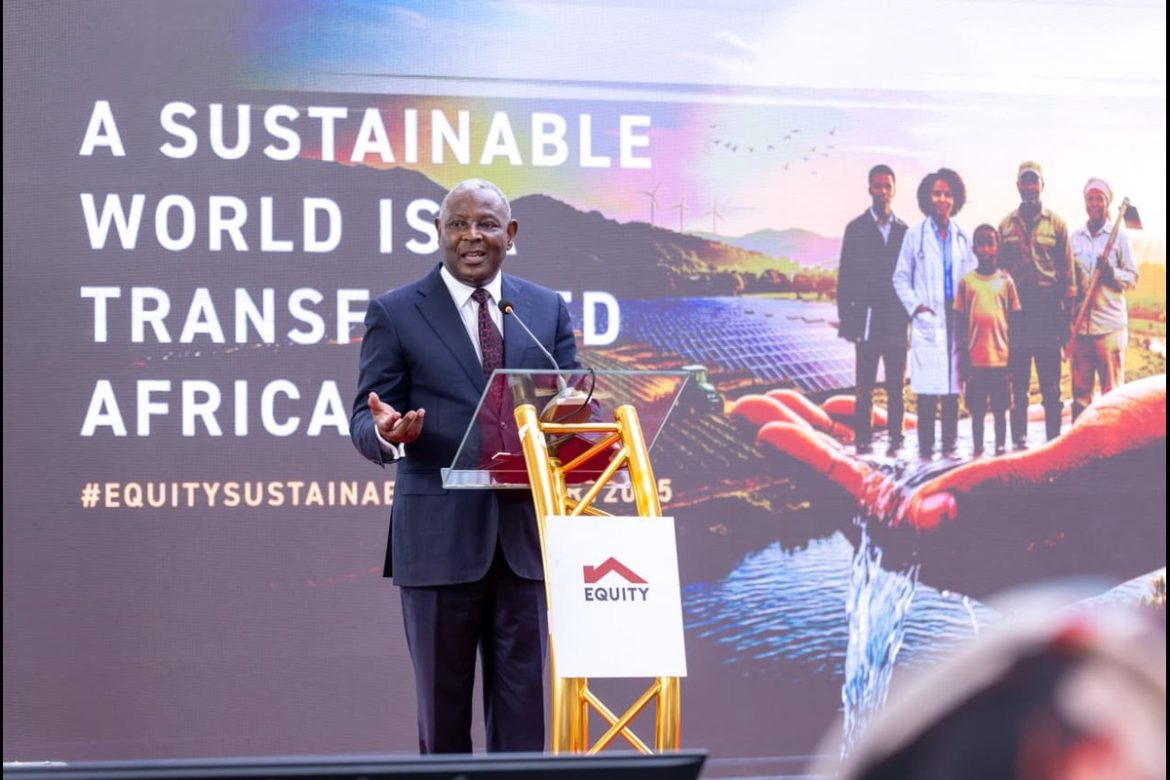
Equity Group Holdings deployed more than KSh26 billion in sustainable and climate-aligned finance in 2025, supporting climate adaptation, clean energy and agricultural resilience across its regional markets, according to its 2025 Sustainability Report. The lender also recorded more than 47,000 climate-related transactions under the International Finance Corporation’s Climate Adaptation Finance Initiative, distributed 75,855 clean-energy products and planted 9.1 million trees during the year.
The reported climate finance forms part of a broader sustainability investment of KSh99.5 billion (US$771 million), reflecting the Group’s expanding role in financing environmental initiatives and supporting businesses and households exposed to climate-related risks. Its activities span lending, agricultural programmes, energy access and environmental conservation, while the report outlines efforts to incorporate climate and nature considerations into credit decisions and risk management.
The figures come as financial institutions across East Africa face growing pressure to respond to the economic consequences of changing weather patterns. Banks are increasingly required to consider not only the opportunities associated with financing renewable energy, but also the risks facing borrowers whose businesses depend on rainfall, agricultural productivity and reliable natural resources.

For Equity, the more than 47,000 transactions recorded under the IFC Climate Adaptation Finance Initiative provide an indication of the scale of its adaptation-related activity. The Group’s wider sustainable finance portfolio also includes clean-energy distribution and agricultural programmes, reflecting the different ways financial institutions can support resilience.
Climate finance extends beyond investment in renewable energy infrastructure. Adaptation financing can support households, farmers and businesses in managing climate-related pressures, protecting productive assets and adjusting their operations to changing environmental conditions. This distinction is particularly relevant in East Africa, where agricultural production, rural incomes and small businesses remain exposed to drought, rainfall variability and other climate hazards.
Agriculture is a significant component of Equity’s sustainability and enterprise development activities. The Group reported reaching 622,525 small and medium-sized farmers through its agricultural programmes in 2025. Its wider enterprise lending programme also disbursed KSh404 billion to micro, small and medium-sized enterprises during the year, although this figure covers broader enterprise development and financial inclusion activity rather than climate finance alone.
Access to agricultural credit remains an important factor in determining how farmers respond to production risks. Previous reporting on agricultural lending in Kenya has highlighted the financing constraints facing smallholder farmers, many of whom rely on rain-fed production and borrow primarily to purchase farm inputs. Equity has outlined lending approaches that align disbursements with agricultural production cycles, alongside financing for equipment and other productive assets.
The connection between agricultural finance and climate resilience is becoming more significant as farmers face changing production conditions. Financing for irrigation, water harvesting, storage and productive equipment can help rural enterprises manage some of the risks associated with weather variability. However, the availability of credit must also be matched by appropriate repayment structures and support that reflects the financial capacity and production cycles of smallholder farmers.
Equity’s regional strategy includes partnerships intended to extend this financing beyond individual markets. In September 2026, the Group announced the African Rural and Agricultural Credit Facility for Inclusive Markets, known as ARCAFIM, in partnership with the International Fund for Agricultural Development. The 12-year programme covers Kenya, Uganda, Tanzania and Rwanda, with a planned facility of US$200 million.
The proposed structure allocates US$180 million to lending and US$20 million to technical assistance, with Equity committing US$90 million in lending capital. ARCAFIM targets 260,000 smallholder farmers and 500 rural micro, small and medium-sized enterprises, with women and young people forming a significant part of its intended beneficiaries.
The facility is designed to support investments in irrigation, water harvesting, livestock and dairy resilience, post-harvest storage, renewable energy and climate-resilient agro-processing. Its approach combines financing with technical assistance, reflecting the role of development partnerships in addressing barriers that can prevent rural enterprises from accessing capital.
The programme adds to the climate-related activity captured in Equity’s 2025 sustainability reporting and illustrates how commercial banks and development institutions are seeking to structure financing for agricultural adaptation. Its implementation will be important in determining how effectively the planned capital reaches smallholder farmers and rural businesses across the four markets.
Beyond lending, Equity reported distributing 75,855 clean-energy products in 2025, compared with 44,732 recorded in its 2024 sustainability reporting. The increase points to an expanded distribution programme, providing another channel through which the Group is supporting access to energy technologies.
The Group also planted 9.1 million trees during the year, bringing its cumulative tree-planting total to 44.6 million. This exceeded its earlier target of 35 million trees, according to the report. The figures place tree planting alongside clean-energy distribution and climate-aligned financing as major components of its environmental programme.
These activities are taking place within a wider African climate investment market that is attracting banks, development finance institutions, venture investors and specialised technology companies. Kenya has featured prominently in the continent’s ClimateTech investment landscape, with funding directed towards clean energy, climate finance and other climate-related technologies. The expansion of this market is increasing the importance of financial institutions in connecting capital with businesses and projects seeking to address climate risks.
At the same time, banks are facing growing expectations to demonstrate how sustainability considerations influence lending decisions and financial risk management. Equity said it is integrating environmental, social and governance, climate and nature-related considerations into its credit processes, operations and risk management framework.
Its reported measures include environmental and social risk screening, enhanced due diligence for high-risk sectors, climate scenario analysis and stress testing. The Group is also preparing for the adoption of IFRS S1 and IFRS S2, the sustainability-related disclosure standards that establish requirements for reporting sustainability-related risks and opportunities.

The wider banking sector is also working towards more consistent systems for tracking sustainable finance. Kenya’s Banking Industry Sustainable Finance Roadmap 2027–2037 has outlined plans for a sustainable finance tracking system, interoperable reporting infrastructure and the integration of climate and nature datasets into financial risk analysis.
For lenders, improved data systems are central to assessing borrowers’ exposure to environmental risks and measuring the outcomes of sustainable lending. The ability to distinguish between general enterprise financing and capital directed towards climate adaptation, mitigation and other environmental objectives will also influence the credibility of sustainability reporting.
Equity’s 2025 figures bring together several dimensions of this transition, from climate-aligned lending and adaptation transactions to clean-energy distribution, agricultural support and environmental conservation. The next test will be how effectively these activities translate into measurable resilience for farmers, businesses and communities, while strengthening the Group’s ability to identify and manage climate-related financial risks.


