
A new global assessment of rangelands has underscored the strategic value of Africa’s vast pastoral landscapes for food security, climate resilience, and rural livelihoods, revealing that these ecosystems, often dismissed as marginal, are in fact central to continental and global sustainability efforts.
The findings, released by the Economics of Land Degradation (ELD) Initiative at the 23rd session of the UN Convention to Combat Desertification (UNCCD) Committee for the Review of the Implementation of the Convention (CRIC23), provide a detailed economic and ecological case for investment in rangeland restoration across Africa, Asia, and Latin America.
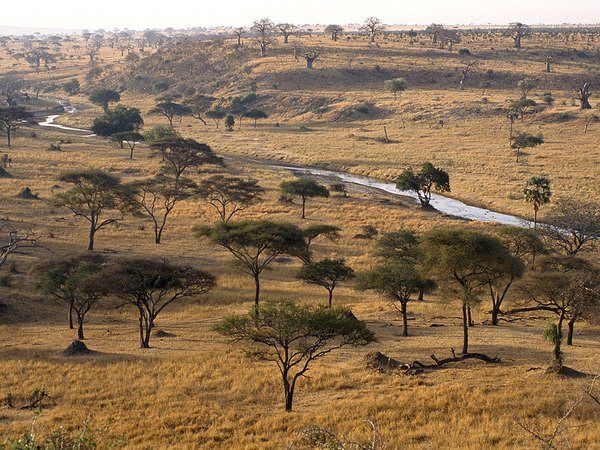
Stretching across the Sahel, East African drylands, and southern savannas, Africa’s rangelands support millions of pastoralists and livestock herders, while simultaneously storing significant carbon and regulating water systems in some of the continent’s driest regions.
The ELD analysis finds that between 25 and 50 percent of rangelands worldwide are degraded or at risk, and Africa’s drylands are particularly vulnerable to overgrazing, desertification, and climate stress. Losses in these areas threaten not only the mobility and productivity of pastoralist communities but also regional food supply chains and ecosystem services, with ripple effects on urban centers dependent on livestock products and water.
The study assigns a tangible economic value to these landscapes, noting that every dollar invested in rangeland restoration can yield up to $35 in returns, a multiplier far exceeding that of many other land-use investments.
In Africa, where pastoralism contributes directly to livelihoods, nutrition, and trade, this represents a critical opportunity for governments and development partners. Countries such as Kenya, Ethiopia, Niger, and Mali, which manage extensive drylands, could see measurable gains from policies that secure land tenure, enable mobility-based grazing, and integrate pastoralist knowledge into restoration strategies.

Experts at CRIC23 emphasized that effective restoration does not require high-cost infrastructure. The most successful interventions hinge on governance reforms, secure access to water and grazing corridors, and support for traditional management practices.
When herders can move livestock seasonally in response to rainfall and forage availability, vegetation cover rebounds more rapidly, soil carbon is stabilized, and local water cycles improve. This approach also strengthens resilience among women and youth, who are often at the frontlines of pastoral livelihoods and land stewardship.
The political dimension of rangeland management is gaining recognition in Africa, where national development strategies increasingly intersect with climate commitments. The upcoming International Year of Rangelands and Pastoralists (IYRP 2026) is expected to bring unprecedented visibility to the continent’s drylands, highlighting their contributions to food security, biodiversity, and climate mitigation.
African governments, together with regional organizations like the African Union and development partners, are exploring investment frameworks that link rangeland health with carbon financing, livestock productivity, and rural development objectives.
Read also: African Cities Innovation Fund launches to drive smart, climate-resilient urban solutions
Mongolia, the host of UNCCD COP17 in 2026, serves as a parallel example, where rangelands underpin national identity, livestock-based economies, and ecosystem services. Insights from Mongolia’s restoration and governance experiences offer Africa-relevant lessons, particularly around integrating community knowledge, legal frameworks, and scalable restoration strategies. These lessons align with ELD’s evidence that pastoralist stewardship, combined with targeted public and private investment, can generate measurable ecological, social, and economic returns.
In East and Southern Africa, initiatives already underway demonstrate the feasibility of this approach. In Kenya’s arid northern counties, programs that coordinate grazing patterns among pastoralist groups have improved vegetation cover, reduced land conflict, and enhanced livestock yields.

Ethiopia’s Borena Plateau has piloted community-led rangeland management schemes that stabilize soils, improve water infiltration, and increase the resilience of herders to prolonged droughts. These successes underscore the potential for Africa-wide scaling if policies, finance, and technical support align.
The ELD report and CRIC23 discussions signal a shift in global recognition of rangelands from marginal wastelands to strategic ecosystems essential for sustainability. For Africa, this reframing has practical consequences: securing rangeland health could strengthen food security, support climate mitigation, and preserve pastoral cultures while attracting investment in green and resilient development.
The convergence of evidence, political momentum, and upcoming international focus through IYRP 2026 presents an opportunity for Africa to lead globally in safeguarding rangelands while ensuring that the continent’s drylands continue to sustain communities, economies, and ecosystems.
Engage with us on LinkedIn: Africa Sustainability Matters