


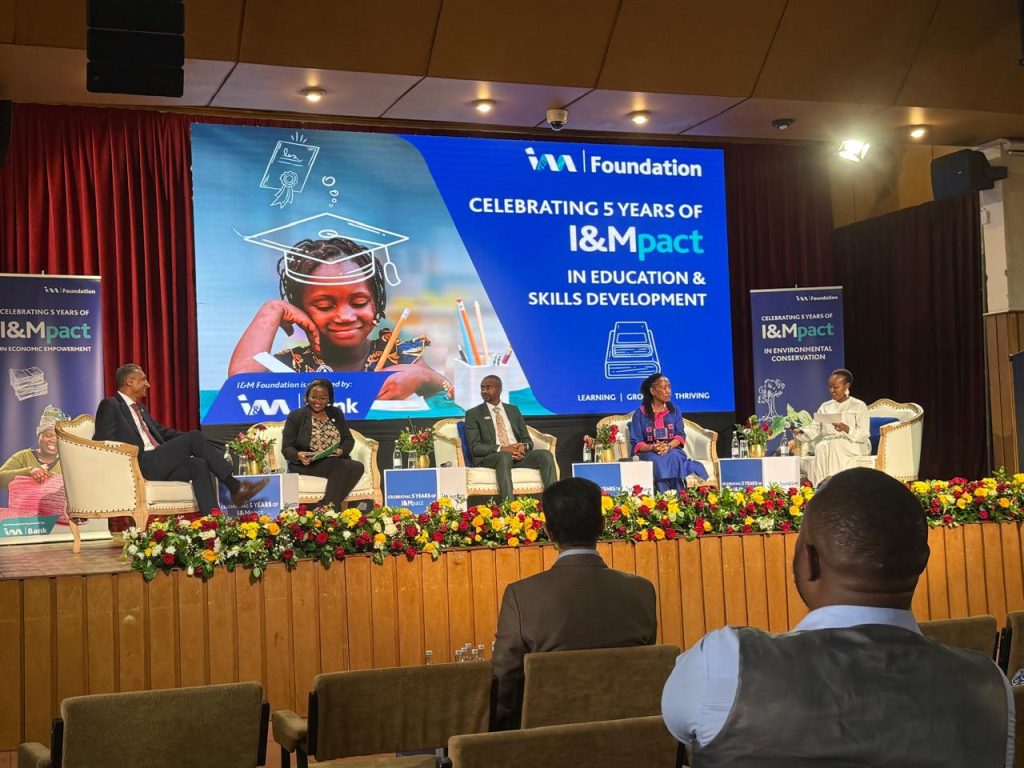
I&M Group has reported that its sustainability initiatives impacted more than 10 million lives in 2025, alongside more than KES250 million in ecosystem restoration investment and the planting of over one million trees, as the Kenyan financial services group handed over conservation infrastructure at Nairobi’s Ngong Road Forest Sanctuary to the Kenya Forest Service.
The figures were released as I&M Group launched its 2025 Sustainability Report, providing a measure of how the bank is attempting to connect sustainability with financing, community investment, environmental restoration and operational performance. The report comes as Kenyan financial institutions face growing expectations to demonstrate how environmental, social and governance commitments translate into measurable economic and environmental outcomes.
The Ngong Road Forest project provides one of the clearest examples of that approach. Developed through a partnership between the I&M Foundation and the Kenya Forest Service, the initiative has focused on strengthening protection of the Sanctuary Block while improving infrastructure for rangers, visitors and surrounding communities.
I&M Foundation announced the partnership with KFS in 2024, with the project initially valued at KES162 million and designed around forest fencing, restoration of degraded areas, seedling production and improved mobility and security. The Sanctuary Block covers about 695 hectares and is the largest of the five blocks that make up Ngong Road Forest. The wider forest covers more than 1,200 hectares and faces pressures including encroachment, illegal access and environmental degradation. Kenya Forest Service has identified fencing and improved security infrastructure as important measures for protecting fragile forest ecosystems.
The completed intervention includes an electric fence, access gates, ranger housing, water infrastructure, event grounds and nature trails. Earlier phases of the project included the construction of a 14.2-kilometre fence around the Sanctuary Block, while subsequent support has included additional resources for fence management and community scouts. For Nairobi, the investment has implications beyond forest protection. Urban forests provide green space in a rapidly expanding city, while improving security and access can increase their value for recreation, environmental education and ecological research. KFS has positioned the upgraded Ngong Road facility as complementary to Karura Forest, where demand for accessible urban nature has demonstrated the importance of protected green spaces within the capital.
The conservation programme also illustrates a broader shift in corporate environmental investment in Kenya. Rather than limiting sustainability spending to tree planting, projects are increasingly incorporating infrastructure, community participation, ecosystem management and long-term maintenance. That distinction is important because the number of seedlings planted does not by itself demonstrate successful restoration. I&M reported an 85% survival rate for trees planted by the end of 2025, highlighting the importance of monitoring what happens after trees are planted.
The group said more than one million trees were planted during the year, while its ecosystem restoration investments exceeded KES250 million. Its wider environmental activities included restoration work in coastal and forest ecosystems, including mangrove planting in Kwale and tree-growing initiatives in Nakuru. I&M’s sustainability strategy extends beyond environmental conservation. The group reported investments in economic empowerment, scholarships and programmes targeting women and young people, while local procurement remained part of its social and economic agenda.
The 2025 sustainability disclosures also point to a growing effort to embed ESG considerations within the bank’s core operations. I&M reported reductions in energy consumption per employee and paper use, alongside increased employee engagement and continued representation of women in senior leadership. The financial side of the strategy is potentially more consequential for Kenya’s transition. Banks have a role in determining which economic activities receive capital, and I&M reported KES5.9 billion in ecosystem financing, KES3.7 billion in green finance contracts, KES2.3 billion in agricultural finance and KES18.3 billion in MSME financing during 2025.
That creates a link between sustainability reporting and the allocation of financial resources. Green finance, agricultural lending, ecosystem investment and MSME financing can influence the resilience of businesses and communities while determining how quickly climate-related considerations become incorporated into investment decisions.
The group also reported KES20.6 billion in digital lending, demonstrating how financial inclusion and sustainability increasingly overlap as financial institutions expand access to services through digital channels. For Kenya, this connection matters because climate risks are increasingly affecting agricultural productivity, water resources, infrastructure and household incomes. Financing adaptation and resilient enterprises therefore requires more than grants or corporate social investment. Commercial banks and other financial institutions are increasingly important in directing capital towards businesses capable of operating under changing environmental conditions.
The Ngong Road Forest project similarly demonstrates why environmental outcomes require institutional cooperation. I&M Foundation financed and supported the intervention, but KFS remains responsible for managing the public forest resource. Community forest associations, rangers and local users also have roles in maintaining security and ensuring that increased public access does not undermine conservation.
The Kenya Forest Service has repeatedly emphasised the importance of partnerships with private companies, communities and other institutions as the country seeks to expand forest restoration and protection. Its recent conservation agenda has included stronger fencing, nursery development and landscape restoration as part of wider efforts to increase forest cover and protect biodiversity. For I&M Group, the reported 10 million lives impacted marks an interim milestone under its 2024-2026 Sustainability Action Plan. The group has set a longer-term objective of positively impacting more than 50 million lives by 2030. The challenge now is measurement. As sustainability becomes increasingly integrated into banking and corporate strategy, headline numbers such as trees planted, people reached or capital deployed will increasingly need to be supported by evidence of outcomes, including tree survival, ecosystem health, improved livelihoods, financial inclusion and emissions reductions.
The Ngong Road Forest initiative offers a practical illustration of that challenge. Its long-term value will depend on whether the infrastructure continues to protect the forest, whether restoration survives beyond the initial planting period, whether rangers have adequate resources and whether Nairobi residents can benefit from the forest without increasing pressure on the ecosystem.
For Kenya’s financial sector, the broader lesson is that sustainability is moving closer to the balance sheet. Capital allocation, risk management, environmental restoration and community investment are increasingly connected. The effectiveness of that shift will ultimately be determined not by the scale of commitments alone, but by whether investments produce measurable and durable benefits for ecosystems, businesses and communities.


